.png)

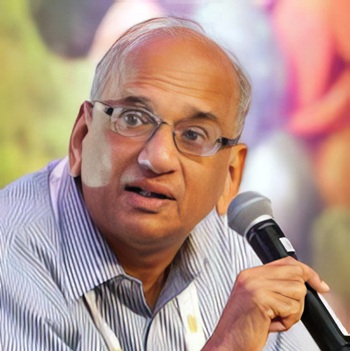
Chandrashekhar is an economist, journalist and policy commentator renowned for his expertise in agriculture, commodity markets and economic policy.
December 17, 2025 at 11:33 AM IST
India’s malnutrition problem is not hard to diagnose. It persists because nutrition has never been treated as a serious policy priority. Protein deficiency continues to affect millions even as the economy grows and official narratives celebrate progress. The contrast is uncomfortable, and it should be.
Nutrition outcomes also differ sharply across states. These gaps have less to do with income alone and far more to do with how seriously governments treat public health and food delivery. Where public systems work, nutrition improves; where they do not, growth figures mean little. For all the talk of India’s rising global stature, our record on basic human development indicators remains sobering. On nutrition, in particular, it borders on embarrassing.
Malnutrition is often explained away through a long list of causes—sanitation, healthcare, food access. All of these matter. But one absence runs through them all and rarely gets the attention it deserves: protein. Calories are available; protein is not. This is the crisis at the centre of India’s nutrition story.
Nutritionists have long pointed out that Indians consume far less protein than recommended—roughly 55 grams per day against a desirable intake of about 85 grams. This shortfall is not evenly distributed. It is most severe among the poor, rural households, and children.
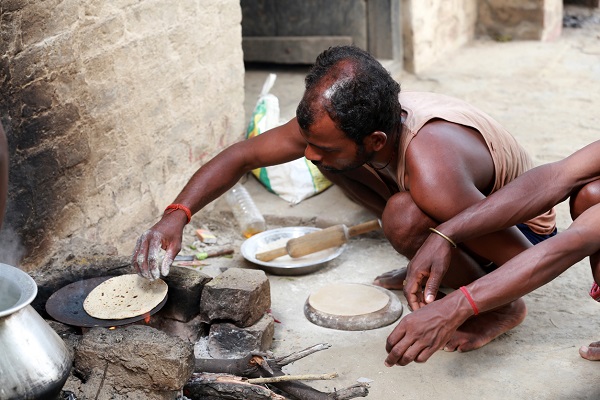
The reason lies in how narrowly we define food security. India’s food welfare system still rests almost entirely on cereals. Rice and wheat move efficiently through procurement and distribution, but nutrition does not move with them. Calories reach households; protein largely does not.
This is not a design flaw; it is a policy choice. What gets grown, procured and distributed shapes what people eat. Treating agriculture, nutrition and health as separate domains has ensured that none of them quite delivers. Ignoring this nexus has meant that food policy delivers quantity without quality.
The irony is that India is not short of protein. Quite the opposite. Pulses have long been a staple of Indian diets. Dal with rice or roti is everyday food for millions, not a nutritional innovation. Combined with cereals, pulses provide a balanced source of protein, which is precisely why they belong in large-scale feeding programmes. India is the world’s largest producer and consumer of pulses, yet they barely feature in most welfare schemes.
|
Protein Source |
India’s Global Rank |
Production Volume |
|
|
Milk |
1st |
Over 240 million tonnes |
|
|
Poultry meat |
4th |
5 million tonnes |
|
|
Eggs |
2nd |
142 billion eggs |
|
|
Groundnut |
2nd |
12 million tonnes |
|
|
Pulses |
1st |
25 million tonnes* |
|
|
Soybean |
5th |
12 million tonnes |
|
|
*Plus 7 million imported |
|
|
|
The same contradiction runs through our broader protein economy. India leads the world in milk production, ranks among the top producers of eggs, poultry, groundnut and soybean, and has a diverse base of affordable vegetable protein. Plant-based protein—pulses, soybean and groundnut—is cheaper than animal protein and widely consumed across regions. Yet even with protein deficiency so widespread, prices for these crops often slip below minimum support levels. Farmers get the message quickly: protein crops are not a policy priority. The result is declining grower confidence, weak processing investment, and a lost opportunity to address malnutrition at scale.
Soybean best captures this failure of imagination. With over 40% protein content, it is one of the most efficient protein sources available. Yet India has never seriously positioned soy as food for people. For years, soybean processing has been geared towards exporting soymeal for animal feed. That market is now weakening, and farmers are bearing the consequences. This outcome reflects not a lack of potential, but a lack of foresight. It can be processed into tofu, soymilk, soy flour, protein isolates and textured foods, many of which can be adapted to Indian tastes. More importantly, soybean can be converted into a ‘soy dal analogue’, a pulse-like product that fits naturally into existing food habits and welfare delivery systems.
Including such protein-rich foods in public programmes would not require reinventing the system. It would simply mean using it more intelligently. Such a shift would deliver results quickly. It would strengthen nutrition, steady farmer demand, and revive investment in processing, while easing pressure on pulse imports.
Nothing here depends on new breakthroughs. It depends on what policy chooses to prioritise. Unless nutrition is treated as central to food policy, economic growth will continue to bypass those who need it most.
More From BasisPoint