.png)


Pandya, a communications professional, explores climate, energy transition, and security. Off the grid, he recharges with long-distance runs.
March 30, 2026 at 4:11 AM IST
The distance from Delhi to Tehran may be measured in kilometres, but the economic transmission of the ongoing conflict is far more immediate. An extended disruption in West Asian energy flows has already unsettled global markets, with risks around the Strait of Hormuz keeping crude and gas supply expectations on edge. For a country that imports close to 90% of its crude requirement and a majority of its LPG, this is not a distant geopolitical episode but a live macro shock.
India’s initial response has been effective on the supply side. Diplomatic engagement has sought to ensure that critical shipping routes remain open. Procurement has adjusted, with increased sourcing from Russia and other channels. Logistical coordination across agencies has, for now, prevented visible shortages. These measures have insulated domestic availability at a time of elevated global uncertainty.
Yet this is only one half of crisis management.
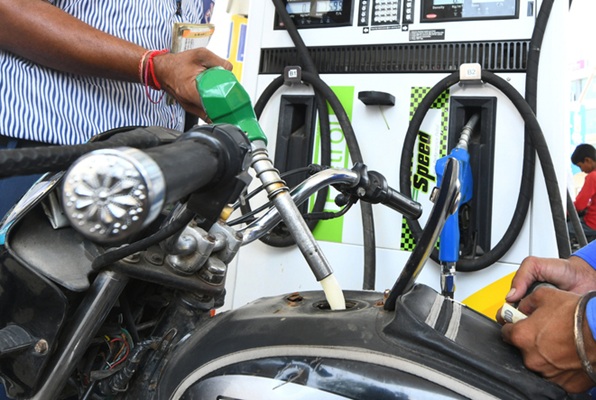
The policy response remains heavily tilted towards supply assurance, with limited evidence of price signalling or demand-side adjustment. Retail fuel prices have not meaningfully reflected the evolving global risk premium, and there has been little by way of public communication encouraging conservation or moderating discretionary consumption. The result is that, even as the external environment tightens, domestic demand continues as if conditions were unchanged.
This creates a structural gap in the adjustment process.
In any energy shock, stabilisation works through three channels: securing supply, transmitting price signals, and moderating demand. When one of these channels is underutilised, the burden shifts elsewhere. In India’s case, the absence of calibrated price pass-through and demand signalling means that consumption has not internalised the external shock. Households and firms face no incentive to adapt behaviour, and scarce energy resources are not prioritised across essential and non-essential uses.
The risks of such an approach are not immediate, but they are cumulative.
First, adjustment is delayed rather than avoided. If supply conditions worsen, the eventual correction in prices and consumption is likely to be sharper and more disruptive. Second, the absence of demand moderation risks inefficient allocation, where discretionary consumption continues alongside critical needs without differentiation. Third, the fiscal cost of cushioning, whether explicit or embedded in oil marketing balance sheets, can build without clear visibility. Finally, a higher import bill without corresponding demand compression adds pressure on the external account, shifting the adjustment onto the currency.
High-visibility consumption patterns offer a useful signal. Large-scale discretionary activity continues without restraint, suggesting that the policy framework has not transmitted any sense of scarcity to the economy. This is not a question of public behaviour alone; it reflects the absence of a coordinated demand-management strategy.
A shock of this nature cannot be managed through supply assurance alone. It requires calibrated demand compression and credible signalling.
This does not imply abrupt price hikes or heavy-handed restrictions. The policy toolkit is more nuanced. Gradual and partial pass-through of global prices can begin to shape consumption decisions without triggering volatility. Public advisories on fuel conservation, especially in urban transport and commercial usage, can help moderate demand at the margin. A clear prioritisation framework for essential sectors ensures that, in the event of tighter supply, allocation remains orderly. Most importantly, transparent communication around potential scenarios can prepare households and firms for adjustment, reducing the risk of abrupt reactions later.
India has navigated the initial phase of the energy shock with competence on the supply front. The next phase requires broadening the response. Without demand-side signalling, the system remains exposed to a delayed and potentially sharper adjustment if external conditions deteriorate.
Stability, in this context, is not only about ensuring supply. It is also about ensuring that the economy responds to scarcity in time. An economy that is not prepared to adjust gradually risks adjusting abruptly, and under stress, even well-managed systems can slip into disarray.
More From BasisPoint