.png)

India’s LPG Rescue Is Creating a Hidden Cost Shock for Industry
India’s diversion of LPG supply to protect households is tightening the supply of petrochemical feedstocks, raising costs for plastics processors, glassmakers and restaurant chains.

Krishnadevan is Editorial Director at BasisPoint Insight. He has worked in the equity markets, and been a journalist at ET, AFX News, Reuters TV and Cogencis.
March 13, 2026 at 5:55 AM IST
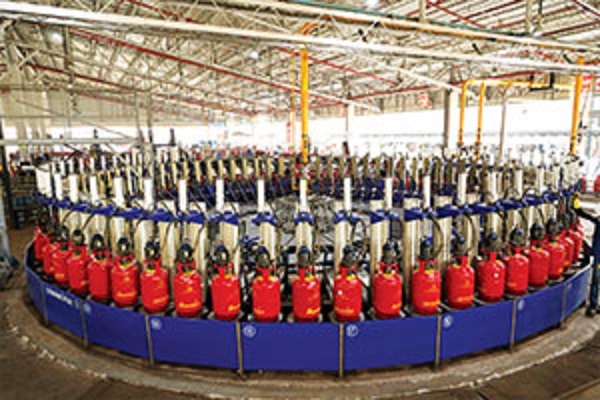
India’s directive to protect household LPG supply is quietly transmitting a cost shock through sectors of the consumer economy that rarely appear in the same policy discussion. By diverting propane, butane and propylene streams away from petrochemical production and into the domestic cooking gas pool, the government has tightened feedstock availability for plastics processors, glass manufacturers and commercial kitchens that depend on the same hydrocarbons.
The decision was taken amid geopolitical disruptions affecting shipments through the Strait of Hormuz, a route that carries the majority of India’s LPG imports. Protecting household cooking fuel was the obvious priority. Its effects will not appear immediately in company financials because most firms are still consuming inventory purchased before the diversion took place.
A single refinery allocation can change cost structures across packaging, glass and food businesses simultaneously.
The plastics channel is the most widespread. Propylene diverted into LPG blending is the same feedstock used to produce the bottles, films and sachets that carry everything from shampoo to packaged snacks. Crude-linked inputs already account for roughly 15–30% of the cost of goods sold for many staple companies.
If polymer prices rise by 10%, a consumer goods company in which production costs equal half of revenue and plastics account for one-fifth of that cost base would see about 100 basis points eroded from gross margins. The immediate difficulty is that prices cannot always be raised quickly in competitive retail markets.
Higher packaging costs will also impinge on cash flow. Companies must purchase polymer feedstock weeks before finished products reach retail shelves, which means a rise in plastic prices increases the working capital required to maintain the same level of output.
The glass channel is less widespread but potentially more disruptive. Consumer glassware maker Borosil has already reported production interruptions linked to gas shortages. For liquor companies such as United Spirits, glass bottles account for roughly 40% of input costs.
Glass furnaces are built to run continuously. When gas supply tightens and output slows, those furnaces cannot simply be turned off and restarted overnight. Cooling and restarting a furnace can take weeks. That means supply interruptions translate quickly into shortages of bottles and higher input costs for beverage producers.
The third channel runs through commercial kitchens. Jubilant FoodWorks, Devyani International, Sapphire Foods and Westlife Foodworld rely on LPG cylinders to run restaurant operations. Industry estimates suggest that many outlets currently hold less than a week’s worth of LPG inventory.
The government’s allocation rules prioritise domestic consumers and essential services such as hospitals and educational institutions. Commercial food establishments sit further down that list. If supplies tighten further, restaurants may face temporary closures rather than higher fuel costs.
Higher input prices reduce margins, but a fuel shortage interrupts revenue even as fixed costs continue to accrue.
For analysts and lenders, the difficulty lies in pencilling in changes to estimates. Oil prices and refining spreads are readily observable in commodity markets, allowing investors to update forecasts continuously. A government directive shifting refinery output from petrochemicals to LPG does not appear in those price feeds.
Instead, the financial impact emerges gradually as inventories run down and supply contracts reset. By the time companies report margin pressure in the April–June quarter, the policy change that triggered it will already be several months old.
India imports about 60% of its LPG consumption, and roughly 90% of those shipments pass through the Strait of Hormuz, according to Goldman Sachs. Domestic output has increased by about 25% in recent years, but demand continues to outpace supply.
The policy ensured uninterrupted household cooking fuel supplies during a volatile time for global energy trade. The consequences of that choice for industry will emerge more slowly as higher packaging costs, constrained glass production and fuel-dependent restaurant operations begin to filter through corporate accounts in the months ahead.
More From BasisPoint