.png)

In God We Trust; Everyone Else Gets Audited
What happens after a donation slips into a hundi says less about God than it does about the species that invented both prayer and locks.

Krishnadevan is Editorial Director at BasisPoint Insight. He has worked in the equity markets, and been a journalist at ET, AFX News, Reuters TV and Cogencis.
June 27, 2026 at 11:14 AM IST
The recent allegations that cash was siphoned from donation boxes at the Ram temple in Ayodhya have predictably produced outrage, arrests and demands for accountability. In India, even scandals observe a ritual. First comes shock. Then come arrests. Then comes a statement promising strict action. Then someone suggests more CCTV cameras, because apparently even God now needs surveillance support.
Every few years, a story like this emerges from some place of worship or another, and every time we react as though someone has violated a sacred law.
Not the law governing temples, but the older, simpler belief that money offered in faith should behave better than money left unattended on a table.
That, sadly, is asking too much of money. Money has never been famous for spiritual discipline.
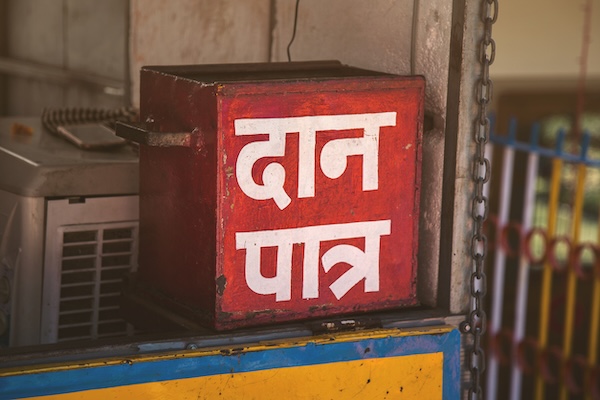
The real puzzle is not why someone occasionally steals from a holy place. The real puzzle is how millions of people continue to place cash into metal boxes and walk away in peace, having done what no accountant would recommend: made a payment to the divine without a receipt.
The moment a devotee slips a currency note through the brass slot of a hundi, the money undergoes a remarkable transformation. Seconds earlier, it was legal tender. Seconds later, it has become thanksgiving for a recovered parent, insurance for an impending examination, an advance payment on a promotion or a quiet plea for tomorrow to be kinder than today.
But not every note is a private petition. Many are given with a broader hope: that the temple will feed someone, fund a student, keep a school running, repair a pilgrims’ hall, improve a queue, build a toilet, offer annadanam, or make the visit of the next tired devotee a little less punishing.
That is the quiet social contract inside the hundi. The devotee may not know the beneficiary’s name, but he imagines one. A child with fees due. An old woman is waiting for a meal. A family that has travelled overnight and needs drinking water more urgently than philosophy.
The faithful leave believing the transaction is complete. The deity, one assumes, has acknowledged receipt without demanding proof. No SMS arrives saying, “Your offering has been received. Your prayer number is 48,72,913.”
Then the cash sits inside a steel box where it must contend with locks, ledgers and, every now and then, the occasional light-fingered custodian.
That is where devotion meets the man holding the key.
The hundi is a beautiful democratic instrument. It swallows the wealthy man’s crisp note and the tired bus conductor’s crumpled tenner with the same expressionless dignity. It does not ask for caste, class, PAN number or political preference. In the darkness of the box, all currency is equal.
But it is also a test. Not of the devotee. Of the custodian.
Once the currency note disappears through the slot, ownership undergoes a curious transformation. No devotee would dream of fishing out the very note they had just offered to the deity. Yet someone entrusted with counting those notes occasionally concludes that the Almighty can probably spare the change.
That is not a failure of faith.
It is an ordinary human weakness to wear freshly washed temple clothes.
The person who steals from a donation box is not always a grand villain from mythology. He may simply be tempted with a key, an opportunity with a ledger, and a dangerously poor fear of consequences. Hell has been downsized in the modern imagination. Audit, alas, has not.
The arrangement is fascinating because the principal recipient has no rent to pay, no school fees due, no hospital bill pending, and no EMI waiting at the end of the month. Yet the money continues to accumulate in very earthly containers, creating precisely the sort of temptation that has troubled humankind since the first locked box was invented.
Our grandmothers would have understood the problem without consulting an economist: leave a full jar unattended long enough, and someone will eventually call it prasad.
The faithful are not really buying divine services. They are buying something much harder to price. Reassurance and hope that someone infinitely more competent has finally taken charge of matters.
A devotee does not stand before the idol thinking, “I hope the internal controls are robust.” She thinks of the scan report. The exam result. The debt. The diagnosis. The quarrel at home. The fear that cannot be said aloud. The hundi receives not just cash, but panic folded into small rectangles.
That is why stolen donation money feels more indecent than ordinary theft. A thief has not merely taken notes. He has pawed through someone’s hope. It is not God’s loss that offends us. It is the smallness of stealing from people who have already arrived vulnerable.
Perhaps that explains why scandals involving donations produce disappointment rather than panic. People understand that institutions are run by human beings, and hope they have a moral compass, preferably one that does not point towards the cash room.
The Ayodhya episode, like those before it at Sabarimala or Tirupati, will not deter the faithful.
The next morning, the queue will form again. Bells will ring. Flowers will arrive. Coconuts will break. Someone will whisper a promise. Someone will push in from the side, because piety, like traffic, has its own rules. Another note will disappear through the slit.
The scandal may add a camera, a seal, a new register, a sterner lock and a notice typed in capital letters. We may trust God, but we now prefer Him watched in 4K.
The faithful do not come to temples because they trust the locks.
They come because they trust what lies within them.
Belief.
As for those who steal from God, perhaps the punishment is simpler than mythology suggests.
No thunderbolts. No serpent. No curse.
Just a ledger somewhere, waiting.
So, when someone steals from the hundi, perhaps the sin is not that God has been robbed. God, one suspects, will manage.
It is possible that someone poorer, hungrier, younger or more tired may have been.
More From BasisPoint