.png)

HUL Spent Two Years Blaming Rural. The Real Margin Story Is Structural
For two years, HUL leaned on a rural-slowdown story to explain every soft quarter. The January-March quarter saw volumes at a twelve-quarter high, yet margins slipped anyway. The structural shift in new FMCG selling models is eating HUL’s old model.

Dev Chandrasekhar advises corporates on big picture narratives relating to strategy, markets, and policy.
May 1, 2026 at 7:35 AM IST
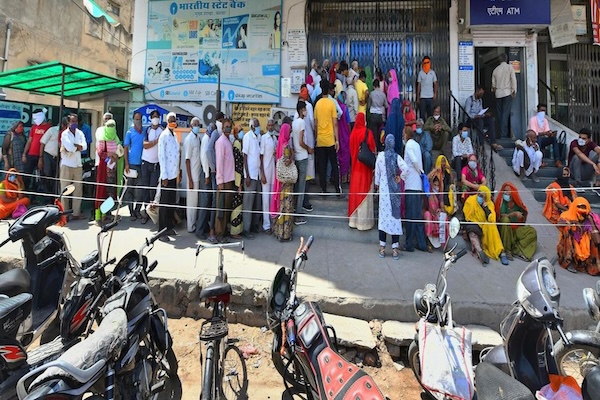
Over the past two years, through every soft quarter, the explanation from Hindustan Unilever Limited was the same. Rural India was in a slowdown, and the country's largest consumer-goods company was selling fewer soaps because the rural buyer had run out of room in her budget.
Some of it was indeed true. Rural growth did lag urban, and food inflation did chip away at the small-pack consumer's purchasing power. But two years of telling the rural-slowdown story kept the company's attention trained on a question that was never going to settle its margin trajectory. Volumes are now back, yet the profit line continues to go the other way.
In the January-March quarter, revenue grew 8% year-on-year to ₹162.07 billion on 6% volume growth, the strongest in 12 quarters. Reported net profit for the quarter, up 20% at ₹30.02 billion looks like vindication until the footnote: most of that lift was a ₹2.56 billion exceptional gain on the divestment of HUL's stake in D2C company Nutritionalab. Strip the one-timer out, and profit before exceptional items rose 4% on volumes that grew six.
The rural frame was always about the buying side. It asked who was buying. It did not ask through which shelf, on which app, against which new brand. While HUL kept telling that story, the route to the buyer, and the rules of selling to her, were being rebuilt by entrants not playing the old FMCG game at all.
Three categories of competitor that did not exist five years ago are now entrenched inside HUL's categories. D2C brands like Mamaearth and Minimalist sell straight to the urban buyer through their own apps. Unable to out-build them, HUL has had to buy in, taking Minimalist and OZiva for over ₹35 billion in 2025-26. Regional players, on lower overheads, undercut on price in detergent bars, oral care and hair oils, and use quick commerce to compress a multi-year distribution build. Besides, Reliance Consumer Products, Reliance's in-house consumer brands business, ended 2025-26 with ₹220 billion in revenue, almost double the year before, selling at twenty to forty per cent below incumbent prices through the same kirana counters where Lever brands have been the default for forty years.
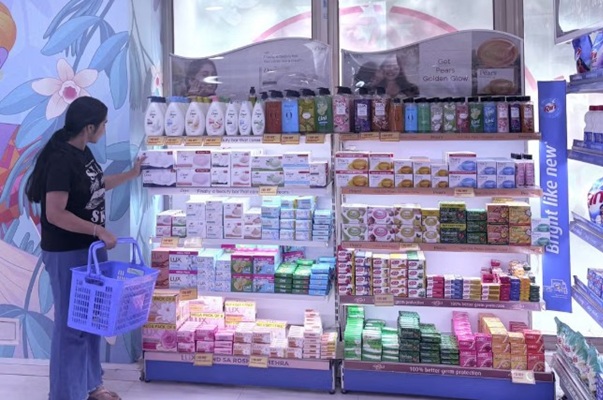
The route is splintering too. Modern retail, dominated by Avenue Supermarts and Reliance Retail's supermarket formats, is winning the metropolitan basket on price and on private label. E-commerce is substituting search ranking for brand recall: the buyer who once asked for Lux now searches "body soap", and house brands surface at the top of the result. Quick commerce has compressed national distribution into the cost of getting onto a screen. The kirana, the channel that once carried HUL's business, now handles roughly three-quarters of it, with the rest spread across formats that behave nothing like one another.
The rural-slowdown framing allowed HUL to avoid proactively managing these shifts. The cost of avoidance is now in the margin line. The recovery is flowing into a competitive scenario and a distribution architecture the company's playbook was not built for. Volumes are translating into less revenue per transaction because mix has shifted toward smaller packs and thinner-margin routes. Revenue is translating into less profit because price competition from Reliance and the regional players is now structural, not cyclical.
HUL's own outlook names the response. CFO Niranjan Gupta has flagged 2-5% price increases already taken, with more to come if costs require; advertising and promotion spend is being trimmed. The longer-run answer is the portfolio: ₹20 billion of capex into premium formats, ₹35 billion into bolt-on D2C acquisitions, a dedicated quick commerce organisation. The tell is in mid-term EBITDA margin guidance at 22.5–23.5%, below the 23.6% 2025-26 just delivered. It means HUL is signalling further margin compression.
For two years, the macro story was used by HUL to defer a structural problem of its own making. In that time, the architecture of FMCG selling in India was being rebuilt by entrants HUL had not previously had to compete with. The January-March results — volumes up, margin still slipping — are evidence that HUL’s alibi is past its sell-by date.
More From BasisPoint