.png)

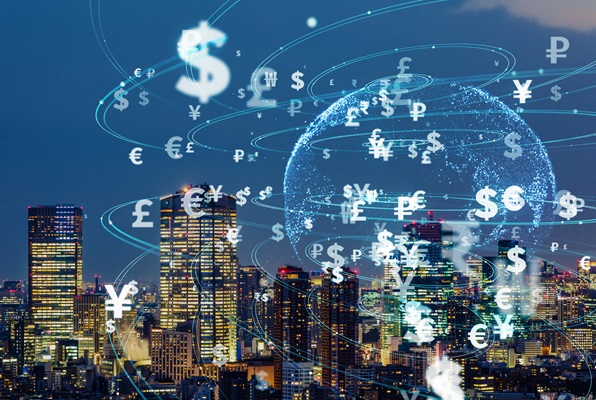

An uncomfortable reality is becoming increasingly difficult to ignore. The global economy is in a period of “more frequent and violent shocks,” as Nobel laureate Michael Spence puts it. Instead of facing isolated and temporary disruptions, we are confronting a structural shift toward unsettling volatility, deepening fragmentation, and a wider dispersion of outcomes for countries, companies, and households. The old world is gone, and virtually everyone risks losing out in the new one. The question is by how much and what to do about it.
The Iran war, which spread across the Middle East, exemplifies this new reality. Even though the local, regional, and global damage has been going from bad to worse, introducing a durable circuit breaker has proved difficult. As such, the economic damage is evolving and deepening, with early effects on energy prices and interest rates fueling broader inflation and raising the risk of lower growth and financial instability.
This phenomenon is not new. A circuit breaker has proven equally elusive for the Ukraine war, and we have seen the same dynamics in narrower economic and finance spheres, from the weaponization of tariffs and investment sanctions to supply-chain fragmentation. It is tempting to treat each of these as standalone episodes—and many policymakers and investors are doing just that. This is a mistake.
Rather than constituting isolated events, the current instability is the predictable result of the loss of three previously dominant narratives with no unifying ones to replace them. The first is globalization. Gone are the days when ever-deeper economic integration was seen to act as a stabilizing force. The promise that interdependency would reduce the risk of conflict has been replaced by the weaponization of trade and finance, and the exploitation of chokepoints. Because the world failed to address globalization’s adverse distributional effects early on, the essential trifecta of respected global standards, effective multilateral institutions, and the rule of law is now being dismantled in favor of unilateralism, fragmentation, and impunity.
The second narrative anchor is the Washington Consensus. The belief that liberalization, deregulation, fiscal responsibility, and central-bank independence hold the key to prosperity at the country level has been dying a slow death in recent years. Ironically, the United States has led the way in upending this approach domestically, despite having spent three decades championing it for the rest of the world.
Then there is AI, which is poised to change the assumptions that have long underpinned business models and labor markets. While AI has immense transformative potential as a general-purpose technology—not least for productivity—new frameworks are badly needed to guide adoption. Otherwise, the disruptions risk outpacing societies’ ability to adapt.
The loss of these three anchors has given rise to a culture of distrust, zero-sum thinking, and short-sighted decision-making, which destroys the old without ready replacements on hand. As suspicion displaces engagement, the quest for expensive self-reliance displaces pooled insurance, and durable coordination becomes impossible. The global orchestra is playing from different sheet music, with no conductor in sight. The result is as disruptive as it is cacophonous.
Disorderly fragmentation will lead to lower growth, higher inflation, and greater inequality. But all is not lost: the trajectory of this new world can still be shifted in a more positive direction, if we have the courage and wisdom to abandon outdated mindsets and build a new five-part consensus.
First, it is time to move past the “globalization versus protectionism” binary. Governments should instead consider what former British Prime Minister Gordon Brown calls “managed globalization lite”—a pragmatic approach to friendshoring and de-risking that secures critical supply chains and chokepoints, without descending into counter-productive trade wars and other beggar-thy-neighbor policies.
Second, sustainable and inclusive growth must return to the top of national agendas. This does not mean throwing money at the demand side of the economy through yet more fiscal and monetary stimulus. Nor does it mean stealing growth from other economies—or from the future. Rather, it means focusing on productivity gains, infrastructure improvements, and secular transitions in energy and beyond.
Third, the most vulnerable households need support. As it stands, too many countries’ safety nets lack effectiveness or inadvertently push vulnerable groups to become wards of the state—undermining labor-force participation in the process—rather than providing the protections and opportunities necessary to deliver security and empowerment.
Fourth, the trajectory of AI cannot be left to the invisible hand of the market. Policies governing this transformative innovation must tilt the scales toward labor enhancement over displacement (augmentation over automation). This means using tax systems to adjust incentives, and pursuing early-win investments in social sectors like health and education, where AI can bridge service-delivery gaps. It also means providing guidance to companies that encourage pro-job and pro-productivity restructuring and reinvention, not just immediate cost savings through labor displacement. And it means retooling public-private partnerships to ensure that the workforce remains agile and adequately skilled, and offering transition support for the most vulnerable segments of the population.
Finally, to safeguard international institutions, they must be reformed. The United Nations, the International Monetary Fund, and the World Bank remain constrained by outdated structures and governance systems. Without a more representative and responsive multilateral system, outcomes that were once unthinkable will become increasingly likely, jeopardizing our future well-being.
The problems we face today will not fix themselves. Without vision and concerted effort, our human, financial, and institutional resilience will continue to erode, leaving us increasingly vulnerable to frequent and violent shocks. We must stop yearning for the world of yesterday, and instead adapt to the world of today and create the anchors and momentum we will need to thrive in the world of tomorrow.