.png)


Krishnadevan is Editorial Director at BasisPoint Insight. He has worked in the equity markets, and been a journalist at ET, AFX News, Reuters TV and Cogencis.
March 23, 2026 at 12:26 PM IST
Owning nearly 85% of a bank while behaving like a dispersed minority reflects an ownership structure that the market continues to misprice.
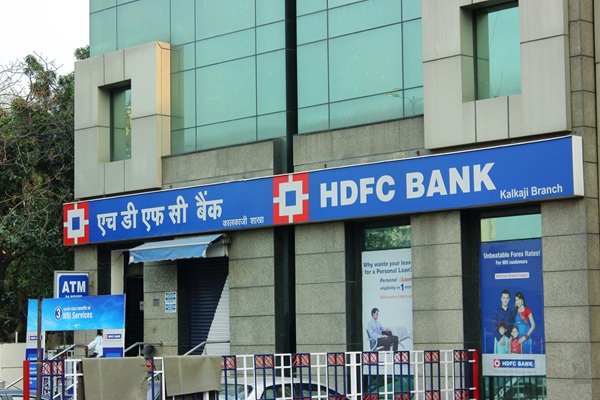
A resignation that hinted at ethical concerns erased roughly $7 billion in market value in a single session, only for the concerns to be withdrawn. That loss was borne by institutional investors who own the bank but did not prevent the episode. Foreign investors hold about 47.7%, domestic mutual funds 26.7%, insurance companies 7.2% and pension funds another 2.5% in a structure without a promoter. Control, in this case, is widely held but weakly exercised.
The rebound in buying interest points to confidence in the franchise, not in the governance that produced the shock.
The episode is being read as a boardroom misalignment. For investors, the more relevant issue is whether concentrated institutional ownership can act in coordination at all. An 85% holding without visible engagement does not produce oversight.
SEBI’s Stewardship Code of 2019 requires disclosure and voting. In practice, this has produced reporting, not intervention.
The constraint is familiar. Investors who push too hard risk losing access to management, which shapes information flow and earnings expectations. That trade-off favours accommodation over confrontation.
The pattern is visible in HDFC Bank’s latest ESOP scheme, authorising up to 95 million stock options, approved at the 2024 AGM with broad institutional support. Such approvals are routine, not because dilution is immaterial, but because few investors are willing to challenge compensation structures alone. When dilution passes without contest, it signals dependence rather than endorsement.
The forthcoming appointment of a chairman, after interim chairman Keki Mistry’s tenure ends in June, will test whether institutional investors act as owners or remain passive.
For the market, it is a near-term signal of whether ownership can translate into governance.
HDFC Bank continues to trade at a premium to private sector peers, supported by franchise strength and management depth. That premium assumes that institutional ownership provides discipline even without a promoter. The recent episode introduces doubt about whether that discipline holds when coordination is required.
Ultimately, a governance structure that leans more on the regulator than on investors shifts fiduciary responsibility from the owners to the supervisor. The market has yet to clearly price the difference between a bank governed by its shareholders and one governed primarily by its regulator.
More From BasisPoint