.png)

Rajesh Mahapatra, ex-Editor of PTI, has deep experience in political and economic journalism, shaping media coverage of key events.
March 25, 2026 at 6:36 AM IST
US President Donald Trump said on Monday that Iran was interested in peace talks, adding that officials from both sides had held “very good and productive conversations” to end hostilities in the Middle East.
Iran denied the claim immediately, calling it “fake news” and a manoeuvre either to steady markets or to buy time ahead of further escalation. Nonetheless, markets around the world cheered the development, hoping that recent efforts by countries like Egypt, Turkey, and Pakistan to broker peace might pay off.
Trump’s promise to pause hostilities for the next five days was a sharp reversal of a threat issued just a day earlier to bomb Iranian energy and water infrastructure if the Strait of Hormuz was not kept open. For diplomats, geopolitical analysts, and citizens alike, Trump’s unpredictability raises a more structural question: Is there a method to this approach, or is the leading global power no longer behaving as a consistently rational actor?
Increasingly, it is becoming apparent to many observers that Trump has little respect for traditional democratic guardrails, such as institutional checks. On the one hand, he prefers to disregard deliberative institutions such as Congress and even his own cabinet, while on the other, some of the most important pronouncements are almost casually issued on his Truth Social handle or in an impromptu press briefing.
In other words, Trump actively pursues a highly personalised form of politics, resembling a centralised style of authority. Dealing with Trump, as many heads of government have realised, requires them to engage in an instinctual, amoral, and idiosyncratic power play. Trumpian politics, in fact, seem to especially thrive when inconsistencies abound and there is no clarity.
Yet, viewing this solely as a personal idiosyncrasy risks missing a larger shift. Trump’s actions may also reflect how a post-globalisation world is beginning to take shape.
Political Pricing
In that world, market efficiency has been giving way to extraction through political rent, a form of modern feudalism in which trade and capital flows are shaped less by competition and more by coercive power. Prices and costs are increasingly shaped by tariffs, access restrictions, and geopolitical alignment rather than market discovery, reflecting a broader “might-is-right” dynamic. The global economy, in other words, is being reconstituted through political realignment rather than the imperatives of the market.
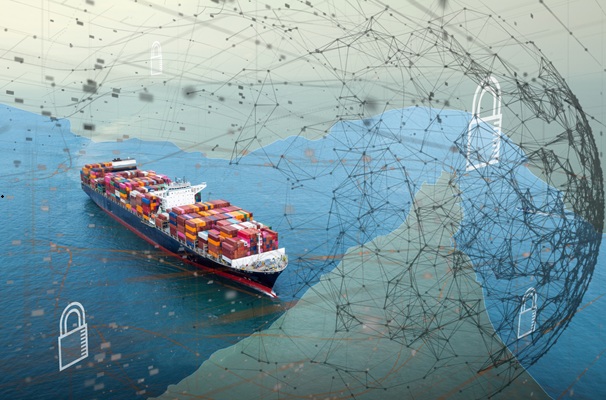
The US-Israel war on Iran, therefore, cannot be reduced to a classical colonial-style nineteenth-century war over resources, nor to an ideologically driven quest to achieve a ‘greater Israel’. Rather, the Iranian imbroglio is indicative of a new geography that seems to be taking shape around the idea of political rent. Control over the Strait of Hormuz, whether explicit or incidental, is increasingly emerging as the central strategic objective.
Even if peace is restored in the weeks to come, it is highly unlikely that the passageway will return to its status as a global common. Instead, we may witness a new geopolitical arrangement in which navigation through Hormuz will be dependent on payments to one or more geopolitical gatekeepers.
More From BasisPoint