.png)


Aadya Tyagi is a student with keen interests in history and economics.
August 15, 2026 at 3:00 AM IST
Bombay's emergence as an international trading hub owed much to opium in the eighteenth century. The East India Company exported the drug, grown in northern India, to China from the late eighteenth century onwards, and between 1830 and 1860, opium sales increased more than tenfold. Cotton followed: the Deccan, Gujarat, and the Central Provinces shipped raw fibre through Bombay primarily to East Asia, though without yet dominating the port's commerce.
The transformation came with the American Civil War. Before 1861, Lancashire's textile mills relied almost entirely on supplies from the American South. When the Union blockade cut off Confederate ports in 1861, British manufacturers had nowhere else to turn. Indian cotton suddenly possessed strategic value. Bombay became the principal outlet for western India's exports, and the consequences unfolded rapidly.
Traders from across the subcontinent converged on the city to claim a share of what merchants called 'white gold'. Brokers competed obsessively for the latest price intelligence from Liverpool. Europeans conducted business from offices; Indian merchants gathered beneath trees in public spaces, where colonial authorities dismissed them as nuisances. The gap between the two worlds narrowed only after European firms began squeezing Indian merchants out of profitable segments. Some, notably the Shetias, adapted by entering textile manufacturing, but most wealthy Indians needed somewhere to deploy their accumulated capital. As Sir Richard Temple observed, the produce of India's great cotton fields funnelled through Bombay. Cotton exports doubled between 1860 and 1864, from 566,000 bales to 1.11 million bales (Dharohar, an initiative by SEBI). At that moment, Bombay accounted for ₹520 million of India's ₹850 million in bullion imports.
Capital Sinks
When Henry Bartle Frere arrived as Governor in 1862, his first act was demolishing the Fort walls. The move was architecturally consequential and politically shrewd. It knitted the European commercial core to the rapidly growing Indian merchant community whilst releasing land for development. More importantly, it solved an immediate problem. Indian merchants possessed capital but faced constraints within the cotton trade. They needed an outlet, and reclamation companies provided it.
What followed resembled less a market than a fever. Land reclamation companies captured up to 95% of paid-up capital in all Bombay registrations between 1861 and 1865, according to historian Gyan Prakash. Many were joint-stock ventures affiliated with banks, allowing speculative money to flow effortlessly into projects. Investors expected share prices to rise indefinitely and quoted extravagant premiums before companies had anything tangible to show. To enter the game, speculators took high-interest loans; banks financed these ventures with reckless abandon. The banking sector itself transformed. Where a handful of wealthy shroffs had once dominated, thirty-one banks and sixteen financial associations emerged within a single decade, up from just ten banks in 1854.
These companies created roughly four square miles of new land. The reclamation projects channeled cotton wealth into Bombay's physical expansion and the creation of south Mumbai's distinctive Victorian Gothic skyline. The city earned the soubriquet Urbs Prima in India. Frere, anticipating the Back Bay scheme that would not materialise for decades, expressed confidence that "it would be done very rapidly and surely, and without the government advancing a rupee".
Market Reckoning
The American Civil War ended in 1865, and cotton gradually flowed again from the American South. British manufacturers reverted to their traditional suppliers. Indian cotton prices collapsed. In July 1865, the market shed ₹458 million in a single session—Bombay's 'Black Day'. Investors were left clutching worthless paper. Joint-stock companies folded. Land reclamation firms entered liquidation. Even the official Presidency Bank, the Bank of Bombay itself, eventually failed as a consequence.
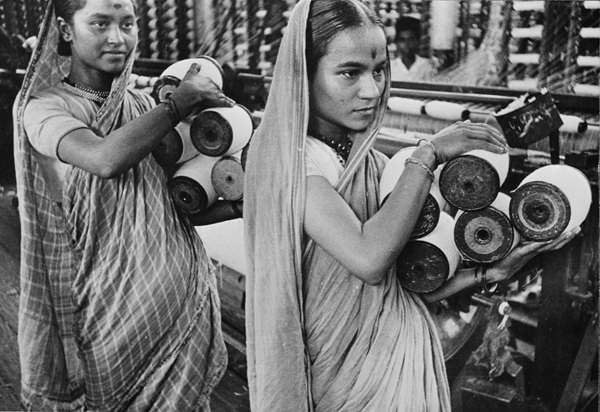
Yet the boom proved essential despite its calamitous conclusion. The infrastructure built during these years—warehouses, docks, railways—remained. The international trade networks embedded Bombay in global commerce. The Shetias had already begun establishing textile mills in Parel and Lalbaug, initiating the transition that would define the city's next chapter. When the Suez Canal opened in 1869, reducing the distance between India and Europe, Bombay possessed the capacity to capitalise on it. The city rebuilt itself around textiles, grain, oilseed, and imports.
Less visibly, the crash exposed a financial system built on speculation and tradition. The surviving institutions—banks, exchanges, commercial houses—became increasingly central to mediating capital flows. Bombay's financial infrastructure matured through catastrophe into something more formal and regulated.
The Times of India captured it neatly: "To the great stir and enthusiasm of those days may be traced the beginning of what may be called modern Bombay".
More From BasisPoint