.png)

Comprehensive Customs Reforms Are Urgent for India’s Trade Competitiveness
India’s high tariffs and cumbersome customs procedures are eroding its trade competitiveness. A comprehensive overhaul of tariffs, systems, and infrastructure is now essential.
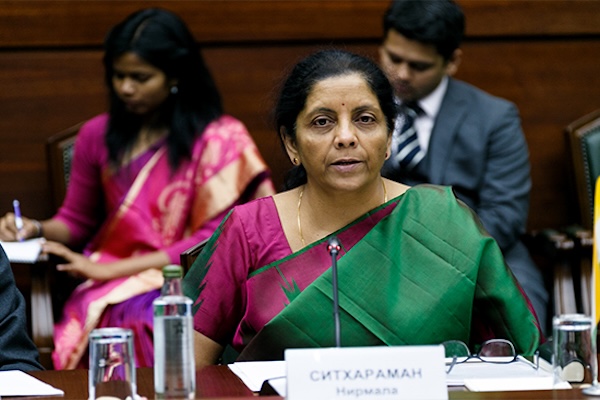

Sharmila Kantha is an industrial policy specialist and author. Formerly a consultant at the CII*, she has worked extensively on economic policy and India’s international engagement.
December 11, 2025 at 10:01 AM IST
In a recent speech, Finance Minister Nirmala Sitharaman highlighted that simplification of customs procedures would be the next major reform on her to-do list. A ‘comprehensive review’ of customs duties was earlier announced in the July 2024 Budget speech and taken forward in the Budget presented on February 1, 2025. As many as seven import duty rates were removed, leaving just eight rates and a single cess or surcharge per item.
Customs procedures have created significant challenges for exporters and importers, despite the introduction of various measures. At the operational level, these measures often fail to translate into efficient, timely, and effective clearances and approvals. A recent social media post by a foreign company announcing its withdrawal from India elicited hundreds of negative comments. It highlighted ongoing regulatory compliance issues, administrative delays, and corruption in trading across borders.
In addition, India has the highest trade-weighted tariffs among G20 nations. It has been famously labelled ‘tariff king’ by the US, which imposed some of its maximum ‘reciprocal’ tariffs on Indian goods. Between 2017 and 2019, India raised tariffs on over 2,300 products, resulting in a surge in average tariffs. Quality Control Orders were expanded to nearly 800 products, including intermediate goods, before concerns about their adverse impact on manufacturing and exports led to dialling them down. Additional procedural complexities arise from India’s free trade agreements, which set different tariffs and regulations for partner countries.
Over the years, the Central Board of Indirect Taxes and Customs and other agencies have prioritised trade facilitation through various measures such as ‘Turant Customs’ for faceless, contactless, and paperless customs procedures, direct port delivery and entry, setting up of the Advance Ruling Authority, 24x7 customs clearance at specific points, the Authorised Economic Operator (AEO) programme, and the risk management system. The National Committee on Trade Facilitation, established under the World Trade Organization’s Trade Facilitation Agreement, completed the first-stage implementation of its norms.
Leveraging technology, the Indian Customs Electronic Data Interchange Gateway (ICEGATE) was launched to provide a single interface for trading entities and the customs department and to accelerate clearances. ICEGATE 2.0 is now in operation. SWIFT, the Single Window Interface for Facilitating Trade, provides a single point of access for all import-export regulatory requirements. E-Sanchit enables the submission of all documents for consignment clearance, while the electronic cash ledger serves as a running account for traders to pay duties and fees.
However, trade facilitation requires a mindset of constant improvement. The simplification of customs tariffs and procedures in India remains immensely challenging, and a wide range of issues must be addressed holistically to achieve comprehensive, effective, and lasting reform. Dimensions of such a policy would include the tariff rate structure, regulatory and system issues, technology upgradation, strengthening customs infrastructure, and expanding human resources.
Tariff rates in India remain high, discouraging its presence in global value chains. Climbing down from the rates introduced since 2017 will require a close examination of domestic manufacturing capabilities and costs, diversification of import sources, and the potential for value addition and exports. Two general principles to guide the customs duty structure would be, first, to align tariffs with comparator countries, keeping them slightly higher for finished goods and lower for inputs and components, while reducing rates to nil for raw materials, and second, to avoid inverted duty structures where final goods have lower tariffs than inputs.
Under regulatory and system reforms, the primary trade facilitation measures would be a stronger risk management system (RMS) and an expanded AEO programme. Deploying technology for risk management would help reduce manual inspections and align examinations with the potential risks of misuse. It is essential to enhance transparency in decisions and ensure consistent practices across ports to build confidence among importers. The AEO programme, which provides benefits and cuts down clearance time for recognised, reliable traders, currently covers about 6,000 traders. Streamlining approvals, better benefits, recognition by more government agencies, and enhanced cross-border cooperation could encourage more traders to voluntarily opt for the programme.
Customs and port infrastructure must also be upgraded to support a modern, efficient trading system. The National Time Release Study of key entry points 2025 shows improvements in average release time, but it stresses delays in duty payment, query resolution, interventions by partner government agencies, and post-clearance logistics. At seaports, regulatory clearances and post-Let Export Order logistics could take up to 190 hours. A high level of coordination and technology would be required across all agencies to reduce the time involved.
The customs administration can be significantly improved through further digitalisation of trade procedures, standardisation of regulations across entry points, and more and better-trained staff. Many other areas, such as sharing information with traders, onboarding additional partner government agencies, improving the faceless assessment system, and streamlining grievance and dispute resolution procedures, would also need to be addressed to make the cross-border movement of Indian goods truly seamless.
Trade facilitation is a key component of India’s import-export competitiveness in the rapidly evolving global trading regime. The finance minister’s announcement is timely and needs to be taken forward urgently as part of India’s overall economic growth strategy.
Also Read: Why Faceless Customs Is Failing India’s Trade System
Also Read: USTR Shares One-Sided Narrative on Trade Bargains With India
More From BasisPoint