.png)


Sharmila Chavaly, a former civil servant who held key roles in the railways and finance ministries, specialises in infrastructure, project finance, and PPPs.
May 15, 2026 at 7:52 AM IST
India has just announced a ₹375 billion scheme to gasify 100 million tonnes of coal annually by 2030, replacing imports of LNG, urea, methanol, and ammonia. The stated goal: import substitution, cutting an annual bill of ₹2.77 trillion. But how well does the strategy survive scrutiny? Seven questions separate the logic from the blind spots.
What is coal gasification, and why India now?
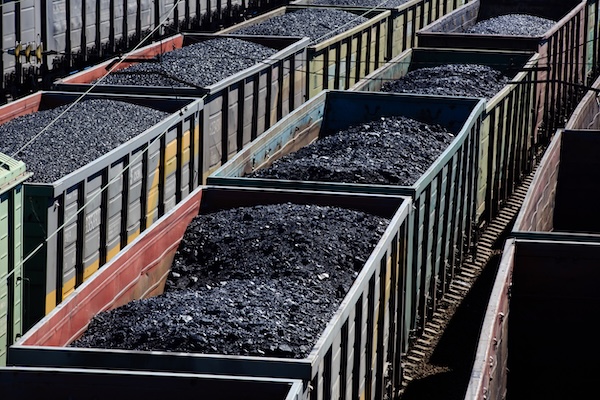
The process converts solid coal into syngas (carbon monoxide and hydrogen) using oxygen and steam. Syngas can be refined into synthetic natural gas, methanol, ammonia, or urea - products that India currently imports.
India sits on nearly 400 billion tonnes of coal reserves, yet imports over 50% of its natural gas, nearly all its methanol, and roughly 20% of its urea. The challenge: Indian coal has 30–45% ash content, making gasification technically difficult and commercially unproven at scale. The ₹375 billion scheme is a bet that this hurdle can be overcome.
But here is the problem.
The announcements are coming thick and fast – an ₹85 billion scheme in January 2024, a ministerial speech in March 2026 flagging underground coal gasification (UCG), an even more speculative technology with a poor global track record.
And now this ₹375 billion push in May 2026.
The government’s implementation record hardly inspires confidence: of the ₹3 billion budgeted for coal gasification in 2025-26, almost the entire amount remained unspent until January 2026. Adding to the confusion, an expert environment panel in March 2026 declined a coal ministry proposal seeking relaxation from minimum mining depth norms for UCG pilots.
Yet there is very little in the way of a cohesive picture or forward guidance in the face of what increasingly looks like a major crisis.
- What is the sequencing?
- Which projects come first?
- How does surface gasification relate to UCG?
- Where does compressed bio-gas (CBG) fit?
We do not have an integrated roadmap, nor clarity on how the various pieces, i.e., subsidies, coal linkages, technology development, water allocation, environmental clearances, fit together in a single, public-facing document that answers a simple question: By what date will what be built, at what cost, using what technology, with what water, and producing what volume of which product?
Absent that, we have a series of ambitious but disconnected announcements with some unanswered questions.
1. Do the numbers stack up when we consider the costs, the import bill, and the downside risks?
On import substitution, yes. Every tonne of syngas reduces forex outflows. The government covers up to 20% of plant costs, unlocking ₹2.5–3.0 trillion in investment and about 50,000 jobs. But coal gasification is capital-intensive and prone to cost overruns. When global gas prices fall, syngas becomes uncompetitive without a subsidy, and taxpayers bear that risk. Also, high-ash coal increases plant wear, which adds to O&M costs. The economics work only if global gas prices stay high for 15–20 years.
2. Were any realistic alternatives available to the government, and why was it passed over?
Two alternatives existed: Compressed Bio-Gas (CBG) from agricultural waste, and green hydrogen. India’s CBG potential is 62 million tonnes annually, enough to replace large chunks of imported gas. Green hydrogen is zero-carbon but currently more expensive (₹400–500/kg vs syngas at ₹150–200/kg). The government appears to have chosen coal gasification because it delivers import substitution within 3–5 years using existing coal infrastructure and PSU balance sheets. CBG requires slow, fragmented feedstock from millions of farmers. Green hydrogen (which, anyway, appears suitable only for niche in-house use, like in manufacturing plants) will not reduce the import bill until the late 2030s, if that. Coal gasification appears to have won on speed and administrative convenience.
3. Does this policy contradict or complement the recent push for the rapid rollout of gas pipelines?
It complements the gas pipeline push. India’s 24,000 km gas grid is underutilised because LNG imports are expensive and geopolitically uncertain. Coal gasification produces synthetic natural gas that can be injected directly into these pipelines, improving load factors. GAIL is already part of a coal-to-SNG joint venture. The contradiction is not with pipelines but with renewables, as every rupee spent on coal gasification is a rupee not spent on greening the same pipelines with CBG.
4. Is this sustainable, and in what sense: coal reserves, climate, or water?
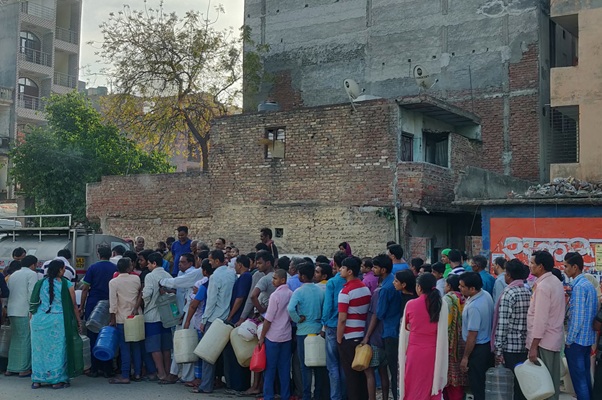
On coal reserves, yes: India has decades of supply. On climate, no: gasification emits about 2.5 tonnes of CO₂ per tonne of coal. Without carbon capture (which is unproven in India), this is not low-carbon. But the most immediate and under-discussed constraint is water. Gasification consumes 4–6 kilolitres per tonne of coal. A single 5-million-tonne plant uses as much water annually as a town of 50,000 people. The proposed locations (Jharkhand, Odisha, Chhattisgarh, West Bengal) are already water-stressed, with groundwater depletion and rising farmer protests over industrial diversion. The policy is silent on water allocation, and without upfront zero-liquid-discharge mandates, these plants face litigation or incur expensive treated-water costs. Water is the hidden dealbreaker. Verdict: sustainable on coal reserves, unsustainable on climate, dangerously uncertain on water.
5. Can India’s high-ash coal actually be gasified at a commercial scale, or is this an engineering gamble?
An engineering gamble, not a certainty. Indian coal has 30–45% ash, compared with 10–15% globally. High ash means faster reactor wear, more slag, and higher oxygen consumption. Earlier pilots, including the one at Dankuni in West Bengal, struggled with frequent shutdowns. BHEL and Coal India are developing an indigenous gasifier, but no commercial-scale high-ash plant exists in India today.
The ₹375 billion scheme is a bold bet, not a safe one, and the past execution record raises legitimate questions about whether the money will actually be spent.
6. On balance, is this a wise move, and for whom?
Wise for India’s energy security in the next 10–15 years: it reduces import dependence for urea (farmers), methanol (chemicals), and gas (industry), shielding the economy from global volatility. Wise for coal-bearing states (jobs, investment) and PSUs (new revenue). Unwise for India’s climate commitments and future taxpayers who may inherit stranded assets if carbon border taxes expand. Unwise for water-stressed communities competing with industry for groundwater. Unwise if it displaces investment in CBG. What can be labelled wise depends on who you are and the time horizon you are looking at.
7. What cleaner alternatives could ₹375 billion have bought, and why were they rejected?
|
Alternative |
What ₹375 billion could have bought |
Why Rejected |
|
Battery Storage |
12-15 GW of grid storage |
Doesn’t produce urea/methanol; benefits electricity only |
|
Compressed Bio-Gas (CBG) |
5000-7500 plants plus pipeline injection |
Requires slow, fragmented farm feedstock, lacks powerful champions |
|
Green Hydrogen (niche) |
Viability funding for industrial clusters |
Expensive; not a mass solution for urea/methanol |
Coal gasification delivers visible import substitution within 3–5 years. The alternatives are cleaner but slower, harder to administer, and lack political weight. This is a choice of speed and convenience over long-term climate and water logic.
Is this a transition tool or a long-term solution?
The prudent path would be to use this as a temporary bridge - producing syngas for urea, methanol, and industrial feedstocks for the next 15–20 years- while scaling CBG from agricultural waste with genuine urgency. CBG is a distributed, low-water alternative that works with India’s rural economy, not against it.
If the government treats coal gasification as a long-term solution rather than a transitional tool, history will judge it a costly carbon mistake.
So the final verdict is that it is economically logical, geopolitically savvy, but compromised in terms of sustainability - a workable hedge for today, but not a plan for 2050.
More From BasisPoint