.png)

Central Banking 101: The Rise and Fall of Monetary Policy Regimes
From the collapse of Bretton Woods to the rise and fall of monetary targeting, central banks kept reinventing policy anchors.

Michael Patra is an economist, a career central banker, and a former RBI Deputy Governor who led monetary policy and helped shape India’s inflation targeting framework.
June 15, 2026 at 4:12 AM IST
Since their advent, central banks have been associated with stability: financial stability, exchange rate stability, monetary stability, price stability, regime stability. Above all, it is regime instability that gets their hackles up; regime change makes them dig in their heels, drawing forth their stiffest resistance.
What is a regime, my students asked.
Is it a set of rules that usually describes an authoritarian government, like a dictator or a monarch? I was disarmed by this holding up of the proverbial mirror to the practitioner. The terms associated with our profession suddenly seemed feeble attempts to bulk up like a sumo wrestler and project potency in dealing with the dilemmas, trilemmas, trade-offs and impossibilities that come with the job.
Some Nuts and Bolts
A regime, I told them, is a framework, sometimes backed by some theory and sometimes not, which maps the central bank’s instruments, like the policy interest rate, to its goals, like price stability. The regime becomes the environment within which banks, financial institutions, markets and corporates operate, manage various types of risks, follow benchmarks, and so on. Regimes take a long time to craft, often with painful meticulousness, before they crystallise. Central banks have to deal with long and variable lags in the time taken for their actions to materialise in the form of their goals.
Meanwhile, they have to remain steadfast, forward-looking and accountable. Hence, central banks are very reluctant to give up a regime once it comes into being. It is only a tectonic shift in their environment or in their philosophy that can compel them to take a step into twilight towards a new regime. Typically, they are prompted to make the leap by the fear of losing control over instruments or operating procedures.
The role of monetary policy is to stabilise the economy around the path of its full capacity expansion, often called its potential or trend. If the economy slows down below its potential, monetary policy has to boost it by cutting interest rates, making finance cheaper and encouraging economic activity to pick up. When the economy is expanding beyond its potential, it can overheat. Monetary policy must curb exuberance by raising interest rates and making finance costlier. Deflation and inflation are only symptoms of departures from the potential on the down side and on the up side, respectively. Antithetical to those who believe that inflation targeting is about ‘nutting’ about inflation, it is actually about stabilising growth.
A regime, in the monetary policy sense of the term, is distinguished from another by its nominal anchor, a variable that can be observed by the public and accepted as reflecting the central bank’s actions in pursuit of its objectives. Monetary policy regimes differ essentially in the choice of nominal anchor. History records the use of the exchange rate, credit and monetary aggregates, and more recently, inflation as nominal anchors. Another anchor that has been talked about but never adopted is nominal GDP.
The Early Regimes: Domestic Monetary Policy Did Not Matter
Predating all these nominal anchors were precious commodities like gold and silver. In fact, the period from 1875 to 1914 was that of the classical gold standard, under which gold alone was assured of unrestricted coinage, and it was allowed to be freely exported and imported. There was two-way convertibility between gold and national currencies at a stable ratio. The gold standard provided a 40-year period of unprecedented stability in exchange rates, which served to promote international trade. For instance, the U.S. dollar remained in a narrow range of $4.84–4.90 against the British pound sterling. During the period between the two World Wars, between 1915 and 1944, however, trade in gold broke down, and countries started to “cheat” by allowing their exchange rates to fluctuate out of alignment with the gold pegs.
Exchange Rate as the Nominal Anchor
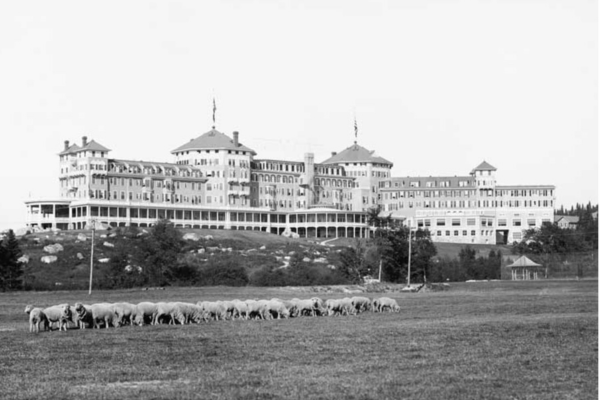
Eventually, some semblance of order was restored from 1944, as part of the global reconstruction following World War II. Forty-four countries, including India, signed an agreement at the Mount Washington Hotel in Bretton Woods, in the town of Carroll, New Hampshire, US, to adopt a system of fixed exchange rates pegged to the US dollar, or rather its value in gold, which was 35 dollars per troy ounce of gold. All other countries pegged their currency values to the US dollar, the sun around which all the other currencies revolved like planets. The US guaranteed that foreign central banks could convert their dollar holdings into gold at the fixed price of $35 per ounce, providing trust in the reserve currency.
The Bretton Woods system became the first example of a fully negotiated international order intended to govern monetary relations among independent countries. The IMF was the watchdog of the system. It allowed movements of +/- 1 per cent around the parity. Countries were responsible for maintaining their exchange rate parities by buying or selling U.S. dollars in foreign exchange markets. Implicitly, US inflation and growth would determine inflation and growth in all other countries. If, for some reason, however, a country performed much better than the US in terms of higher growth and inflation, this would cause its interest rates to rise higher than US interest rates; hence, capital could flow out of the US and into the higher-interest-rate country. As a consequence, capital controls were an important part of the system. Countries could, however, negotiate with the IMF and revise their parities in a one-step manner called revaluations or devaluations. The IMF also provided temporary balance of payments support in case a country experienced persistent pressures on its currency to devalue.
Thus, under this monetary policy regime, the exchange rate became the nominal anchor. The task for monetary policy in all countries was to follow US monetary policy and maintain parity with the US dollar rather than be sensitive and responsive to domestic macroeconomic conditions. It sought to achieve the stability and global orientation of its predecessor regime, the gold standard, but domestically oriented monetary policy did not matter.
The masterclass continues in Part 4, which examines how inflation targeting emerged as the dominant monetary policy regime globally and how India eventually moved towards a flexible inflation targeting framework after the upheaval of 2013.
Masterclass with Michael Patra: Previous Sessions
Part 1:
Central Banking 101: Origins, Ideas and Institutions
Michael Patra begins the masterclass by tracing how central banks evolved from fragile monetary experiments into institutions entrusted with preserving trust, stability and confidence.
Part 2:
Central Banking 101: RBI and the Safeguarding of Confidence
The series then turns to the RBI’s evolution, its expanding institutional role, and the delicate balance between autonomy, growth and price stability.
More From BasisPoint