.png)


Chandrashekhar is an economist, journalist and policy commentator renowned for his expertise in agriculture, commodity markets and economic policy.
March 24, 2026 at 3:24 AM IST
Precious metals enjoyed a stellar run in 2025, with gold reaching a record high price of $4,550 a troy ounce at the end of the year, reflecting a meteoric 65 % price gain during the year, a spectacular performance by any reckoning.
Silver outperformed with price rising as much as 148%, the strongest annual increase since 1979. Not to be left behind, platinum rose 127%, the strongest rise since trading started in 1987, to reach $2490/oz, while palladium increased 77%, the strongest annual gain in 15 years, to trade at a 3-year high of just under $2000/oz.
This extraordinary performance of the precious metals complex emboldened market participants. Since early this year, gold bulls have been betting that the yellow metal will set a new record high of $ 6,000 per troy ounce in 2026. No doubt, the metal reached a high of $ 5,400/oz by the last week of February, further raising expectations of a continued bull run.
At current levels, however, gold appears to be carrying a significant ‘war risk premium’ estimated at $700–1,000 per troy ounce. That premium, rather than underlying demand, has been the dominant driver of prices. As the market begins to reassess this premium, the recent correction needs to be seen less as a surprise and more as an early sign of repricing.
Multiple reasons were advanced for the rally, including gold’s safe haven status in the midst of geopolitical tensions, geo-economic uncertainties, a relatively weak US dollar, expectations of rate cuts by the US Federal Reserve and continued central bank purchases. The US military intervention in Venezuela provided tailwinds to these expectations.
The Israel-US military action against Iran at the end of February added further momentum. The war is now into its fourth week, yet precious metals prices are falling rather than rising, suggesting that geopolitical stress is no longer the dominant price driver.
Gold has lost as much as 15% of its value, equivalent to $800/oz, in the first 20 days of this month. On March 20, the precious metal was trading at around $ 4,670/oz, down 7% from a week earlier and 8.7% from a month ago.
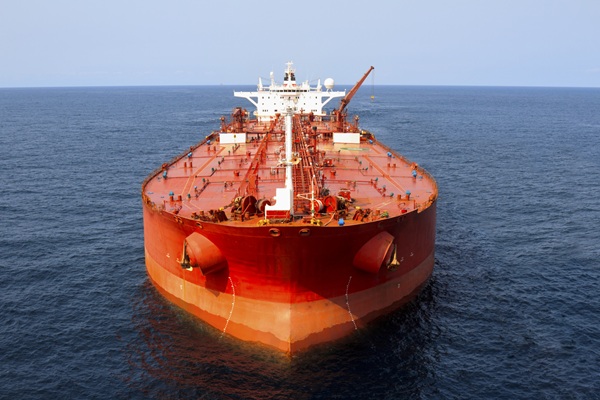
With the virtual closure of the Strait of Hormuz, energy commodity supplies are highly disrupted, leading to a sharp spike in energy prices. Brent crude has already breached $110 a barrel, rising from around $65 a barrel at the start of the year.
Macro shift
The result is a firmer dollar, rising bond yields, elevated oil prices and visible outflows from exchange-traded funds, all of which are weighing on gold prices.
So long as the war lasts and inflation lingers, interest rates are unlikely to fall. If anything, the bias to rates is upward, reinforcing the headwinds for gold.
Equally important, the demand profile is weak. Investment demand, not physical demand, has been driving the market. Physical demand remains subdued, and even central bank purchases have softened, raising questions about the sustainability of elevated prices.
The Middle East, particularly Dubai, is widely recognised as the epicentre of the gold trade, and this region is facing the ravages of war. Disruptions to trade flows and consumption in this hub could further dampen physical demand at a time when prices are already under pressure.
Not just gold; other precious metal prices have followed suit. Silver has fallen to around $66/oz while platinum has slipped to $1875/oz, a six-week low. Palladium too has fallen to $1415/oz, a four-month low. These are metals with significant industrial demand, and their decline reflects growing concerns over global growth prospects in 2026 amid war-related disruptions.
No one knows when the war will end or what the outcome will be. A great deal of uncertainty lies ahead. However, the key risk for gold lies in the potential unwinding of the embedded war premium, especially if macro conditions continue to tighten.
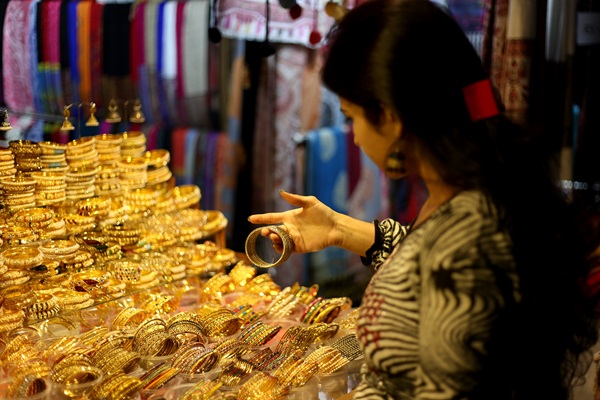
India is a large importer and consumer of gold. We spent $58 billion in 2024 on gold imports. India is a price taker rather than a price setter, with prices determined in London and New York and the domestic market broadly reflecting global dynamics.
As the gap between narrative-driven positioning and underlying demand becomes more visible, the scope for further correction cannot be ruled out.
Note: This article seeks to highlight the inherent risks in gold trading and does not intend to provide any price guidance. The current phase calls for a more calibrated reading of both macro signals and positioning dynamics, rather than extrapolating from the recent rally.
More From BasisPoint