.png)

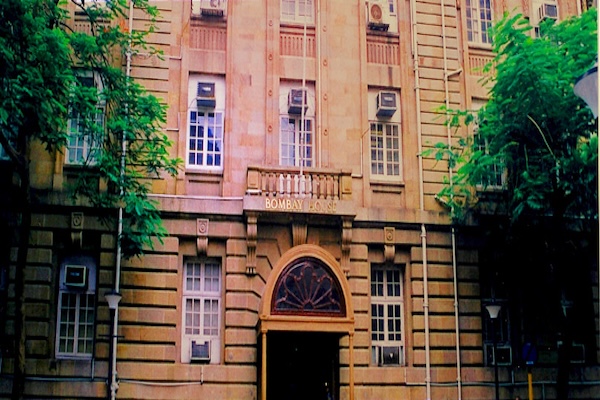
The Independent Director is a Bombay House veteran who spent two decades in senior executive roles across several Tata Group companies and their Boards. Now he mentors other companies.
August 12, 2026 at 1:35 PM IST
About 18 months after Cyrus Mistry was removed as chairman of Tata Sons, I met Ratan Tata for coffee at his home. He spoke with a vulnerability I had seldom seen. He said he felt as though he were standing before a firing squad.
The preceding months had brought public accusations, rebuttals and litigation. What stayed with me was not anger, but hurt. He appeared haunted by the possibility that a legacy built over decades had been blemished late in his life. It was an unusual admission from a man who rarely exposed private emotion, particularly to someone he mainly had a professional relationship with.
The crisis had begun on October 24, 2016, when the Tata Sons board removed Mistry and brought Ratan Tata back as interim chairman. The legal battle would eventually reach the Supreme Court, but the deeper issue was never merely whether the board had the legal power to remove a chairman. It was whether the post-Ratan governance structure had clearly divided authority between Tata Trusts, the controlling shareholder, and Tata Sons, the group holding company.
For most of the group’s history, the same person had chaired both. Ratan Tata’s retirement from Tata Sons created a lasting separation: he remained at the Trusts while Mistry, and later N Chandrasekaran, ran Tata Sons. The structure was intended to distinguish stewardship from executive leadership. Yet Tata Trusts held 66% of Tata Sons and retained formal rights over board composition and important decisions. The arrangement therefore depended not only on rules, but also on a workable relationship between the two chairs.
That relationship has broken down again.
On August 12, Chandrasekaran said he would not seek reappointment when his term ends on February 20, 2027. His account was unusually direct. The Sir Dorabji Tata Trust and Sir Ratan Tata Trust had unanimously recommended a five-year extension. The proposal went through the nomination process, but did not secure unanimous support when placed before the Tata Sons board on February 24. Six months later, with no resolution, Chandrasekaran chose to end the uncertainty and asked the board to begin the succession process.
This is more than the departure of a successful professional chairman. It is the clearest sign since the Mistry rupture that the separation between Tata Trusts and Tata Sons works only when personal accommodation compensates for institutional ambiguity.
Two Centres
Some became satraps, running their domains with little interference from Bombay House. JRD held the arrangement together less through central control than through trust, persuasion, and moral authority.
That model suited an economy governed by licences, permits and state oversight. It also created space for leaders to emerge. Several of those leaders, in turn, developed strong managers beneath them.
Ratan Tata inherited the Conglomerate in a changing India.
Liberalisation exposed weak promoter holdings, fragmented group identities and companies that could no longer rely on the protective walls of the old economy. His response was to centralise. Tata Sons raised its holdings in key companies, common brand and governance mechanisms were strengthened, and Bombay House became the strategic centre of the group. The operating companies remained important, but the balance of authority shifted decisively towards the holding company.
The results were substantial, as companies first repaired themselves and then expanded abroad. Tata Consultancy Services, which had remained a division of Tata Sons for decades, became a listed company and an exceptional source of value and liquidity. That strength helped support a wave of acquisitions. Some, such as Jaguar Land Rover, created considerable value over time. Others consumed capital and management attention without delivering the promised returns.
Centralisation was necessary, but it also made control of the centre more consequential. Under JRD, authority had been dispersed among operating companies. Under Ratan Tata, the strategic centre became stronger. Once the chairmanships of the Trusts and Tata Sons were separated, the group had created two centres of authority without fully settling the boundary between them.
Succession Test
The search for his successor was presented as global and professional. Several prominent international and Indian executives were discussed. The eventual choice of Cyrus Mistry appeared to reconcile many interests. He was young, educated abroad, familiar with the group and connected to its largest minority shareholder. He was also Noel Tata’s brother-in-law.
To many observers, the appointment looked like an elegant balance between family, ownership, and professional management.
It lasted less than four years.
The Mistry episode showed that a selection process can look impeccable while leaving the most important question unanswered: how much authority does the chairman actually possess?
A chairman held responsible for the group’s performance must have room to lead. A controlling shareholder is entitled to oversight. But when oversight becomes operational control, accountability is blurred. The chairman can be blamed for decisions he did not fully control, while the shareholder can influence decisions without bearing executive responsibility.
Chandrasekaran’s appointment in 2017 appeared to resolve that problem. He had risen through Tata Consultancy Services and represented the strongest possible case for internal merit. His elevation reassured employees and markets after the Mistry battle. It also restored stability without returning the Tata surname to the executive chair.
At the first annual senior management meeting after Chandrasekaran took over, a Tata veteran offered a blunt reminder: “Tata Trusts are not the CSR arm of Tata Sons. Tata Sons is the operating company of Tata Trusts.” The formulation was striking because it made explicit how the Trusts saw the hierarchy within the group.
For much of his tenure, the two-chair structure held. Ratan Tata chaired the Trusts, Chandrasekaran chaired Tata Sons, and the relationship between them supplied the accommodation that the formal design lacked.
After Ratan Tata’s death in October 2024, Noel Tata was unanimously appointed chairman of Tata Trusts. The governance arrangement then had to work without Ratan Tata as its informal bridge.
It has not.
Older Order
Recent reporting indicates that these issues, together with board representation, have been at the centre of the differences between the Trusts and Chandrasekaran.
The problem is not scrutiny and, instead, is the absence of a settled mechanism for converting scrutiny into decisions without weakening the authority of the person expected to run the group.
Noel Tata did not become chairman in either of the two previous successions. He now chairs the Trusts, sits at the apex of the controlling shareholder and will have a central voice in the next appointment. The Trust boards have also begun to include members of the next generation of the Tata family.
That does not prove that the next chairman of Tata Sons will bear the Tata name. It does, however, make a return to family leadership a serious possibility rather than idle speculation.
Such an outcome would not, by itself, be objectionable. Tata Sons is a private company, and the Trusts are entitled to choose a chairman they trust. A family member may be capable, experienced and suited to the role.
But lineage cannot substitute for a credible process, and trust cannot substitute for a clear allocation of authority.
The next chairman must know whether the job carries genuine strategic autonomy, whether decisions require shareholder concurrence, how disagreements will be resolved and whether performance will be judged against powers actually granted.
The Trusts, in turn, must decide whether they want an executive chairman or a chief custodian operating under their close direction. Both models can work. Pretending to have one while practising the other cannot.
The Tata group now faces the same question that bruised Ratan Tata after the Mistry affair. Is succession a transfer of authority or merely a change of occupant?
If the next transition restores the family without resolving that question, one old order will indeed have given way to another. The group will not have solved succession. It will merely have restored hierarchy.
More From BasisPoint