.png)

A Fiscally Prudent and Reform-Oriented Budget
A fiscally cautious Union Budget stays the reform course, prioritising capital spending and stability while laying foundations for medium-term growth.
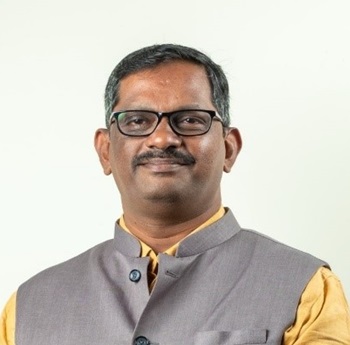
Bhanumurthy, Director of the Madras School of Economics, previously led Dr B R Ambedkar School of Economics and key economic institutes.
February 1, 2026 at 3:22 PM IST
The Union Budget, presented against the backdrop of extreme global uncertainty, has maintained continuity with the last few Budgets. While it has broadly followed the macro-fiscal path that was presented last year, in terms of reforms, it is also a continuation of the ‘reform express’ that 2025-26 has seen. The Budget focused on various micro- and process-level reforms and, at the same time, consistently steadied the economy at the macro level.
The Budget continues to focus on public capital expenditure, with an increased allocation of ₹12.2 trillion, up from ₹11 trillion in 2025-26. Within this, the states’ loan component under the SASCI scheme also increased to ₹2 trillion, indicating that almost 90% of borrowing is expected to be directed towards capital expenditure. With this sustained improvement in the quality of expenditure towards capital assets, the Budget is expected to reduce Union government debt to 55.6% of GDP, a decrease of 0.5 percentage points from 2025-26. The Budget also calculates effective capital expenditure, including grants-in-aid for the creation of capital assets, at 4.4% of GDP, marginally higher than the headline fiscal deficit.
However, the 2025-26 figures show significant differences between the budget and revised estimates, particularly in net revenues, which were lower by approximately ₹1.5 trillion. This also resulted in a reduction of about ₹1 trillion in expenditure. One reason for this change was the decline in nominal GDP growth to 8% against the Budget’s assumption of 10.1%. The present Budget assumes nominal GDP growth of 10%. Although nominal growth has remained in the single digits in recent years, the expected rise in inflation makes this assumption reasonable. Still, there could be risks to both inflation and GDP numbers, as both are expected to be revised soon with new base years.
In fiscal arithmetic, the Budget makes conservative assumptions regarding revenue buoyancy, with income tax buoyancy estimated at approximately 1.1 and overall revenue buoyancy at 0.8. On the revenue side, one recurring concern, which also affects overall calculations, concerns the assumption regarding disinvestment. While this is not stated explicitly, it is assumed under other capital receipts and budgeted at ₹800 billion for 2026-27, against ₹340 billion in 2025-26 (revised estimate). While the shortfall in disinvestment receipts has been more than compensated for by RBI dividends, assuming such adjustments every year could be a cause for concern.
A more immediate concern relates to the extent of market borrowings, pegged at ₹13 trillion, including government securities and treasury bills, compared with ₹10.4 trillion in 2025-26. This could further delay the revival of the private investment cycle, especially given the already tight liquidity conditions.
On the expenditure side, two major concerns stand out, although these could be addressed over the medium term. First, while overall debt as a share of GDP has been declining, the share of interest payments in total expenditure has been increasing steadily. In 2026-27, interest payments are estimated to account for 26.3% of total expenditure, or 3.67% of GDP. This compares with 23.9% and 25.7% in 2024-25 and 2025-26 (revised estimate), respectively, even as the overall interest rate structure has softened following a cumulative 125-basis-point reduction in policy rates. This calls for a re-examination of the debt path, which currently serves as the fiscal policy anchor. As shown elsewhere, to reach the targeted debt level of 50% plus or minus 1% of GDP by 2030-31, the annual debt reduction would need to be around 0.8 to 1 percentage point. By contrast, the 2026-27 Budget targets a reduction of only 0.5 percentage points.
There has also been some discussion around defence expenditure increasing by about 20%. However, a comparison of revised estimate for 2025-26 with budget estimate for 2026-27 shows that the increase is closer to 4.7%. In other words, the increase was largely front-loaded in 2025-26 following Operation Sindoor, and the rise in 2026-27 reflects only trend growth. There are positive trends in food, fertiliser, and petroleum subsidies as well, with all three expected to be lower than their 2025-26 (revised estimate) levels.
Beyond the fiscal arithmetic, the Budget has made several proposals aimed at preparing the economy not only to navigate medium-term risks, especially global ones, but also to position it for the 2047 horizon. The Budget focused equally on manufacturing and services. Several tax proposals for the services sector, including a tax holiday for data centre services up to 2047, should revive the IT sector in a meaningful way. The proposal to set up a committee to link education with employment and enterprise, alongside a renewed focus on skilling in healthcare and tourism, should support growth with better employment outcomes.
One area that received only passing mention in the Finance Minister’s speech is domestic savings. The Economic Survey has highlighted how a high cost of capital is affecting productivity and export competitiveness. The proposed High-Level Committee on Banking is expected to examine the savings issue more closely. In this context, the decision to raise the securities transaction tax on options and futures is a prudent move to channel domestic savings back towards banking and other productive sectors.
Overall, the Budget ticks most of the boxes for a stable medium-term macro-fiscal roadmap, while simultaneously triggering micro and process reforms that should strengthen the foundations of growth on the path towards Viksit Bharat.
* Views are personal
More From BasisPoint