.png)

December 4, 2025 at 5:52 AM IST
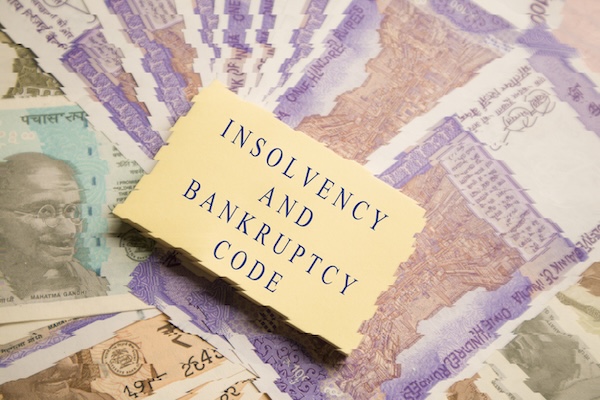
India’s insolvency ecosystem is showing a widening gap between regulatory intent and ground-level outcomes, with new data from India Ratings & Research indicating that delays and weak recoveries continue to define the Corporate Insolvency Resolution Process (CIRP) despite a series of recent reforms.
The report said resolution-to-liquidation ratio fell to 0.7x in the September quarter from 0.9x in April-June 2025-26, underscoring a rising proportion of cases closing through liquidation rather than resolution.
Recoveries weakened to about 25% in the September quarter, down from 30% in April-June, reinforcing concerns over the effectiveness of the Insolvency and Bankruptcy Code in delivering value-maximising outcomes.
Also Read: Broad Demand Recovery May Lift India’s July–September GDP to 7.4%
Timelines For CIRP Resolution Remain the Most Persistent Challenge
Despite marginal improvement, resolution timelines remained pressured with 77% of cases still outside statutory limits as of 30 September 2025, compared with 78% in April-June 2025-26, said the report. It added that CIRP timelines have lengthened significantly, touching their highest levels since 2020–21: 729 days for financial creditors, 739 for operational creditors, and 627 for corporate debtors in July–September 2025–26.
Also Read: Fitch: Sanctions Unlikely to Dent Indian OMCs’ Margins, Credit Strength
In parallel with these lengthening timelines, recoveries have remained largely stagnant. Operational creditors realised 25% in July-September 2025-26, unchanged from July-September 2024-25, while corporate debtors recovered around 18%, unchanged since 2022-23. For financial creditors, recoveries edged up to 33% from 31% a year earlier, but remain within the 31–34% band seen since 2022-23.
Liquidation offers little relief, as the average time taken for resolution through liquidation in July–September 2025–26 rose at 526 days for financial creditors, 527 for operational creditors and 454 for corporate debtors marking the slowest pace since 2020–21, noted India Ratings in its report. Correspondingly, recoveries for all classes of creditors have slipped to their lowest levels in five years, it added.
Also Read: Moody’s Lifts Ratings of Canara Bank, Bank of Baroda and PNB
Timelines remain stretched and have touched record highs, driven largely by capacity constraints at adjudicating authorities, frequent litigation, and inconsistent execution across jurisdictions. Delays in admission, limited bandwidth at NCLT benches, and procedural bottlenecks continue to erode value in stressed assets and prolong the resolution cycle. In some cases, even unsuccessful resolution applicants pursue litigation, further elongating and complicating recoveries.
Over the past quarter, the government and the Insolvency and Bankruptcy Board of India have introduced a broad suite of reforms, including revised valuation templates, stricter disclosure norms for bidders, and clearer guidance on PMLA-attached assets. The proposed IBC Amendment Bill is also expected to streamline process steps and reduce procedural disputes. Collectively, the measures aim to enhance transparency, unify valuation practices, and reduce friction points that have historically slowed resolution.
However, India Ratings notes that the benefits of these reforms will likely play out slowly amid current structural constraints.
India Ratings in its report mentions that liquidation continues to be the predominant way CIRPs are closed, with the overall mix of outcomes showing little movement from July-September 2024-25. In fact, 43% of all closures still end in liquidation, underscoring the system’s limited success in steering distressed firms toward viable resolution plans.
A smaller portion of cases exits the process through Section 12A withdrawals, a mechanism introduced in 2018 that allows the adjudicating authority to permit withdrawal after admission when the applicant and creditors reach a settlement.
Together, this closure pattern suggests that liquidation remains the path of least resistance in the current insolvency framework, it added.
More From BasisPoint