.png)


Michael Patra is an economist, a career central banker, and a former RBI Deputy Governor who led monetary policy and helped shape India’s inflation targeting framework.
January 1, 2026 at 3:46 AM IST
Traced to French origins in 1900, the idea that asset prices reflect all available information forms the basic logic of all modern risk-based theories of asset pricing. Then why are financial markets in India not reflecting the shine in domestic macroeconomic developments this year?
In the first half of 2025-26, real GDP seems to be confirming the solidifying of an upshift to an 8% post-pandemic growth trajectory. The flurry of upward revisions in projections all around is validating this prognosis. Consumer price inflation looks like it is about to disappear; wholesale price inflation is already in negative territory. The current account deficit averaged just 0.8% of GDP in the first half of the year and, by all indications, it will remain at those levels through the rest of the year. The recent decline in exports may just be a wobble related to front-loading to beat the application of US tariffs. Given the resilience of world trade and the diversification that is underway, India’s exports may soon regain positive terrain. The fiscal deficit and public debt ratios are set on a consolidation path unless nominal GDP plays spoilsport. Corporate and bank profitability keeps piling up, with balance sheets healthier from deleveraging in the case of the former and the virtual disappearance of non-performing assets net of provisions for the latter.
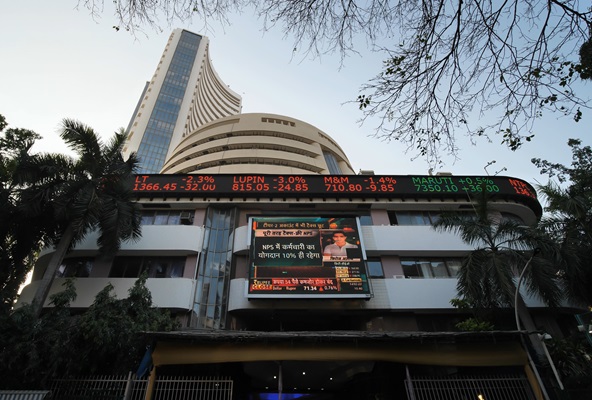
Yet, equities are grossly underperforming peers in other emerging markets, especially in Asia, even after scaling 52-week peaks in late October, and with forward price earnings multiples retreating to historical averages. Notwithstanding the sizzling IPO boom, returns on the MSCI India index are just 2.5% so far in US dollar terms versus 27.7% on the MSCI emerging markets index. Even these slender India returns would not have been possible without the ebullience of domestic institutional investors. This year may yield the worst performance of equities in more than a decade. Foreign institutional investors have drawn out more than $16 billion so far. Apparently, they are booking profits to rotate and take long positions in tech-heavy markets in other parts of Asia as they chase the AI theme. The Indian rupee has turned in one of the worst performances in Asia. This may also be contributing to low equity returns in dollar terms. Bond markets are also slipping and extending losses that have occurred over the year, despite no unreasonable pressure from additional market borrowing. On a cross-country basis too, returns on sovereign bonds have been weak relative to the broader emerging market bond index (EMBI). Credit markets are slackening, having come off the scorching pace of 2022-24.
The proximate explanations suggest that this is a temporary lull. Global headwinds are seen as the major factor, but on the ground, several categories of tariffed products are finding their way to new markets and new routes to old markets. The Trump tariffs’ bark is turning out to be more fearsome than their bite. With the momentum of hedging and resilience gathering pace, India can sit back and wait for the trade agreement to bake. Services exports are expanding robustly, and remittances appear poised to scale a new peak this year. Another explanation given is the downward corrections to earnings forecasts, but again it may be a case of corporates being slow on the uptake in catching the wind in their sails from the sweet spot in macroeconomic performance of the Indian economy. They will have to come to the dance floor, if the indications of reviving consumption spending strengthen into a broader trend, with support from tax cuts and more recently, a more accommodative monetary policy.
Indian financial markets have a great track record for rebounds. Analysts point out that blue chip companies are trading at record highs even as the broad indices are below their recent peaks; soon the broader market will get set to climb the shoulder of a catch-up. Some also believe that corporate earnings corrections have bottomed out and are now steadying in line with expectations of improved forward performance. This is prompting re-weighting of India allocations upwards. In fact, Morgan Stanley judges that Indian stocks are poised to ‘regain their mojo’ over the next 12 months on the back of a supportive policy configuration, the sustained support from domestic investor interest and the environment of macroeconomic stability that India is likely to continue to enjoy. The resolution of the tariff standoff and the coming into being of a trade agreement with the US will provide the icing on the cake, alongside the ‘anti-involution’ drive in China aimed at curbing excessive competition and overcapacity.
As regards portfolio flows, what swipes right will swipe left. India’s growth story is too compelling to be ignored, igniting FOMO – fears of missing out. The global AI lure appears to have been substantially priced in and going forward, the flight to Asia east and north of India may reverse. In fact, the sentiment on Wall Street suggests that investors are positioning for a possible rotation out of AI stocks, with a likely unwind in the first half of 2026. The Indian rupee may regain verve, given its history of bounce-back potential, and the bond market will stand to benefit from high carry. The recent policy rate cut and announcement of large-scale bond purchases may lift the mood in this segment.
If instead the AI trade turns out to be a bubble, it will take down all markets, but less so India because of the absence of AI as a theme so far here. Who knows; in the situation of the bubble bursting, capital flows may turn to India as a safe refuge.
All in all, 2026 appears to be waiting with optimism for India’s financial markets to rise up to the curve.
More From BasisPoint