.png)


Krishnadevan is Editorial Director at BasisPoint Insight. He has worked in the equity markets, and been a journalist at ET, AFX News, Reuters TV and Cogencis.
May 28, 2026 at 6:21 AM IST
The MSCI Emerging Markets Index now allocates more capital to one Taiwanese company than to the entire Indian stock market. Not one Indian sector or one “in vogue” corner of the market. India itself.
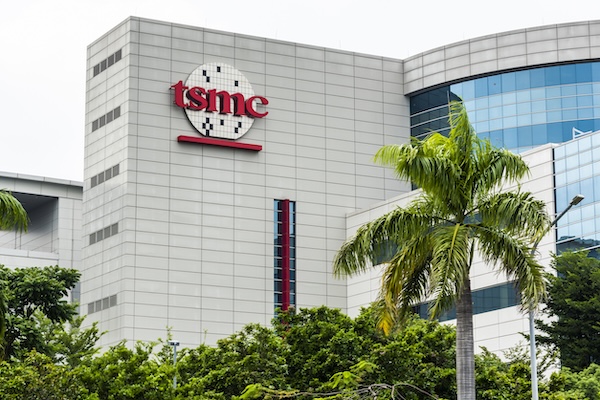
That sounds like the sort of statistic engineered for social media outrage, except it happens to be true. Taiwan Semiconductor Manufacturing Company now accounts for roughly 13.3% of MSCI EM while India's weight has slid to 11.94% as of end-April 2026, down from a peak of nearly 21% just eight months ago. One chipmaker on an island smaller than Kerala carries more benchmark influence than every listed Indian bank, software exporter, consumer company and industrial conglomerate put together.
The striking part is not that Taiwan overtook India in market capitalisation. It is that investors bought this concentration while believing they owned diversified emerging markets exposure.
TSMC alone makes up over 44% of Taiwan's domestic benchmark, the Taiex. Any active fund manager proposing a 44% single-stock position would lead to risk committee meetings before the pitch deck reached clients. Passive investors, however, absorb that exposure automatically because the concentration sits at the country level rather than inside the fund itself.
The concentration story also stopped being a simple by-product of market enthusiasm. Taiwan's Financial Supervisory Commission recently raised the limit domestic funds can allocate to companies whose benchmark weight exceeds 10%, a rule that effectively applies to only one company.
Analysts estimate the change could bring in more than $6 billion of additional domestic buying into TSMC, turning what used to be a market-driven concentration into a regulator-assisted one.
Benchmark Illusion
For perspective, a pension fund allocating 15% of assets to a passive EM strategy now indirectly places roughly 2% of its entire portfolio into TSMC before accounting for any separate technology or semiconductor exposure elsewhere. In EM ex-China products, the weighting rises further. Institutions that believe they hold diversified emerging-market allocations are, these days, often running oversized AI hardware bets without consciously approving them.
The AI-led technology rally has challenged the old assumption that country diversification naturally creates sector diversification.
Indian policymakers and domestic strategists often frame the country’s broad-based economy as a structural advantage over narrower export-driven markets such as Taiwan or South Korea. In an AI-led cycle, global capital seeks concentration inside the right technological ecosystem leading to better premiums that broad diversification does not offer.
India's problem therefore extends well beyond foreign outflows or expensive valuations. The country lacks an AI infrastructure company large enough to matter in global benchmarks.
The Nifty 50 index is diversified but has no advanced chipmaker, no hyperscaler and no direct proxy for the AI buildout attracting global capital. Investors wanting exposure to AI infrastructure can bet on that view through Taiwan and South Korea. India offers no equivalent route.
As of May 2026, TSMC trades at roughly 23 times forward earnings while analysts expect earnings growth above 25% annually through 2029. India's benchmark trades near 21–22 times earnings with consensus growth closer to 10–12%.
On a growth-adjusted basis, India looks materially more expensive. Indian investors are paying richer multiples for slower earnings growth because India still benefits from the narrative premium of a long-term manufacturing and consumption story even as global capital increasingly chases AI infrastructure instead.
The market is therefore pricing two very different kinds of risk.
Taiwan carries concentrated geopolitical danger. Any Taiwan Strait escalation would hit TSMC brutally and immediately. India's risk works more slowly as earnings that fail to accelerate eventually compress valuation leading to a correction over time. Markets tolerate geopolitical tail risk when earnings compound at 25%.
India still retains substantial structural strengths. SIP inflows and rising household ownership of financial assets have cushioned the market against heavy foreign selling, but domestic liquidity cannot manufacture AI infrastructure companies.
India may remain one of the world’s most admired growth stories while steadily losing benchmark relevance to markets that can monetise the AI buildout.
More From BasisPoint