.png)

Risk-On Rally Sweeps Asia as US-Iran Accord Raises Hopes of Regional Stability
Here’s your quick read to start the day: a chatty, no-fuss look at overnight moves, the big story, what’s on the docket, and the tickers you need to watch.
June 15, 2026 at 1:44 AM IST
GLOBAL MOOD: Risk On
Drivers: US–Iran Ceasefire
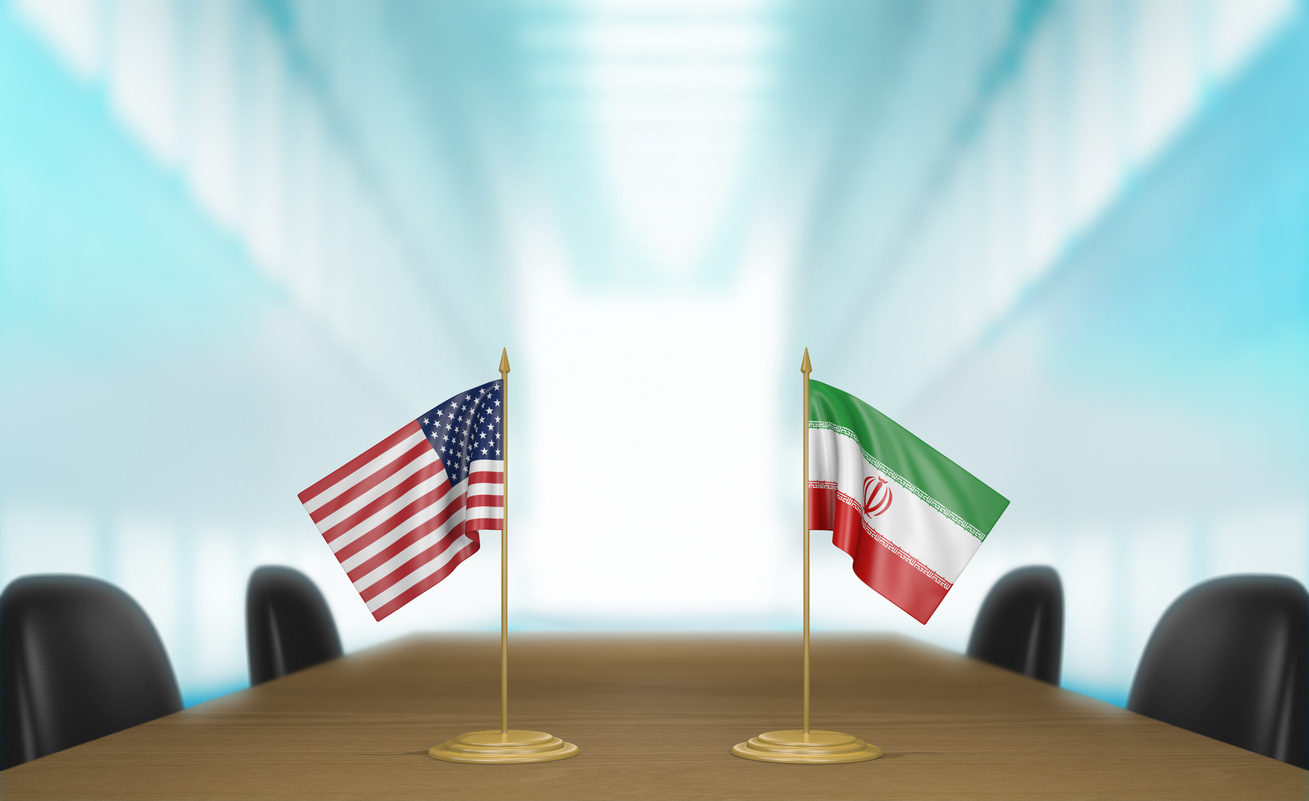
Asia-Pacific markets began the week firmly in a risk-on mood after US President Donald Trump announced that a peace agreement with Iran had been completed, raising hopes that months of conflict in West Asia may be nearing an end. Investors welcomed the prospect of reduced geopolitical tensions and the reopening of the Strait of Hormuz, a critical artery for global oil shipments.
Regional equities rallied broadly, led by South Korea and Japan, as investors shifted back into risk assets. Sentiment was further supported by strong appetite for growth sectors after SpaceX's blockbuster Nasdaq debut underscored continued investor enthusiasm for technology, artificial intelligence and space-related companies.
THE BIG STORY
"The deal with the Islamic Republic of Iran is now complete," Trump said in a post on Truth Social on Sunday, adding that he had authorised the reopening of the Strait of Hormuz and the removal of the US naval blockade. "Ships of the world, start your engines. Let the oil flow," he said.
Trump's comments came after Pakistani Prime Minister Shehbaz Sharif said the United States and Iran had agreed on a peace framework and were expected to formally sign the agreement in Switzerland on Friday, according to Reuters. The agreement was reportedly facilitated through mediation efforts involving Pakistan and several Gulf states.
According to Reuters, the framework calls for an immediate cessation of hostilities and a 60-day ceasefire period during which both sides will negotiate a broader settlement covering sanctions relief, regional security issues and Iran's nuclear programme.
Iranian officials said that the proposed arrangement includes commitments by Tehran to freeze further nuclear advances during the negotiation period, while discussions continue on the phased release of frozen Iranian assets and the potential easing of sanctions.
The prospect of a reopening of the Strait of Hormuz triggered a sharp reaction in energy markets. Brent crude futures fell around 4% in early Asian trading on Monday to $84/bbl, while US crude futures dropped more than 4%, as traders unwound the geopolitical risk premium that had built up during the conflict.
For financial markets, however, the immediate focus is on the prospect of uninterrupted oil flows from the Gulf and the reduction of a geopolitical risk that had dominated commodity markets over recent weeks
Separately, SpaceX jumped 19% in its Nasdaq debut after a record $75 billion IPO, pushing its valuation above $2 trillion and Elon Musk’s wealth past $1 trillion. The rally showed continued appetite for AI and space-linked growth stocks despite geopolitical uncertainty.
Data Spotlight
The University of Michigan’s Consumer Sentiment Index rose to 48.9 in early June from May’s record low of 44.8, beating market expectations of 46. The improvement was driven partly by easing gasoline prices earlier in the month, with sentiment recovering across income, education and political groups. Lower-income households recorded particularly strong gains as fuel costs eased from recent highs.
Consumers also reported improved views on personal finances and business conditions. However, overall sentiment remained weak historically, staying 13% below January levels and 19% lower than a year earlier as households continued facing pressure from elevated living costs and economic uncertainty.
Inflation expectations moderated slightly during the month. One-year inflation expectations eased to 4.6% from 4.8%, while five-year inflation expectations declined sharply to 3.4% from 3.9%. Despite the moderation, consumers continued expressing concerns that inflation could remain persistently elevated in the near term.
Takeaway:
- US stocks end higher as SpaceX surges on debut and Iran deal hopes lift sentiment
- The Dow rose 0.70%, the S&P 500 gained 0.50%, and the Nasdaq added 0.31%, with all three major indexes up 7% for the week.
- SpaceX shares closed up 19.2% at $160.95, above their $135 IPO price, giving it a market cap of $2.1 trillion in the world's biggest ever public listing.
- Other space stocks retreated after rallying ahead of the debut, with Rocket Lab down 10.8%, Intuitive Machines down 13.1%, and Planet Labs down 8.8%.
- The US and Iran signalled a deal was close, with a senior US official saying a draft proposal liked by both sides was in place.
- The Russell 2000 hit a record closing high, while US equity funds saw their first weekly outflow in three weeks.
- Markets price a 55% chance of a Fed rate hike by December, with next week's meeting the first under new Chair Kevin Warsh.
- Adobe slid 6.8% following the departure of CFO Dan Durn.
- IPOs of OpenAI and Anthropic are also highly anticipated later in the year.
- The Dow rose 0.70%, the S&P 500 gained 0.50%, and the Nasdaq added 0.31%, with all three major indexes up 7% for the week.
- US Treasury yields edge up as Iran deal uncertainty clouds inflationary relief
- The 10-year Treasury yield rose to 4.5%, trimming the prior session's 10bps decline as fresh doubts emerged over the Iran deal.
- Trump condemned reports that Iran struck an Indian ship and denied claims Iran had offered different concessions than agreed, jeopardising the deal.
- Oil and fuel prices pared sharp declines, limiting the inflationary relief from easing energy costs.
- Rate hike bets were consolidated after both consumer and producer inflation rose to multi-year highs in May, with markets pricing at least one Fed hike this year.
- University of Michigan data showed inflation expectations easing from first-half June peaks, following the top in energy prices.
- The 10-year Treasury yield rose to 4.5%, trimming the prior session's 10bps decline as fresh doubts emerged over the Iran deal.
- US dollar holds most prior session's losses as Iran deal hopes ease safe-haven demand
- The dollar index edged up to 99.8 but retained the bulk of Thursday's decline as Trump said a peace deal with Iran could be signed as soon as this weekend in Europe.
- Trump's comments sparked a sharp drop in oil prices, easing inflation concerns and reducing the urgency for rate hikes.
- US producer prices rose 6.5% year-on-year in May, the highest since November 2022 and slightly above the 6.4% forecast.
- Combined with consumer inflation hitting a three-year high, the PPI data reinforces expectations of a Fed rate hike later this year.
- The dollar index edged up to 99.8 but retained the bulk of Thursday's decline as Trump said a peace deal with Iran could be signed as soon as this weekend in Europe.
- Oil falls 3.2% on Iran deal hopes but conflicting reports cloud outlook
- Brent fell 3.2% to $84.88/bbl as prospects of a US-Iran deal to reopen the Strait of Hormuz grew, though officials warned an agreement was not guaranteed.
- Prices declined 6% on the week but remain more than 20% higher since the US and Israel launched attacks on Iran on February 28.
- A Trump administration official put the odds of a deal being signed soon at 80%, with terms potentially including Hormuz reopening, naval blockade removal, nuclear dismantlement, and economic incentives.
- Conflicting reports emerged after Iranian media published a draft with different terms, including US force withdrawals and reconstruction funding, which Trump said did not reflect what was agreed.
- Pakistan's PM said a final text had been reached, while Iran's foreign minister said an understanding was closer than ever but urged caution until finalised.
- Brent fell 3.2% to $84.88/bbl as prospects of a US-Iran deal to reopen the Strait of Hormuz grew, though officials warned an agreement was not guaranteed.
Day’s Ledger*
Economic Data
- India May WPI Inflation Data
- Eurozone April Industrial Production Data
- US May Industrial Production Data
- India May Trade Data
Corporate Actions
- Finkurve Financial Services to consider fund raising
- Shree Ram Proteins to consider financial results
Policy
- German Buba President Nagel Speaks
- ECB President Lagarde Speaks
Tickers to Watch
- AUROBINDO PHARMA informed that the US FDA has classified the inspection of Eugia Pharma Specialities’ Unit-III facility as “Official Action Indicated” (OAI).
- DR REDDY'S LABORATORIES has launched Bosutinib Tablets, a generic version of Bosulif used in the treatment of Chronic Myeloid Leukaemia, in the US market.
- IPCA LABORATORIES has entered into a global licensing agreement with Bhami’s Research Laboratory for access to its proprietary high-concentration subcutaneous biologics delivery platform.
- JSW ENERGY subsidiary JSW Neo Energy has commissioned the full 150 MW Tidong hydroelectric project in Himachal Pradesh, taking total installed capacity to around 13,900 MW.
- MEESHO will acquire Kirana Club and Retail Pulse Labs for an aggregate consideration of ₹2.02 billion to strengthen its digital commerce ecosystem.
- ONGC subsidiary ONGC Petro Additions (OPaL) has approved raising up to ₹44.71 billion through private placement of non-convertible debentures.
- POWER GRID has emerged as the successful bidder for an inter-state transmission system project in Andhra Pradesh under the tariff-based competitive bidding route.
- SEPC has received a Letter of Acceptance from SAIL’s IISCO Steel Plant for works related to the 4.08 MTPA crude steel expansion project.
- VEDANTA, s all four demerged entities--Vedanta Aluminium, Vedanta Oil & Gas, Vedanta Power and Vedanta Iron & Steel--are set to debut on stock exchanges on June 15, with focus on the group's aluminium business.
Must Read
- UK, France, Germany and Italy ready to lift Iran sanctions after US-Iran deal
- British forces intercept Russian shadow fleet tanker in the Channel
- Statistical system may get AI overhaul: MoSPI Secy
- Basmati exports to W Asia come to a grinding halt
- Electronics makers face component shortages as Gulf shipping crisis hits production
- War and AI force India Inc to rethink huge office deals
- SP Group seeks more time to repay bonds nearing maturity
- Can Military Superiority Still Deliver Political Success?
- The One Word That Explains SEBI's Entire Reform Agenda
See you tomorrow with another edition of The Morning Edge.
Have a great trading day
World’s Biggest AI Rulebook Is Already Being Rewritten
The European Union Artificial Intelligence Act was widely heralded as a global benchmark, and not two years after coming into force, Europe has postponed some of its hardest obligations. Even in doing so, Europe has not abandoned its rulebook, but it has acknowledged that building the institutional and technical capacity to enforce such a sweeping AI law takes time.
Pranav Rai writes, in effect, the world’s largest AI rulebook is already being reshaped by implementation reality. Writing an AI law is not a one-time exercise. It needs built-in feedback loops, the policy equivalent of model monitoring, to stay effective as technology evolves. As Indian policymakers consider the next steps in AI governance, Europe’s experience underscores a simple point: implementation capacity matters as much as legislative ambition.
The takeaway is not that India should legislate less, but that it should never undervalue execution. India has not rushed into an AI law, a stance that may reflect strategic patience or simply caution.
(*Compiled from various media sources)
More From BasisPoint