.png)

Madhavi Arora is Chief Economist at Emkay Global Financial Services, where she focuses on macroeconomic research and asset allocation strategies.
March 1, 2026 at 5:46 PM IST
The expanding United States-Iran conflict, now marked by missile and drone strikes extending beyond US and Israeli military targets into multiple Gulf Cooperation Council states, raises the probability of energy and shipping disruptions that carry direct macro implications for India. The seriousness of this episode lies not merely in the exchange of hostilities but in the geographic spillover into key energy-producing and transit regions.
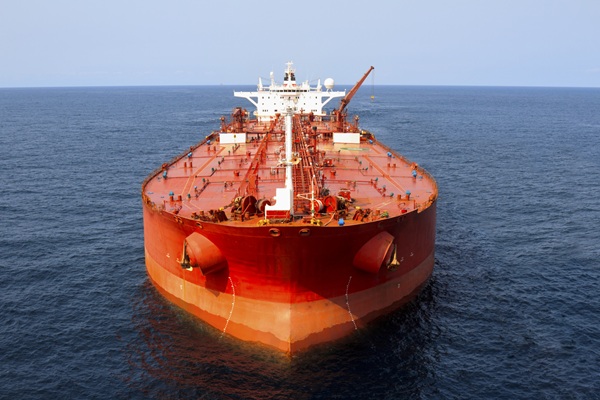
Even in the absence of a formal blockade, heightened tensions in the Middle East tend to elevate freight and insurance costs and increase supply-chain frictions. For India, the Strait of Hormuzremains the principal vulnerability. A sizeable share of India’s crude oil and liquefied natural gas imports transit through this corridor, creating exposure to both price shocks and potential logistical constraints.
At present, preliminary checks indicate that India’s crude and LNG supplies remain largely intact. Diversified sourcing, strategic petroleum reserves and operational inventories provide buffers that can cushion short-term disruptions. The macroeconomic outcome, however, will depend less on immediate physical shortages and more on the trajectory and persistence of crude prices relative to baseline assumptions.
Our working assumption remains that the most intense phase of the conflict could prove relatively short-lived, reflecting the marked asymmetry in military capabilities among the parties involved. Should the situation stabilise, alongside OPEC+ signalling an output increase of 400,000 barrels per day, oil prices may struggle to sustain a sharp spike amid comfortable global demand-supply dynamics. In such a scenario, the broader macro impact for India would likely remain contained.
A prolonged phase of elevated oil prices would alter that assessment.
The transmission into the domestic economy is reasonably mechanical. For every $1 per barrel increase in Brent, diesel prices could rise by around ₹0.52 per litre and petrol by approximately ₹0.55 per litre, assuming full pass-through. A $10 per barrel deviation from a baseline assumption of $65 per barrel would therefore carry meaningful implications for inflation and household budgets.
On the external front, every $ 10-per-barrel increase in crude prices is estimated to widen the current account deficit by roughly 0.5% of GDP.
Retail inflation could see an impact of about 35 basis points, while wholesale price inflation may rise by close to 130 basis points. Real GDP growth could be trimmed by 15–20 basis points, other factors remaining constant. These effects, while manageable in isolation, become more material if oil prices remain elevated for an extended period.
The fiscal response remains a key variable.
At this stage, the government is not expected to cut excise duties to absorb part of the burden faced by oil marketing companies. Every ₹1 per litre reduction in excise implies an annualised fiscal cost of around ₹150 billion, constraining policy space. Oil marketing companies appear relatively cushioned for now, with earnings from other business segments helping offset potential oil marketing losses. The eventual macro impact will depend on how the burden of higher crude prices is shared between the government, oil marketing companies and end-consumers.
In essence, the macro risks for India hinge on the duration of the conflict and the persistence of crude prices above baseline levels. Containment of hostilities and stabilising oil prices would limit spillovers. A sustained oil shock, particularly one that disrupts flows through the Strait of Hormuz, would place incremental pressure on inflation, the external balance and fiscal arithmetic.
More From BasisPoint