.png)

Markets Turn Cautious as Crude Jumps Despite Reserve Release
Here’s your quick read to start the day: a chatty, no-fuss look at overnight moves, the big story, what’s on the docket, and the tickers you need to watch.
Richard is an independent financial journalist who tracks financial markets and macroeconomic developments
March 12, 2026 at 2:12 AM IST
GLOBAL MOOD: Extreme Risk-Off
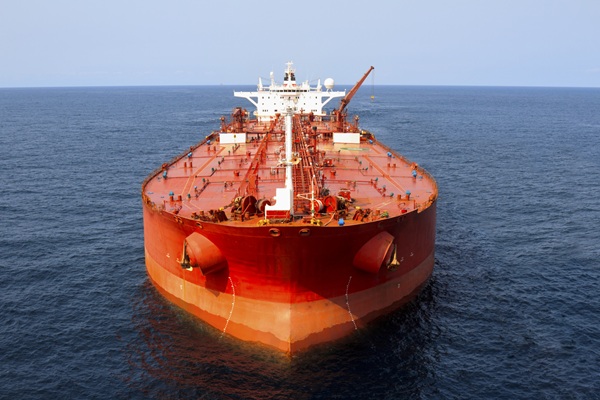
Asian equity markets slipped on Thursday, reflecting a renewed risk-off tone as surging oil prices overshadowed efforts by governments to stabilise energy markets. Crude oil rallied more than 7%, with WTI nearing $94 a barrel and Brent approaching $100, even after the International Energy Agency announced a record emergency release of 400 million barrels. Investors remain sceptical that strategic reserves can fully offset supply disruptions caused by the Iran war, keeping inflation and growth concerns at the forefront of market sentiment.
TODAY’S WATCHLIST
THE BIG STORY
In another development, the Trump administration has launched new trade investigations into China, Mexico, the European Union and more than a dozen other economies, aiming to replace reciprocal tariffs that were recently ruled illegal by the US Supreme Court.
US Trade Representative Jamieson Greer said the probes will be conducted under Section 301 of the Trade Act of 1974, which allows Washington to impose tariffs on imports from countries found to be engaging in unfair trade practices. The administration could use these investigations to reintroduce tariffs on several trading partners.
Greer said the investigations will examine policies and practices linked to structural excess capacity in manufacturing sectors. According to the US, such excess production—often disconnected from domestic and global demand—has contributed to persistent trade surpluses in some economies.
Apart from China, Mexico and the EU, the investigations will cover Japan, India, Taiwan, Vietnam, South Korea, Singapore, Switzerland, Norway, Indonesia, Malaysia, Cambodia, Bangladesh and Thailand.
The move signals that the administration intends to continue pursuing trade measures aimed at addressing perceived imbalances and protecting US manufacturing and employment.
Data Spotlight
US inflation stayed at 2.4% in February 2026, unchanged from January and matching forecasts, the lowest since May 2025. Monthly CPI rose 0.3%, led by shelter, gasoline, and food increases. Energy prices rebounded, notably fuel oil up 6.2% and natural gas up 10.9%, while gasoline's annual decline eased. Core inflation was steady at 2.5% annually, with a mild 0.2% monthly rise.
Takeaway:
WHAT HAPPENED OVERNIGHT
- US stocks fell as Hormuz attacks and inflation fears offset CPI relief
- The S&P 500 slipped 0.2%, Nasdaq fell 0.1%, and the Dow dropped 0.7% as energy-driven inflation concerns dominated sentiment.
- WTI climbed past $87 after projectile strikes on cargo ships near the Strait of Hormuz overwhelmed the IEA's record reserve release announcement.
- February CPI met expectations at 2.4% annually but markets noted the full energy surge from the conflict is yet to be reflected in the data.
- Rising yields pressured credit-sensitive equities, weighing on financial and rate-sensitive sectors.
- Oracle surged 9.2% after earnings beat and improved guidance, providing the tech sector's main bright spot.
- Clean energy funds hit record highs as investors sought alternatives to volatile fossil fuel supplies, a notable structural shift amid the ongoing conflict.
- The S&P 500 slipped 0.2%, Nasdaq fell 0.1%, and the Dow dropped 0.7% as energy-driven inflation concerns dominated sentiment.
- US Treasury yield climbs to one-month high of 4.2% as energy inflation fears reassert
- The 10-year Treasury yield rose to 4.2%, its highest in about a month marking a second consecutive session of gains.
- Oil resuming its climb after brief reserve-release relief kept energy-driven inflation fears firmly in focus.
- February CPI met expectations at 2.4%, but the full impact of the West Asia energy surge is yet to feed through, leaving the inflation outlook skewed to the upside.
- The Fed is widely expected to hold rates steady at next week's meeting, removing any near-term yield ceiling from policy expectation
- The 10-year Treasury yield rose to 4.2%, its highest in about a month marking a second consecutive session of gains.
- US Dollar resumes gains to 99.1 as Hormuz attacks and inflation concerns reassert safe-haven bid
- The US dollar index rose to 99.1, resuming its climb near the highest levels since the West Asia war began.
- Iran struck tankers and energy storage facilities in fresh attacks, reigniting safe-haven demand for the greenback.
- February CPI came in line with forecasts, showing stable but above-target inflation with the full energy surge from the conflict yet to be reflected in the data.
- Strategic reserve release reports provided brief oil relief before prices resumed their climb, keeping inflation fears alive.
- The dollar's resilience reflects its dual role, as a safe-haven asset in a war and inflation hedge as energy costs surge, both forces currently pointing in the same direction.
- The US dollar index rose to 99.1, resuming its climb near the highest levels since the West Asia war began.
- Crude oil surges 5% as Hormuz ship attacks deepen supply crisis and IEA reserve plan falls short
- Brent crude rose 4.8% to $91.98/barrel and WTI gained 4.6% to $87.25/barrel as fresh supply disruption fears gripped energy markets.
- Fresh attacks on ships in the Strait of Hormuz reignited the supply shock narrative, reversing Tuesday's brief relief rally.
- The IEA's proposed strategic reserve release was dismissed by analysts as inadequate to meaningfully offset Hormuz disruption at scale.
- With Iran threatening a full Gulf oil blockade and physical attacks on vessels intensifying, the path to $100 and beyond remains very much open.
- The IEA rejection signal is significant, it suggests no policy tool currently available is sufficient to fully replace Hormuz supply flows if the blockade materialises.
- Brent crude rose 4.8% to $91.98/barrel and WTI gained 4.6% to $87.25/barrel as fresh supply disruption fears gripped energy markets.
Day’s Ledger*
Economic Data
- India February CPI Inflation Data
- US Trade Data
- US Weekly Initial Jobless Claims
Corporate Actions
- Brookfield India board to consider fund raising
- Jagsonpal Pharma board to consider buyback of shares
- Manorama Industries board to consider fund raising
- Steelco Gujarat board to consider rights share issue
Policy Events
- BoE Governor Bailey Speech
- BoE White Speech
Tickers to Watch
- RIL US refinery may get Venezuelan oil access; need deal clarity: Analysts
- Telangana High Court reserves order on Fino Bank MD arrest in GST case
- Cred gets final license from RBI to operate as payment aggregator
- HDFC ERGO General Insurance appoints Parthanil Ghosh as MD & CEO
- SBI, MUFG sign pact to collaborate on M&A, aviation, real estate financing
- Ashok Leyland breaks ground for EV battery pack facility in Tamil Nadu
- Isuzu Motors India appoints Takeshi Hirano as Deputy Managing Director
Must Read
- Jaishankar speaks to Russia's Lavrov, EU chief amid West Asia crisis
- India crude supplies secure, govt has stepped up fuel management: Official
- Shell declares force majeure on Asia LNG deals after Qatar plant shutdown
- IEA to release record 400 million barrels of oil from stockpiles
- LPG shortage fears trigger panic buying; eateries warn of shutdowns
- Moody's warns of margin, cash-flow pressures for Indian fuel retailers
See you tomorrow with another edition of The Morning Edge.
Have a great trading day
𝐖𝐡𝐚𝐭 𝐡𝐚𝐩𝐩𝐞𝐧𝐬 𝐰𝐡𝐞𝐧 𝐞𝐧𝐞𝐫𝐠𝐲 𝐬𝐡𝐨𝐜𝐤𝐬 𝐚𝐧𝐝 𝐚𝐠𝐫𝐢𝐜𝐮𝐥𝐭𝐮𝐫𝐚𝐥 𝐫𝐢𝐬𝐤𝐬 𝐚𝐫𝐫𝐢𝐯𝐞 𝐚𝐭 𝐭𝐡𝐞 𝐬𝐚𝐦𝐞 𝐭𝐢𝐦𝐞?
G Chandrashekhar writes, disruptions in the Strait of Hormuz are pushing oil prices higher just as heatwaves threaten wheat output and El Niño looms over the Kharif season.
Could this combination drive India’s next inflation cycle?
(*Compiled from various media sources)
More From BasisPoint