.png)

Malhotra Keeps Rate Cuts in Play, but Will He Move Again?
Governor Malhotra kept the easing cycle alive on Friday, yet his real objective may be to extract transmission rather than commit to another cut.
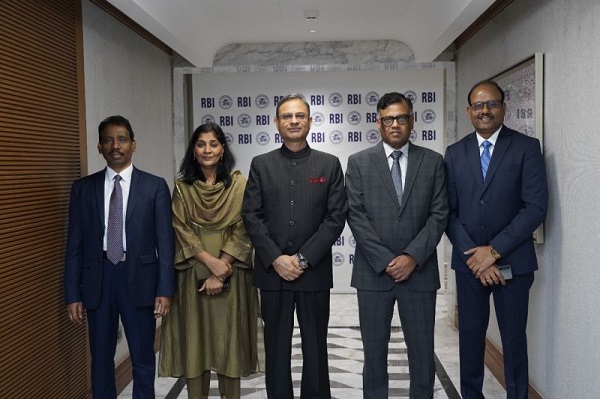

Kalyan Ram, a financial journalist, co-founded Cogencis and now leads BasisPoint Insight.
December 5, 2025 at 11:06 AM IST
The Reserve Bank lowered the policy rate by another 25 basis points on Friday, taking cumulative easing since February to 125 basis points and signalling a central bank increasingly confident of managing the system on lower rates. The move itself was material, yet the more consequential message lay in Governor Sanjay Malhotra’s deliberate choice to keep the door open for further action.
“We expect benign inflation and low policy repo rates rather than higher policy repo rates,” he said. Markets will parse that phrasing closely, though the motivation behind it appears more tactical than directional.
Malhotra’s emphasis on future policy likely reflected a desire to strengthen transmission rather than guide markets towards a terminal rate near 5%. This was the main lesson from June. Then, the Reserve Bank cut the repo rate by 50 basis points and reduced the cash reserve ratio by 100 basis points in a package designed to boost sentiment. The Monetary Policy Committee had simultaneously shifted its stance to neutral to contain exuberance. The mixed signals unsettled markets, and transmission faltered. Lending and deposit rates adjusted only partially, with considerable dispersion.
Also Read: Goodbye Inflation, See You in Next Cycle
The June episode showed that a blunt policy action, unsupported by consistent messaging, cannot anchor expectations.
What also helps transmission this time is the scale of liquidity support Malhotra has put on the table. He pledged a potential infusion of around ₹1.5 trillion through market operations in December alone. The Reserve Bank will purchase ₹1 trillion of government securities this month and execute a three-year buy-sell swap worth $5 billion. Markets expect the Reserve Bank to keep liquidity conditions accommodative into January and February, since currency in circulation, forex interventions, and banks’ reserve requirements will continue to draw liquidity out of the system. Durable operations will therefore need to stay active for transmission to firm up.
Also Read: RBI’s Quiet Hawkishness Behind a Compelled Rate Cut
Soft Growth
Manufacturing PMI, industrial production, construction-related indicators, and electricity use were singled out as areas showing loss of momentum. This greater weight on incoming data, rather than multi-quarter forecasts, points to a more nimble approach at a time when the global backdrop remains unsettled.
The RBI will need to watch how the evolving trade negotiations with the US shape export orders, investment confidence, and currency dynamics.
None of this automatically commits the MPC to lowering the policy rate further, but it identifies the condition under which the next move could occur. If growth softens more visibly over the next quarter, April becomes a credible window for a rate cut. The committee will want to see whether the recent deceleration in high-frequency indicators persists long enough to affect broader confidence and spending. For now, the RBI appears content to let expectations carry some of the transmission burden.
Also Read: Policy Reflects Growth Concerns
Inflation Undershoot
For the first time since inflation targeting was adopted, average inflation for the September quarter undershot the lower tolerance band, printing at 1.7%. The inflation rate was at 0.3% in October. The composition of the decline matters: deflation was seen in select items rather than reflecting broad-based demand weakness.
Even so, the readings raise legitimate academic questions about sustained undershooting and the implications for real rates, credit pricing, and household behaviour. Some economists will inevitably draw parallels with the Japanese experience, though India’s structural features make the comparison largely theoretical.
For policy, the undershoot broadens the available space but, by itself, does not dictate action. The committee still needs to balance inflation prints against the state of transmission, bank balance-sheet incentives, and the distribution of liquidity across the system. A rate cut motivated solely by very low inflation risks overstating the durability of the undershoot, while a cut driven by weakening growth would be more aligned with the RBI’s current focus on short-cycle data. Malhotra’s communication suggests he is aware of this distinction.
Also Read: MPC Gets the Flexible Inflation Targeting Mandate Right
The question, then, is less about whether he will cut again and more about whether he needs to. If the signal of openness succeeds in pushing banks to adjust lending and deposit rates more uniformly, the RBI may achieve much of its objective without further action. If transmission remains uneven and growth data weaken further, an additional cut becomes a live option. The committee has kept that option deliberately visible.
Malhotra has not pre-committed to a path. He has created a corridor of expectations that gives the RBI flexibility, gives markets a reason to transmit the easing already done, and keeps the April meeting in play without pulling policy into a mechanical cycle. That may be the most effective form of easing available to him at this juncture.
More From BasisPoint