.png)


Chandrashekhar is an economist, journalist and policy commentator renowned for his expertise in agriculture, commodity markets and economic policy.
March 27, 2026 at 8:21 AM IST
Crude, crops and currency, the three Cs, are converging into a potent inflationary threat that policymakers can ill afford to underestimate.
This time, the spark is geopolitical. Four weeks into the conflict in the Persian Gulf, and there is still no real sense of where this is headed. The commentary is loud, but not especially useful. Markets, for their part, are not waiting for clarity. The damage to energy flows is already visible, and the consequences are beginning to show up in prices.
Only a few months ago, the crude oil market looked comfortably supplied for 2026. Brent was drifting in the low $60s, and the consensus was for a surplus year. That view has been upended in a matter of weeks. Production outages, damaged infrastructure and the effective choking of the Strait of Hormuz have tightened supply in ways few had priced in.
The Strait is not a marginal route. It carries roughly 20 million barrels a day, close to a fifth of global crude, along with large volumes of natural gas headed largely towards Asia, India included. With traffic disrupted, cargoes are taking longer, more circuitous routes. That shows up quickly in higher freight bills, steeper insurance costs and delayed deliveries.
Prices have adjusted accordingly. Brent is now hovering around $110 a barrel, and if the disruption drags on, it is hard to see the pressure easing anytime soon. Whether partial normalisation can occur in the coming quarter remains uncertain. A prolonged supply shock cannot be ruled out.
For India, which imports over 85% of its crude requirement, the implications are direct and unavoidable. Higher global prices will translate into domestic fuel price increases, likely as early as May. Given crude’s role as a universal intermediate, the pass-through will be broad-based, raising transportation, manufacturing and logistics costs. Energy inflation, in short, is set to become entrenched.
Farm Risks
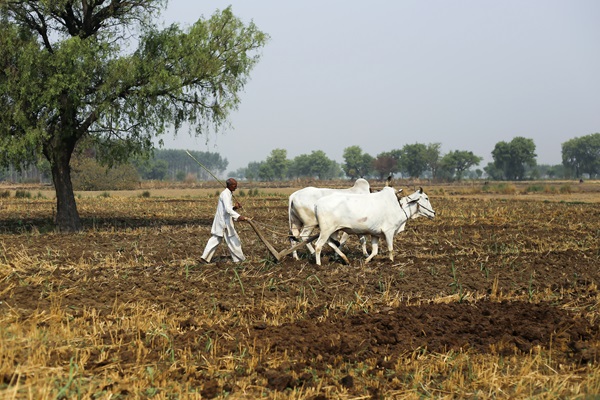
If energy is one front, agriculture is another. The Rabi crop is now coming to market, but the numbers already look suspect. Wheat, pulses and oilseeds were projected on the higher side to begin with, but heat stress and low soil moisture have likely trimmed yields. If recent years are any indication, the revisions after crop-cutting surveys are more likely to come down than go up.
The real concern, though, is the Kharif season. It matters more, and the risk of an El Nino later in 2026 cannot be brushed aside. In India, a weak monsoon does not stay confined to the weather. It feeds straight into output. Rice, pulses, oilseeds and even sugarcane all depend heavily on how the rains hold up.
Natural gas, the backbone for fertilisers such as urea, has become more expensive as global supplies tighten. India’s dependence on imported fertilisers means those shocks land quickly at home. Farmers face higher input costs just as output risks rise, a combination that rarely ends well for prices.
Alongside this, the currency is offering little comfort. At around 94 to the dollar, it reflects both a widening trade deficit and steady capital outflows. A weaker rupee only makes matters worse. Every import, whether fuel or fertiliser, becomes more expensive, adding to price pressures that are already building.
In effect, India is importing inflation on multiple fronts. The simultaneity of these pressures makes the current episode particularly challenging. Each reinforces the other, limiting the scope for easy policy offsets.
The burden of such inflation is regressive. The pain will not be evenly felt. Lower-income households, which spend a larger share on food and fuel, will take the hardest hit. In India, that is not a small constituency. Inflation at this level stops being a macro variable and quickly turns into a lived, political reality.
The real question is: are policymakers ahead of this, or already playing catch-up? Right now, it is hard to tell. This phase calls for foresight and restraint in equal measure. Once inflation takes hold, it does not unwind easily. The signals are already there; and they are getting harder to ignore.
More From BasisPoint