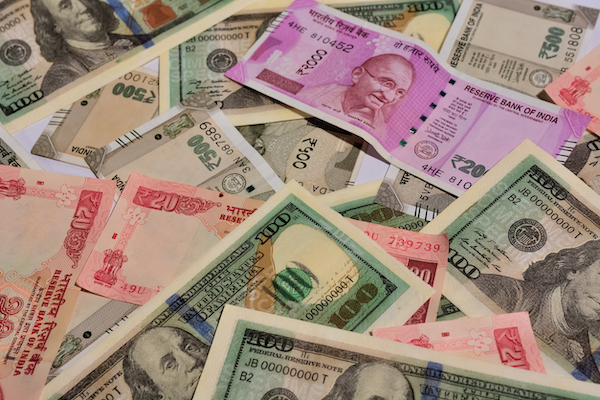
India’s foreign exchange reserves continue to hover near the $700 billion mark, allowing policymakers to remain confident of the country’s external sector resilience. The Reserve Bank of India and government officials have repeatedly pointed to comfortable reserve adequacy metrics, including import cover of around 11 months and reserve coverage exceeding 90% of external debt.
However, beneath the headline numbers, the composition of reserves presents a less comfortable picture.
While total reserves remain near record levels, the most deployable component has declined sharply over the past year. At the same time, a sharp rise in RBI’s short-dollar forward liabilities and growing gold valuation gains have altered the quality of the reserve buffer.
Together, these trends suggest that India’s effective intervention capacity is considerably weaker than what the headline reserve number implies.
FX Assets
India’s total forex reserves stood at $688.89 billion as of May 15, only slightly below the $704.88 billion touched in September 2024.
However, foreign currency assets --the core component used by RBI for currency intervention --have fallen sharply during this period.
Foreign currency assets declined to $545.90 billion from $616.15 billion in September 2024, a drop of more than $70 billion, or over 11%.
This decline is important because foreign currency assets provide the RBI with immediate operational flexibility to intervene in the spot market and smooth excessive volatility in the rupee.
Unlike gold reserves, which are typically monetised only during periods of severe stress, foreign currency assets represent liquid and readily deployable reserves. The sharp erosion in this component effectively weakens the RBI’s intervention strength despite the headline reserve number remaining elevated.
Gold Surge
The resilience in total reserves has been supported significantly by a sharp increase in gold valuation.
India’s gold reserves rose to $119.32 billion in May 2026 from $61.99 billion in September 2024, almost doubling in value within less than two years.
However, the increase in physical gold holdings has been limited.
Gold holdings increased to 880.52 tonnes from 849 tonnes during the same period, implying that the rise in reserve value was driven primarily by appreciation in global gold prices rather than large-scale reserve accumulation.
This distinction matters because valuation gains do not improve the RBI’s liquid foreign currency firepower.
As a result, the stability in headline reserves increasingly reflects mark-to-market gains in gold rather than an expansion in usable foreign currency liquidity.
Forward Risks
An equally important pressure point lies in the RBI’s forward liabilities.
As of March-end, the RBI’s outstanding net short-dollar forward position stood at negative $104.16 billion, compared with negative $18.98 billion in September 2024.
A large short forward position means the RBI has committed to deliver dollars under future contracts.
Headline forex reserves may, therefore, appear large, but future dollar delivery obligations reduce the RBI’s effective reserve buffer.
These forward liabilities reflect prior intervention commitments and reduce the portion of reserves freely available for fresh market operations.
When adjusted for both the fall in foreign currency assets and the large forward liabilities, India’s deployable reserve cushion appears materially lower than what headline reserve data suggests.
The issue becomes increasingly relevant at a time when the rupee faces pressure from elevated crude oil prices, foreign portfolio outflows, and global geopolitical uncertainty. Restoring net deployable reserves, therefore, becomes increasingly important for reinforcing market confidence in the rupee if external sector pressures persist and global financial conditions remain volatile.
.png)