.png)


Chandrika Soyantar is an investment banker and founder Director at Amarisa Capital Advisor.
May 26, 2026 at 10:55 AM IST
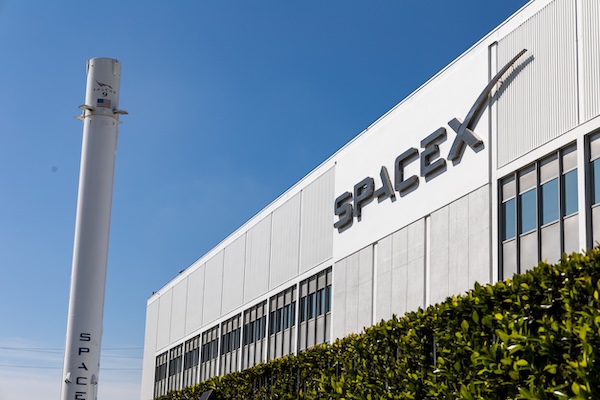
SpaceX’s IPO filing may ultimately reveal less about rockets than about the changing balance of power between companies and capital markets. Exchanges now concede governance flexibility to marquee issuers, reshaping capital markets from systems that once disciplined companies into systems that increasingly negotiate with them.
For most of modern financial history, companies adapted themselves to public markets. Founders accepted disclosure rules, governance constraints, float requirements and investor scrutiny in exchange for access to capital. Exchanges acted as gatekeepers. Markets defined the architecture into which companies entered.
The conventional IPO diluted ownership, standardised disclosure and subjected management to scrutiny under rules largely defined by exchanges and regulators. Frontier companies with sufficient scale, however, now approach public markets with bargaining power already established through private funding, secondary transactions and geopolitical relevance. SpaceX arrives after building extraordinary scale outside public markets.
Regulatory Capitulation
NASDAQ and NYSE competed for the mandate. NASDAQ prevailed. Power balance has shifted. Exchanges increasingly audition for companies large enough to reshape market rules.
Markets now compete through regulatory flexibility rather than liquidity, trading technology or fees.
Effective May 1,weeks before the anticipated listing, NASDAQ rewrote its Fast Entry rule after reports suggested SpaceX demanded immediate index inclusion. Index inclusion once followed market acceptance. Exchanges now appear willing to redesign market architecture in advance to secure the issuer itself.
Nasdaq’s rule changes look less like accommodation than positioning for a broader pipeline of frontier AI and infrastructure listings. Dow Jones Indices is considering similar amendments.
An exchange rewriting rules under conditions set by a single issuer mark one of the clearest signs that bargaining power has shifted away from markets and toward companies large enough to dictate terms.
Dual-class structures once seemed exceptional. Google normalised them in 2004. Meta reinforced them. Investors accepted founder control in exchange for growth exposure.
SpaceX pushes that structure further.
Public investors are not merely buying exposure to a launch company. They are buying into a Musk-controlled ecosystem spanning SpaceX, Tesla, X, Neuralink and xAI. Governance questions now extend beyond voting rights into cross-company influence, related-party dealings and ecosystem opacity.
Not all frontier AI companies are converging toward the same governance structure. Their leadership models increasingly reflect competing philosophies of control.
SpaceX concentrates authority around founder sovereignty. OpenAI reflects corporate-managerial control. Anthropic uses mission-oriented trust structures. Chinese AI firms operate within state-directed strategic systems. Public-private defence ecosystems increasingly combine national-security priorities with market capital.
Anthropic, through its Long-Term Benefit Trust and trust-appointed board majority, is attempting to preserve mission oversight rather than concentrate founder authority. The appointment of Novartis CEO Vas Narasimhan to Anthropic’s board suggests an effort to align AI governance more closely with industries such as healthcare and pharmaceuticals that already operate under heavy regulation.
Reports suggest retail participation in the SpaceX IPO may exceed levels seen in conventional mega listings. Retail participation is often framed as democratisation. It may also serve as regulatory insulation.
Millions of small investors create a political constituency that raises the cost of aggressive oversight. Dispersed ownership weakens coordinated shareholder pressure while simultaneously making intervention politically harder.
Secondary marketplaces and thematic ETFs have already allowed indirect exposure to SpaceX. Capital markets increasingly monetise expectation rather than operating performance.
Frontier technology companies increasingly sit at the intersection of infrastructure, AI, communications, defence and geopolitics. SpaceX simultaneously functions as launch provider, satellite network, defence-adjacent platform and strategic AI-era infrastructure asset.
OpenAI and Anthropic are also preparing paths toward public markets, setting up a competitive phase in which a small group of AI and infrastructure platforms led by Elon Musk, Sam Altman and Dario Amodei compete simultaneously for capital, computer dominance and public-market legitimacy.
The contest no longer centres only on technological capability. It increasingly revolves around which companies can command Wall Street’s deepest pools of capital while negotiating the loosest listing conditions.
Public markets historically disciplined corporate ambition. Increasingly, powerful companies shape the terms under which capital gains access to them.
The SpaceX IPO may therefore mark a turning point for capital markets themselves, shifting the system from one in which companies bent themselves to exchange rules toward one in which exchanges compete to accommodate issuers large enough to reshape those rules.
The more difficult question is whether governance systems can adapt quickly enough to manage technology companies powerful enough to pursue agendas that extend beyond traditional shareholder capitalism. Exchanges competing aggressively for marquee listings may concede more flexibility than markets historically permitted.
More From BasisPoint