.png)

May 29, 2026 at 10:42 AM IST
India's cash economy grew significantly faster than the broader economy in 2025-26, underscoring the continued importance of physical currency despite the country's rapid shift towards digital payments.
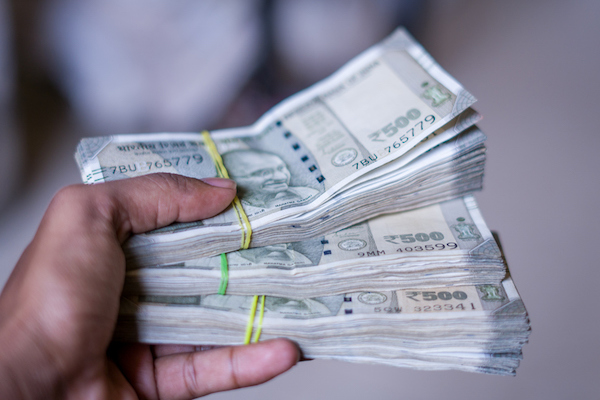
According to the Reserve Bank of India's latest annual report, the value of banknotes in circulation rose 11.9% in 2025-26 to a record ₹41.24 trillion, marking one of the fastest annual increases since the pandemic. The growth in currency holdings appears to have outpaced nominal GDP expansion, pointing to higher cash intensity across the economy.
The rise contrasts with India's digital payments revolution. Unified Payments Interface (UPI) transactions continue to scale new highs, yet demand for physical currency remains robust, showing that digital payments are expanding alongside cash rather than displacing it.
The RBI's latest survey on payment behaviour found a continued preference for cash among households and small retail sellers, suggesting that physical currency remains deeply embedded in everyday economic activity. Even as consumers use digital modes more often for convenience, many still hold and transact in cash, especially in semi-urban and rural areas, informal businesses and cash-intensive service sectors.
The composition of currency in circulation reinforces the trend. The ₹500 denomination now accounts for 85.5% of the total value of banknotes in circulation. Its growing share reflects the gradual replacement of withdrawn ₹2,000 notes and continued preference for high-value notes for storage and transactions.
This pattern suggests India's payments landscape is becoming more hybrid than cashless. Digital channels are gaining ground in formal retail transactions, while cash continues to play a central role in the informal economy and as a store of value for households and businesses.
Several factors may be contributing to the rise in cash holdings. Higher income levels, precautionary savings, election-related spending in parts of the year, and continued activity in cash-intensive sectors may have supported demand for currency. Global economic uncertainty and geopolitical tensions may also have encouraged households and businesses to maintain larger cash buffers.
For policymakers, the trend carries important implications. Currency held outside the banking system is money unavailable for financial intermediation. A sustained rise in cash holdings could, at the margin, weaken monetary policy transmission by reducing the share of savings flowing through bank deposits and other formal financial channels.
The increase also highlights the scale of India's informal economy despite years of formalisation efforts through digitisation, GST implementation and financial inclusion initiatives. Cash remains the preferred settlement mechanism across many segments of economic activity.
The latest RBI data challenges the assumption that digitalisation automatically reduces cash usage. With currency in circulation above ₹41 trillion and rising faster than the economy, physical cash remains a significant part of India's financial system.
More From BasisPoint