.png)

Asian Markets Tumble as Oil Surges Above $100 on Middle East Fears
Here’s your quick read to start the day: a chatty, no-fuss look at overnight moves, the big story, what’s on the docket, and the tickers you need to watch.

Richard is an independent financial journalist who tracks financial markets and macroeconomic developments
March 9, 2026 at 1:51 AM IST
GLOBAL MOOD: Extreme Risk Off
Drivers: Iran-Israel War, Oil Above $100
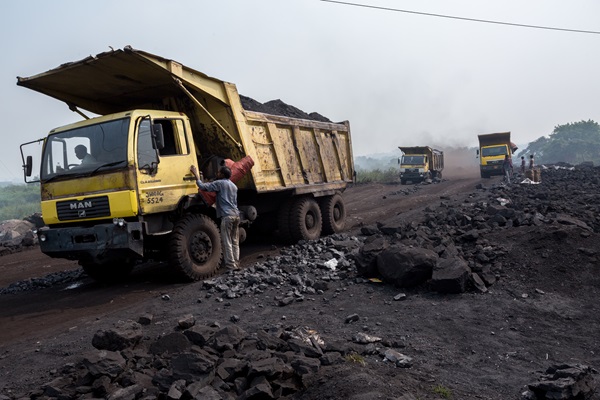
Asian equity markets tumbled at the start of the week, signalling a sharp shift to risk-off sentiment as oil prices surged past $100 a barrel amid escalating tensions in the Middle East. Japan’s Nikkei 225 fell about 5.8% after briefly sliding more than 6 % earlier in the session, while South Korea’s Kospi dropped 6.7% in morning trade as investors rushed to price in the economic fallout of higher energy costs.
The sell-off followed a dramatic spike in crude prices, with US benchmark WTI jumping 17.4% to $106.80 per barrel and Brent crude rising 15.65% to $107.20--levels last seen during the early phase of Russia’s 2022 invasion of Ukraine. The rally in oil has heightened fears of renewed inflationary pressure and slower global growth.
Investor anxiety intensified after Iran named Mojtaba Khamenei as the next supreme leader, reinforcing expectations of a hardline stance in Tehran. With the Strait of Hormuz effectively paralysed and no signs of de-escalation between Iran, the US and Israel, markets are bracing for a prolonged period of elevated energy prices and geopolitical risk.
TODAY’S WATCHLIST
- Germany Industrial Production Data
On the monetary policy front, Fed officials offered strikingly divergent views on the oil shock. Governor Christopher Waller argued the spike in gasoline prices would be temporary and unlikely to warrant a policy response, saying a two-month unwinding would have little lasting impact. Governor Stephen Miran took the opposite view, saying surging oil could sap broader demand and was pushing him toward "even more dovish policy" and steeper rate cuts. Kansas City Fed President Jeff Schmid added a structural dimension, warning that AI is causing businesses to pause hiring decisions while baby boomer retirements are creating lasting labour market shifts, a combination that could keep unemployment elevated regardless of monetary policy. The three-way Fed split reflects a central bank deeply uncertain about how to respond to a shock that is simultaneously inflationary and contractionary.
Data Spotlight
In February, the US economy experienced a decrease of 92,000 jobs, marking the largest decline in four months and falling significantly short of the anticipated gain of 59,000. The loss was primarily attributed to healthcare strikes, which cost 28,000 positions, manufacturing reductions of 12,000, and continued federal government employment cuts totaling another 10,000. Furthermore, revisions to previous data exacerbated the situation, with December and January payrolls collectively adjusted downward by 69,000, revealing a labour market weaker than previously indicated. Average hourly earnings increased by 0.4% month-on-month to $37.32, exceeding forecasts of 0.3%, while annual wage growth accelerated to 3.8%. This sustained wage growth contributed to persistent services’ inflation despite contracting hiring trends. Retail sales declined by 0.2% in January, as notable decreases in motor vehicles, gasoline stations, electronics, and clothing were partially offset by gains in furniture, building materials, and non-store retailers; the control group rose a modest 0.3%.
Takeaway:
WHAT HAPPENED OVERNIGHT
- US stocks tumble as stagflation fears grip markets
- The S&P 500 lost 1.4%, Nasdaq fell 1.6%, and the Dow dropped 1% in a broad risk-off selloff.
- Non-farm payrolls fell by 92,000 in February, unsettling markets amid high energy prices.
- Unemployment increased to 4.4%, fueling concerns about stagflation.
- WTI surging 12% to $90 and a deteriorating jobs market have combined to box in the Federal Reserve cutting risks inflation, holding risks recession.
- BlackRock capped withdrawals from one of its private credit funds for the first time, down 7.2%, as private credit stress spreads beyond Blackstone and Blue Owl.
- Trump's call for Iran's unconditional surrender and warnings from regional energy ministers about production disruptions raised energy costs to levels that threaten global manufacturing.
- The S&P 500 lost 1.4%, Nasdaq fell 1.6%, and the Dow dropped 1% in a broad risk-off selloff.
- US Treasury yield holds at 4.16% as energy-driven inflation fears override jobs shock
- The 10-year Treasury yield rose to 4.16%, recovering from an early dip despite the shocking 92,000 job losses in February.
- Surging oil prices overrode the weak jobs data, WTI approaching $88/barrel kept inflation fears firmly in the driving seat.
- Kuwait began cutting production at some oil fields while Qatar warned Gulf exporters could shut down entirely within weeks a supply shock of potentially historic proportions.
- Trump's demand for unconditional Iranian surrender on day seven of the war offers no near-term path to energy market relief.
- The unemployment rate edged up to 4.4% and retail sales declined in January but bond markets are prioritising inflation over recession risk for now.
- The 10-year Treasury yield rose to 4.16%, recovering from an early dip despite the shocking 92,000 job losses in February.
- US Dollar slips to 99.1 on jobs shock but holds weekly gains on safe-haven demand
- The US dollar index fell to 99.1 after the February payrolls miss raised pressure on the Fed to resume cutting rates.
- Despite Friday's dip, the dollar was up around 1.5% for the week, safe-haven demand from the West Asia conflict providing a firm floor.
- Tehran launched a fresh wave of missile and drone strikes across the Gulf as the US-Israeli offensive entered its seventh day.
- The jobs shock and the inflation risk from $90 oil are pulling the dollar in opposite directions as rate cut hopes weaken it, energy-driven inflation and safe-haven flows support it.
- The US dollar index fell to 99.1 after the February payrolls miss raised pressure on the Fed to resume cutting rates.
- Crude oil surges over $90 amid Hormuz shutdown; Qatar warns of $150 prices
- Brent crude prices jumped 8.5% to $92/barrel on Friday as the Strait of Hormuz shutdown entered its seventh day.
- WTI surged over 12% to above $90/barrel, its highest level in years.
- Qatar warned crude could surge to $150/barrel, a level that would represent a catastrophic inflationary shock for the global economy.
- The rally was driven by the complete halt of shipping through the Strait of Hormuz, cutting off a critical artery for global energy flows.
- At $92, Brent is rapidly approaching the $100 psychological threshold that analysts had flagged as a near-term target.
- Brent crude prices jumped 8.5% to $92/barrel on Friday as the Strait of Hormuz shutdown entered its seventh day.
Day’s Ledger*
Economic Data
- China Inflation Data
- German Industrial Production Data
Corporate Actions
- Indian Railway Finance Corporation to consider fund raising
- Power Grid Corporation of India to consider fund raising
- Railtel Corporation Of India to consider dividend
Tickers to Watch
- DR REDDY'S LABORATORIES informed that US Department of Justice closed its FCPA inquiry into alleged improper payments, with no enforcement action recommended.
- GUJARAT NARMADA VALLEY FERTILIZERS & CHEMICALS informed that RLNG allocation cut to 60% of daily contracted quantity due to LNG supply disruptions, impacting Neem urea production.
- KIRLOSKAR ELECTRIC COMPANY CFO Sanjeev Kumar S relieved from services effective March 6.
- KOTAK MAHINDRA BANK informed that RBI approved the appointment of Anup Kumar Saha as Whole-time Director (Executive Director).
- MAX ESTATES secured RERA approval for the 10-acre Max One project in Noida with ~2.5 million sq ft potential, expected sales potential of ₹20 billion and annuity rental income potential of ₹1.2 billion.
- MAX FINANCIAL SERVICES informed that Axis entities have given in-principle no-objection to the proposed merger of Max Financial Services into Axis Max Life Insurance.
- MEESHO received an Income Tax assessment order for AY24 with a tax demand of ₹14.99 billion, including interest.
- RITES received revised railway electrification project estimates worth ₹7.29 billion from South Western Railway and a consultancy order worth ₹0.45 billion from the West Bengal government.
- TATA POWER partnered with Salesforce to digitally transform rooftop solar, EV charging, and smart home solutions businesses.
- ULTRATECH CEMENT to acquire a 26.2% stake in Sunsure Solarpark Thirty Eight to meet renewable energy requirements and captive power needs.
- YES BANK appointed Vinay Muralidhar Tonse as MD & CEO (Designate) effective March 12; he will assume charge as MD & CEO on April 6.
Must Read
- Ayatollah Khamenei's son Mojtaba named Iran's new supreme leader
- Microsoft to join Ambani & Tata’s $270 billion club as war clouds darken
- West Asia turmoil puts $11.8 billion of India’s farm exports at risk: Report
- West Asia conflict could lift India's inflation, hit GDP growth: Economists
- The road to 2047: Some thoughts for banking panel for Viksit Bharat
- Goldman Says Hedge Funds Add Short Bets on US Stocks Amid Rout
- How Donald Trump is pushing the Supreme Court to weaken federal judges
- Tata’s Fights Are Going Public. Why Doesn’t Its Equity?
See you tomorrow with another edition of The Morning Edge.
Have a great trading day
Trump, Anthropic and the Lesson for India: Build an AI PSU
In The Matrix, taking the red pill meant choosing reality over comforting illusion.
TK Arun writes, India’s AI debate may be approaching a similar moment.
The dispute between Anthropic and the US government reveals a simple truth: advanced AI systems are not global public goods. They are strategic assets tied to national interests.
When national security is involved, governments can override corporate contracts, restrict technology access, or direct how companies deploy their tools.
For India, the question is uncomfortable but unavoidable: can strategic AI capabilities be safely outsourced to foreign platforms?
If AI is going to shape national security, intelligence analysis, and defence planning, India may need to build sovereign AI capability of its own.
Sometimes policy begins with accepting reality.
(*Compiled from various media sources)
More From BasisPoint