.png)

Asian Markets Edge Lower as Geopolitics Temper Optimism
Here’s your quick read to start the day: a chatty, no-fuss look at overnight moves, the big story, what’s on the docket, and the tickers you need to watch.
April 17, 2026 at 1:39 AM IST
GLOBAL MOOD: Cautiously Risk-off
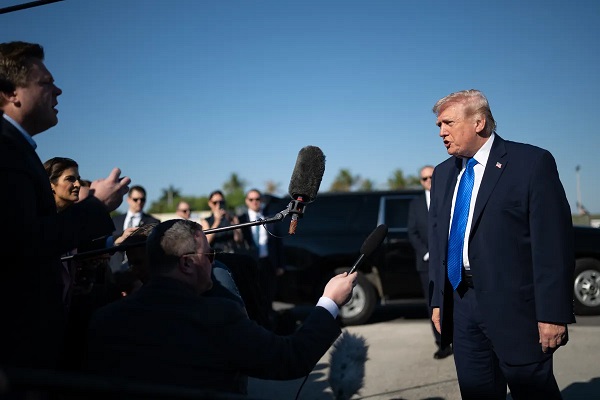
Asia-Pacific markets opened with a cautious risk-off bias on Friday, as lingering geopolitical uncertainty offset optimism over potential de-escalation in the Middle East. While Donald Trump signalled that the Iran conflict could end soon and confirmed a temporary Israel–Lebanon ceasefire, investors remained wary ahead of the expiry of the US–Iran truce.
Equities diverged from Wall Street’s rally, reflecting uncertainty around the durability of ceasefires and the timing of fresh negotiations. Oil prices declined, indicating some easing in supply concerns, but volatility persisted.
Additional caution stemmed from policy signals by the Bank of Japan, as remarks on low real rates added to macro uncertainty. Overall, markets remain in a wait-and-watch mode, balancing diplomatic progress against unresolved geopolitical risks.
TODAY’S WATCHLIST
THE BIG STORY
Trump has struck an increasingly confident tone, suggesting that the war could “end pretty soon”, reinforcing expectations of a potential breakthrough. A successful agreement would not only de-escalate military tensions but also help restore normalcy in the Strait of Hormuz, a key artery for global oil trade. For the US administration, securing such a deal would represent a significant geopolitical win after weeks of strained diplomacy and supply disruptions.
Beyond geopolitics, the ripple effects are being felt in monetary policy. In Europe, rising energy costs have pushed inflation above the ECB’s 2% target, prompting policymakers to signal readiness to act if price pressures persist. While the timing of any rate move remains uncertain, the conflict has clearly added complexity to the inflation outlook, highlighting how geopolitical developments continue to shape the global macro environment.
Data Spotlight
US industrial production declined 0.5% month-on-month in March 2026, marking the sharpest drop since September 2024 and missing expectations, with weakness across utilities (-2.3%), mining (-1.2%) and manufacturing (-0.1%). Capacity utilisation also eased to 75.7%, indicating slack in industrial activity.
However, labour market data remained resilient, with initial jobless claims falling to 207K from 218K, below expectations and marking the largest weekly decline since February. The four-week average edged up slightly to 209,750, while continuing claims rose to 1.82 million, suggesting limited layoffs but some pressure in ongoing unemployment.
Regional manufacturing signals were mixed, with the Philadelphia Fed index rising sharply to 26.7, supported by strong new orders and shipments, though employment weakened. Meanwhile, the New York Fed index improved to -14 but remained in contraction territory.
Takeaway:
WHAT HAPPENED OVERNIGHT
- US stocks notch record highs as ceasefire optimism supports gains
- S&P 500 gained 0.26% and Nasdaq rose 0.36%, both closing at fresh record highs for a second straight session.
- Dow Jones edged up 0.24% as broader sentiment remained positive but cautious.
- Gains driven by optimism around Israel–Lebanon ceasefire and potential US–Iran talks.
- Donald Trump signals progress on diplomacy, including possible nuclear agreement framework.
- Market action remained choppy despite record highs, reflecting lingering uncertainty.
- PepsiCo rose 2.3% on strong earnings, while Abbott fell 6% after cutting profit forecast.
- Charles Schwab dropped 7.6% on results, and Netflix declined 8% post earnings in after-hours.
- S&P 500 gained 0.26% and Nasdaq rose 0.36%, both closing at fresh record highs for a second straight session.
- US Treasury yield steady as diplomacy hopes anchor rate expectations
- The 10-year yield holds around 4.28% after recent volatility.
- Yields stabilise as optimism builds around potential US–Iran diplomatic resolution.
- Donald Trump signals conflict nearing end, supporting risk sentiment.
- Potential partial reopening of Strait of Hormuz via Oman adds to de-escalation hopes.
- Earlier decline in oil prices helped ease inflation concerns and pull yields lower.
- Markets continue to expect Fed to hold rates steady through the year.
- Rate outlook remains anchored amid easing geopolitical risk premium.
- The 10-year yield holds around 4.28% after recent volatility.
- US Dollar rebounds on technical recovery amid deal uncertainty
- The US dollar index rises 0.2% to 98.19, snapping recent losing streak.
- Gains driven by technical rebound after eight consecutive sessions of decline.
- Donald Trump signals conflict may be nearing resolution, shaping expectations.
- Markets await clarity on potential US–Iran deal and upcoming talks in Pakistan.
- Earlier weakness reflected improved risk appetite following ceasefire optimism.
- Dollar recovery remains limited as broader sentiment still leans towards risk assets.
- The US dollar index rises 0.2% to 98.19, snapping recent losing streak.
- Oil jumps on skepticism over peace talks and supply disruption fears
- Brent crude rises 4.7% to $99.39 per barrel, while WTI gains 3.7% to $94.69.
- Gains driven by doubts that US–Iran talks will resolve disruptions to energy flows.
- Ongoing blockade and restricted movement through Strait of Hormuz sustain supply concerns.
- Intraday move reflects re-pricing of geopolitical risk premium despite ongoing negotiations.
- Markets remain cautious about the durability of any near-term diplomatic breakthrough.
- Oil continues to trade below peak levels but remains highly volatile.
- Brent crude rises 4.7% to $99.39 per barrel, while WTI gains 3.7% to $94.69.
Day’s Ledger*
Economic Data
- Euro Current Account
- Euro Balance of Trade
- India Credit-Deposit Data
Corporate Actions
- Jan-Mar Earnings: Aditya Birla Money, Bajaj Consumer, Hathway Cable, Jio Financial, Mastek
- Onix Solar board to consider raising funds
Policy
- ECB Lane Speech
- ECB Buch Speech
- BoE Taylor Speech
- Fed Barkin Speech
- Fed Waller Speech
- IMF/World Bank Spring Meetings
- CCI closes Adani case, says company has no 'dominance' in power market
- BPCL arm to invest $2.8 billion in Brazil's oil and gas exploration project
- No purchase delays despite West Asia conflict, says Ashok Leyland
- Vedanta challenges Adani's JAL plan, flags flaws in CoC scoring process
- Max Healthcare to add 1,200 beds in FY27, says Chairman Abhay Soi
- India a very high-priority market, Fortis primary growth vehicle: IHH CEO
- HDFC Life Insurance Q4 profit rises 4%; HDFC Bank to infuse ₹10 billion
- Wipro Q4 results: Net profit dips 1.9%, signals weak growth outlook
Must Read
- Trump announces 10-day ceasefire between Israel, Lebanon
- India's strong growth outlook intact despite global volatility: Govt
- Russian oil flows to India to continue despite US ending sanctions waivers
- No discrimination against any state under women quota Bills, says PM
- Currency in circulation rose ₹4.4 trillion in FY26, most since demonetisation
- IMF urges targeted buffers, reforms for India amid West Asia shock
- India, Russia explore deeper steel sector cooperation at joint round table
- RBI to conduct ₹2 trillion VRRR to absorb surplus liquidity in system
See you tomorrow with another edition of The Morning Edge.
Have a great trading day
𝐓𝐡𝐞 𝐃𝐞𝐥𝐢𝐦𝐢𝐭𝐚𝐭𝐢𝐨𝐧 𝐂𝐨𝐧𝐮𝐧𝐝𝐫𝐮𝐦: 𝐍𝐨𝐫𝐭𝐡 𝐯𝐬 𝐒𝐨𝐮𝐭𝐡 𝐅𝐥𝐚𝐫𝐞𝐬 𝐔𝐩 𝐢𝐧 𝐏𝐨𝐥𝐥 𝐒𝐞𝐚𝐬𝐨𝐧
Delimitation was always going to return. What was less expected is how sharply it would reopen India’s deepest political fault line. The arithmetic is simple but uncomfortable. What was once a temporary political compromise is now a structural question about representation, incentives, and federal balance.
Amitabh Tiwari writes, So what defines fairness here? Should representation follow population strictly, or should it account for development outcomes and policy choices? If states that controlled fertility lose influence, what signal does that send for future governance? And with women’s reservation tied to delimitation, does this debate now shape not just political balance, but the structure of representation itself?
(*Compiled from various media sources)
More From BasisPoint