.png)



Dehuti Jani is an experienced project manager who also works as an independent financial journalist.
August 3, 2026 at 11:39 AM IST
A temporary Reserve Bank of India facility intended to draw stable foreign currency into the country has sharply altered the distribution of Foreign Currency Non-Resident (Bank) deposits across lenders, with HSBC emerging as the largest beneficiary.
Outstanding FCNR(B) deposits across banks rose to $60.55 billion as of July 30 from $32.56 billion on June 5, an increase of $27.99 billion, or 86%, in just 55 days, according to bank-wise data tabled by the Finance Ministry in the Lok Sabha.
To be sure, the latest data from RBI shows the figure has risen to $36.73 billion as on July 31.
As per the Jule 30 data from the government, HSBC alone accounted for $6.14 billion, or nearly 22%, of the systemwide increase. Its outstanding FCNR(B) deposits surged to $6.26 billion from just $120 million at the beginning of the period.
Standard Chartered Bank, which reported no outstanding balance on June 5, accumulated $1.86 billion by July 30. Together, HSBC and Standard Chartered accounted for nearly 29% of the overall increase in FCNR(B) balances.
The increase was distributed almost equally among private sector, public sector and foreign banks in absolute terms, but the rate of expansion varied sharply.
Private sector banks recorded the largest aggregate increase, adding $10.73 billion. Public sector banks added $8.84 billion, while foreign banks increased their balances by $8.37 billion.
The most striking change was in the position of foreign banks. They held only 1.9% of outstanding FCNR(B) deposits on June 5. By July 30, their share had climbed to 14.8%.
Foreign banks consequently captured almost 30% of the incremental deposits, despite starting with a considerably smaller base than either public or private sector banks.
The concentration of gains at HSBC and Standard Chartered suggests that banks with established international networks and access to non-resident customers were particularly successful in expanding their FCNR(B) books during the window.
HSBC recorded the largest absolute increase among all banks, followed by State Bank of India and ICICI Bank.
SBI added $4.12 billion, taking its outstanding balance to $13.82 billion. It remained the largest individual holder of FCNR(B) deposits despite HSBC’s rapid expansion.
ICICI Bank added $3.70 billion, lifting its balance to $6.06 billion. Kotak Mahindra Bank recorded an increase of $1.66 billion, while Axis Bank and HDFC Bank added $1.59 billion and $1.41 billion, respectively.
The three largest gainers—HSBC, SBI and ICICI Bank—accounted for almost half of the increase across the banking system. The top 10 banks captured nearly 84% of the incremental balances.
Despite the sharp expansion at foreign banks, domestic lenders continued to hold most FCNR(B) deposits.
Private sector banks held $25.68 billion as of July 30, narrowly exceeding the $25.59 billion held by public sector banks. Together, the two groups accounted for nearly 85% of total outstanding deposits.
SBI alone held almost 23% of the systemwide FCNR(B) balance. HSBC’s share rose to 10.3%, followed by ICICI Bank at 10%, HDFC Bank at 9% and Axis Bank at 7.7%.
The data therefore show two simultaneous trends: domestic banks retained their dominance in the stock of deposits, while foreign banks secured a disproportionately large share of the recent increase.
RBI Facility
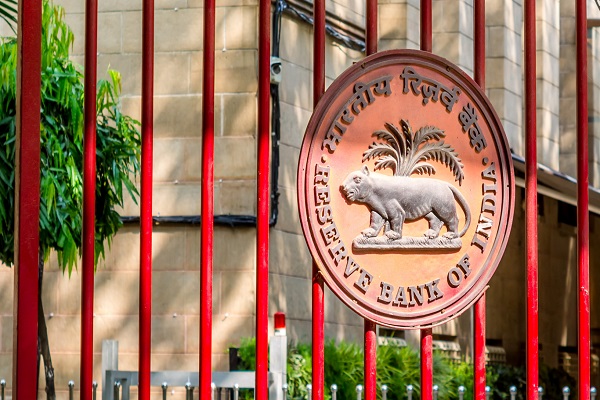
The RBI announced the dollar-rupee swap facility on June 5 to attract stable foreign currency inflows, strengthen India’s balance of payments and ease pressure on the rupee.
The facility covers fresh or renewed FCNR(B) deposits with maturities ranging from three to five years. Deposits mobilised between June 8 and September 30 are eligible, while the swap facility will remain available until October 16.
Banks can swap the foreign currency mobilised through eligible deposits with the RBI. The first leg of the transaction adds to the central bank’s foreign exchange reserves and injects rupee liquidity into the banking system. Both effects are reversed when the swaps mature.
The RBI also exempted eligible deposits from cash reserve ratio and statutory liquidity ratio requirements, improving their economics for banks.
What the Numbers Do Not Show
The parliamentary data capture the change in outstanding balances between two dates. They do not identify exactly how much each bank mobilised as fresh deposits eligible for the swap facility.
The figures may also reflect renewals, maturities and other movements in banks’ outstanding FCNR(B) books. The reply does not disclose the interest rates offered by individual banks, the geographical sources of the deposits or the maturity distribution of the inflows.
It also does not quantify the eventual cost of the swap support. The Finance Ministry said the cost would depend on the amount of foreign exchange mobilised, the maturity of the swaps, the exchange rate and the applicable forward premium.
The initial numbers nevertheless show that the RBI’s intervention has produced a substantial increase in foreign currency deposits. They also reveal that the benefits have not been distributed evenly: international banking reach has mattered almost as much as domestic balance-sheet scale.
More From BasisPoint