.png)

Phynix is a seasoned journalist who revels in playful, unconventional narration, blending quirky storytelling with measured, precise editing. Her work embodies a dual mastery of creative flair and steadfast rigor.
April 6, 2026 at 1:30 AM IST
Dear Insighter,
This used to be a local feeling. You compared yourself to the room you were in. Now the room is infinite, and everyone in it appears to be thriving. You begin to wonder whether your progress is earned or incidental, whether your instincts are sharp or simply confident, whether what you’ve built is real or just held together by the benign inattention of others.
And then you turn to the news and encounter the opposite condition entirely.
Donald Trump, confronting an escalating conflict with Iran, posts a bizarre ultimatum. “Open the F****n’ Strait… or you’ll be living in Hell — JUST WATCH!” It is not merely the language that jars; it is the absence of hesitation. No second-guessing, no visible doubt, no sense that words at that level carry consequences beyond the immediate performance. If imposter syndrome is an excess of self-awareness, this is its inversion: certainty unburdened by reflection.
R. Gurumurthy’s reading of this moment situates it within a broader shift. The neoliberal promise that markets would regulate themselves has given way, gradually and then abruptly, to a system where state power is personalised and projected. The invisible hand has not disappeared so much as been replaced by something more direct, more forceful, and less accountable. The result is a world where neither democracy nor capitalism emerges intact, and where Francis Fukuyama’s “end of history” looks less like a conclusion and more like a pause that overstayed its welcome.
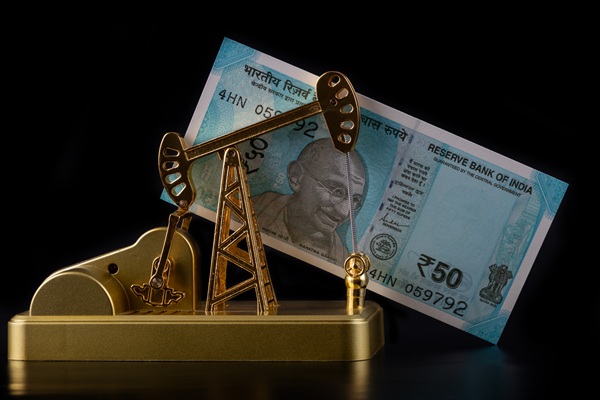
For India, this is no longer distant spectacle. As Smita Roy Trivedi and Abhiman Das outline, the economy is now caught in a tightening triple bind: rising crude, a weakening rupee, and widening external pressures converging at an awkward moment. Brent remains elevated, the rupee continues to weaken. The $4 trillion narrative, already quietly hedged, begins to look aspirational when adjusted for currency movement. In dollar terms, GDP has grown by only $0.69 trillion over four years—not the headline trajectory, but the more honest one.
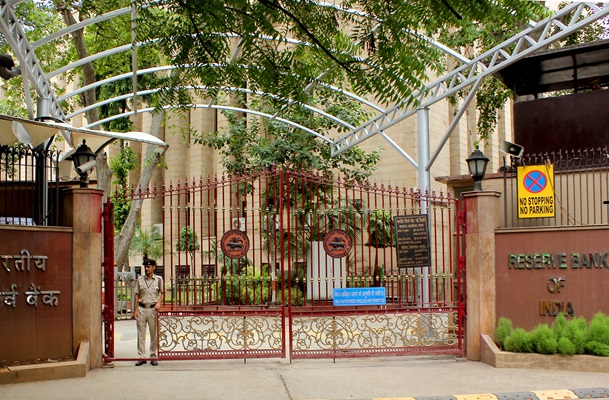
Arvind Mayaram describes this not as a crisis fully formed but as one taking shape. The policy response has been active, yet largely defensive. Capex continues even as consolidation is signalled. The Reserve Bank intervenes, but selectively. Inflation is managed through a mix of monetary tightening and administrative measures. What is missing, as Mayaram puts it, is coherence: a clearly articulated hierarchy of priorities that signals intent rather than mere vigilance.
The RBI’s recent actions in currency markets illustrate both intent and its complications. As V. Thiagarajan reports, the central bank has effectively dismantled arbitrage channels between onshore and offshore rupee markets, restricting non-deliverable forwards and limiting derivative rebooking. The goal is to reduce speculative positioning. The consequence, as Quixotic Banker notes, is that risk is now managed by geography rather than exposure, introducing distortions that may quietly erode trust. Gurumurthy offers a counterpoint: if banks built directional positions while aware of underlying vulnerabilities, complaints about intervention ring hollow. Both arguments hold. The tension between stability and credibility remains unresolved.
That tension extends into monetary policy. Rajendra Paramanik and Unninarayanan Kurup describe the breakdown of the so-called “divine coincidence,” where controlling inflation also stabilised growth. With oil shocks, fertiliser disruptions, and capital volatility interacting simultaneously, the MPC faces a landscape where rate decisions alone cannot resolve underlying pressures. Aabhas Pandya adds that India has cushioned consumers from price signals, particularly in fuel, delaying behavioural adjustment. The risk is that the eventual correction arrives more sharply.
Anupam Sonal offers a framework for financial stability through the crisis: liquidity support, sharper supervision, stronger internal risk discipline. But he notes that the risk lies not in any single factor but in the interaction of multiple pressures across macroeconomic, financial, and operational domains.
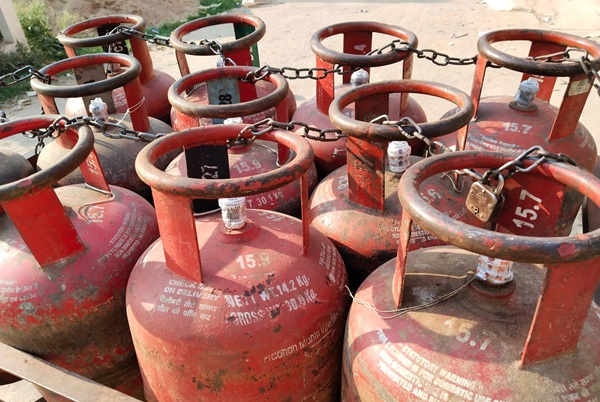
TK Arun’s argument cuts through the noise. Expanding induction cooking requires more than subsidies; it demands infrastructure, certification capacity, and behavioural shifts. More controversially, he argues for prioritising domestic gas for fertiliser production over residential consumption. The trade-off is politically unappealing but economically clear: cheaper food versus broader energy access.
Parallel to these immediate concerns are deeper structural questions. Srinath Sridharan and Anand Venkatanarayanan point to the emerging contest over payment systems, where platforms like mBridge enable cross-border settlements outside the dollar system. If reserves can be frozen and banks excluded, then financial infrastructure itself becomes geopolitical terrain. India’s challenge is not simply to participate but to shape these systems before they harden.
A similar urgency appears in energy strategy. Sharmila Chavaly notes that investment choices today—between gas pipelines and grid capacity, between incremental fixes and systemic shifts—will define whether India evolves into what she calls an electrostate. China’s scale in storage, solar manufacturing, and grid integration underscores both the opportunity and the narrowing window.
Trade policy carries its own quieter risks. Surendar Singh points out that India’s new FTAs contain provisions that receive far less scrutiny than export projections. These clauses will shape constraints years from now, long after the celebratory headlines fade.
Meanwhile, K. Srinivasa Rao documents a rise in fraud amounts even as case counts fluctuate, suggesting deeper vulnerabilities. Rabi Mishra’s work on culture risk highlights where the failure often lies: not in formal controls, but in whether warning signs are escalated or absorbed. Mishra and Sridharan’s critique of independent directors reinforces this pattern. Independence exists, but within boundaries set by the very structures it is meant to check. The result is not overt failure, but managed compliance.
The Insolvency and Bankruptcy Code offers another lens. Nilanjan Banik notes recovery rates around 32% and resolution timelines far exceeding statutory limits. The architecture remains sound in theory, but repeated deviations erode confidence in practice. Reform Compass, examining AI in courtrooms, captures a related theme: tools can assist, but without disciplined oversight they introduce new forms of risk. Four fabricated precedents in a single case illustrate how quickly credibility can unravel.
Elsewhere, the signals are more mixed. Urban Company’s InstaHelp crosses a million bookings in a largely unorganised market, suggesting scale where none seemed obvious. Yet Krishnadevan V notes that market re-rating reflects uncertainty as much as optimism. He also writes about Unilever selling its global foods business, but HUL still carrying the complexity. The divergence reflects how differently the same category is being positioned across geographies. Sharmila Kantha’s review of industrial park schemes traces a familiar cycle of ambition outpacing execution, while Indra Chourasia’s case for tokenisation highlights opportunities that remain contingent on institutional follow-through.
And then there is the labour market. Female participation remains strikingly low, particularly in urban India. The constraints are not about capability but about safety, norms, and workplace design. The gap between rhetoric and reality persists.
Across these domains, the recurring theme is credibility. Systems function not only on design but on belief: that rules will hold, that signals matter, that institutions behave as intended. When that belief weakens, adjustment becomes more abrupt and more costly.
At its core, it is also a question of credibility, but directed inward. A doubt not about systems, but about one’s place within them. The sense that validation is external while uncertainty is internal, and that the two refuse to align. No amount of achievement fully resolves it, because the gap is perceptual.
The contrast with figures like Trump is stark. There is no visible gap, no hesitation. It is tempting, in moments of self-doubt, to envy that clarity. But what appears as confidence often masks something else entirely: an absence of constraint.
The world, after all, is full of people performing certainty they do not feel.
The strait, for now, remains partially open. And the rest of us, imposters or otherwise, continue anyway.
Until next time,
Phynix
Also Read
From Oil Shock to Fed Dilemma: How War Is Reshaping Markets by Manoj Rane: A conversation with Dr Bento Lobo on whether the war ends quickly or drags on, and what it means for oil, gold, equities, and the Fed's impossible choice.
Credit Cards Lose Their Skin, Not Their Relevance by Ganga Narayan Rath and Chirayu Sharma: As UPI absorbs low-ticket flows, credit cards are being disintermediated at the surface but entrenched beneath as embedded credit rails.
India's Liquidity Cycle May Not Be Driven by Policy Alone by Abhishek Dey: RBI policy isn't the only driver of liquidity; sharp swings in state government cash balances may also influence India's banking system liquidity cycle.
We May Not Like It, But We Need a Draupadi to Laugh at Us by Kirti Tarang Pande: Not to humiliate us but to puncture that dangerous moment when illusion starts feeling like certainty.
Sarci-Sense: Teens Are Parenting Their Parents Now by Srinath Sridharan: Adolescence is the stage when Indian parents are finally forced to unlearn control and relearn respect.
Who Said Yes? The Quiet Erosion of Consent in Everyday Life by Kalyani Srinath: When sharing becomes effortless, are we still asking who agreed, who is seen, and what remains private?
Why Iran Is Beating America by Brahma Chellaney: Iran has broken the "asymmetric cost" model that sustained the illusion of American invincibility.
More From BasisPoint