.png)


T.K. Arun, ex-Economic Times editor, is a columnist known for incisive analysis of economic and policy matters.
March 26, 2026 at 3:26 AM IST
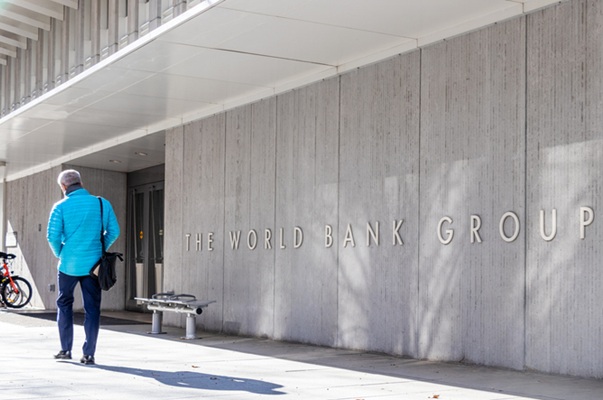
In 1992, Pope John Paul II issued a declaration acknowledging that it was wrong for theologians of the Church to have condemned Galileo for his heliocentric theory in the 17th century. On 17 March, World Bank chief economist Indermit Gill reprised this act of sanctification of what had been condemned as apostasy, when he admitted that the Bank had been wrong in dismissing the industrial policies that had worked the East Asian miracles as a special case, unworthy of emulation by the rest of developing world. He was explaining the rationale for a new World Bank report, Industrial Policy for Development: Approaches in the 21st century.
Subject to conditions of macroeconomic management, fiscal and governance capacity, developing countries can make use of surgical, but never blunt or sweeping, policies of state intervention to boost growth, said the economist, with a liberal helping of hemming and hawing, not entirely unexpected in a case of unforced recantation of dogma.
The World Bank did not need to examine the development experience of South Korea and other East Asian miracle economies to appreciate the value of sensible government intervention to boost the economy. The journey of innovation-led growth of the United States, supposed home of free-market policies, ideology and advocacy is testament to the utility of state support for economic advancement.
It is not unusual for American presidents to have an outsize impact on not just geopolitics but also the global economy and technological evolution. Lincoln started it, with the law to create land grant universities, the state universities that proliferate in every American state.
Franklin Delano Roosevelt institutionalised Big Science, with his Office of Scientific Research and Development reporting directly to the President. OSRD was headed by an MIT academic, inventor and entrepreneur, Vannevar Bush, who thought up the idea of roping in the research and engineering skills of US universities to support the US war effort. The practice of state-funded research can be traced to the Roosevelt-Vannevar Bush partnership.
Bush set up the radar firm that later became Raytheon and initiated the Manhattan Project. His 1945 report, Science, the Endless Frontier, formed the basis for the National Science Foundation, formally set up in 1950, when Harry Truman was President. NSF funds basic research in science and mathematics.
When the Soviet Union, in 1957, launched Sputnik, the first manmade satellite, Dwight Eisenhower was President. If the Soviets could launch a satellite into space, they could use similar rockets to very well drop an atomic bomb anywhere in the US. In 1958, he set up the Advanced Research Projects Agency, to create American science and technology capability that would guard Americans against such technological surprises from its Cold War rival. Months later, he also set up NASA, taking space and aviation research out of ARPA. ARPA then started focusing on advanced electronics, integrated circuits, and computing.
ARPA funded research at one or two removes from the specific requirements of the US army, navy and air force, roping in America’s universities, with special focus on MIT, Stanford and University of California. ARPANET, the prototype of the modern Internet, over which packets of data were sent, was one of its achievements.
John Fitzgerald Kennedy mobilised funds and patriotism to deliver on his promise to land a man on the moon within the decade of the Sixties. The Apollo missions followed. Kennedy himself was assassinated, but his dream lived on, and took a giant leap for mankind on the moon.
The US Department of Defence directly, right after World War II, and through ARPA, after it was set up, served as a generous provider of funds, both risk capital that today would be called venture funding, and grants, and an assured market for products coming out of Stanford University’s research response to problems posed to its community of researchers, faculty and students.
Stanford’s Dean of Engineering, Frederick Terman saw an opportunity to grow his department by making effective use of DoD funds, and encouraged his faculty and students, including Hewlett and Packard, to set up enterprises to convert their research at Stanford into products and systems for the government. Many innovative companies, new inventions and an ecosystem and place later dubbed Silicon Valley grew out of this. Once the ecosystem matured, private funds took over.
Silicon Valley grew out of state funding of projects deemed to have direct or indirect defence applications. Apostles of free market economics are fond of criticising India’s five-year plans, Japan’s Ministry of International Trade and Investment, and China’s state-sponsored, state-funded industrial research and policy. They are able to do this only because they choose to close their eyes to the history of development of modern computing and software industries.
In the wake of the Vietnam war, hugely unpopular on American campuses, there was resistance to universities accepting defence-sponsored research projects. ARPA appended the prefix Defence in 1973 to become DARPA, to fund specifically defence-oriented research.
Under Clinton, DARPA reverted to ARPA but swiftly reverted to DARPA. It started funding projects like the mRNA vaccine technology.
Presidents Reagan, George Bush Sr and Bill Clinton funded and supported the human genome project. Barack Obama initiated the brain mapping project, apart from climate research and green technologies, which had originally got a boost from President Carter after the oil shocks of the 1970s.
Biden’s Infrastructure Act and Chips Act gave liberal funding, including subsidies, for research in assorted climate technologies.
Successive Presidents since Reagan pressed for liberalisation of global trade, leading to swift spread of the gains of trade and cross-border flows of goods, services, technology, capital and people. Globalisation has helped more people move out of the wretchedness of poverty than any organization of production before in human history, with China leading the way.
The National Institutes of Health funded research in medicine and biology, with a budget larger than the NSF’s. Only President Trump has curtailed its funding. Trump is, of course, not an example of policy rationality.
The World Bank’s current thinking better reflects the experience of actual development across nations.
Galileo did not suffer the fate of Giordano Bruno, who was burnt alive at the stake for his freethinking departure from church dogma. The Holy See is capable of introspection and self-correction. Some Indian economists continue to burn Nehru at the stake, every other day.
More From BasisPoint