.png)

Why Rare Earths Now Sit at the Fault Line of US–China Power Politics
China’s hold over rare earths has become a strategic pressure point. The United States is now pushing outward in search of partners to soften that dependence.
Rami Niranjan Desai is an anthropologist and a scholar of the northeast region of India. She is a columnist and author and presently a Distinguished Fellow at the India Foundation.
December 4, 2025 at 6:55 AM IST
China’s decision earlier this year to tighten export controls on a set of rare earth elements did not merely deepen a tariff confrontation; it exposed the West’s structural dependence on Beijing for the minerals that underwrite modern industry and national security.
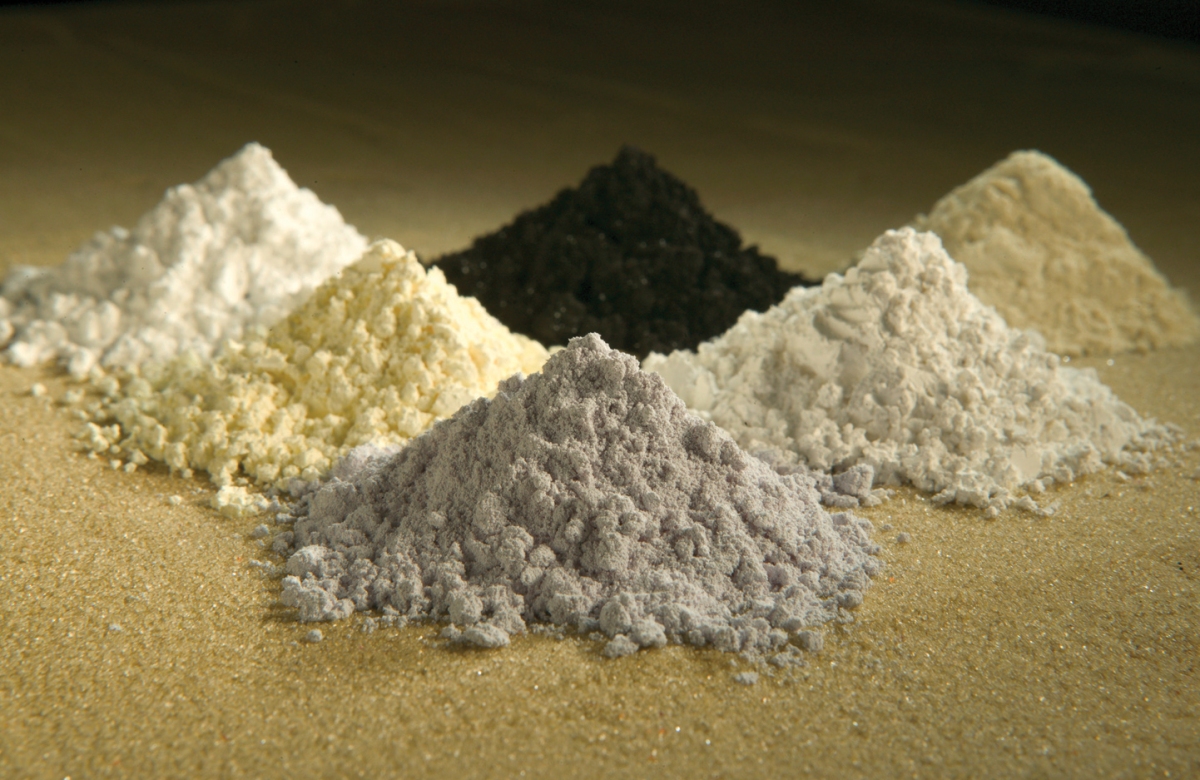
Rare earths, despite the name, are not particularly rare. They form part of a broader set of critical minerals that quietly support the machinery of modern life, whether in everyday electronics, the shift to electric transport or renewable energy systems. They form a group of 17 metals used to make magnets for wind turbines, electric vehicles, fighter jets and high-performance weaponry. What is scarce is the capacity to process them. China controls nearly 90% of global processing, according to the International Energy Agency, and that is where its leverage lies.
When the Trump administration tightened tariff measures against China earlier this year, Beijing responded with export controls on seven elements that it said were necessary for “national security and industrial interests”. European governments were quick to signal their unease. The European Commission warned that the decision risked adding fresh strain to already fragile supply chains and could slow both clean energy ambitions and key defence programmes across the continent.
The United States was even more unsettled. It produces only negligible quantities of heavy rare earths and remains overwhelmingly reliant on imports. China’s restrictions forced Washington to confront the fragility of its critical mineral strategy, intensifying its search for alternative partners.
Also Read: China's Rare-Earth Own Goal
New Alliances
The Trump administration soon turned its attention to the Indo-Pacific, reaching out to producers in Australia, Malaysia, Thailand, Myanmar and Pakistan. The intention was straightforward: the United States did not want to rely on a single supplier for minerals that underpin its defence, electric-vehicle and clean-energy sectors. It also wanted to signal that it was ready to put political weight and real funding behind efforts to create a sturdier supply chain.
Then, Donald Trump and Xi Jinping met in Busan in October, where they agreed on a framework that included a one-year pause on China’s export controls. Yet the scene in Busan was shaped as much by what had already taken place. In the days before the meeting, Trump had signed a new critical minerals arrangement with Australia, Cambodia, Japan, Malaysia, Thailand and Vietnam. These deals committed the United States to investment in processing and exploration, established price floors to support production, and created firm obligations against export restrictions within the group.
The US–Australia partnership is the most ambitious. The Export-Import Bank of the United States issued more than $2.2 billion in Letters of Interest, while the Department of War invested in an Australian gallium refinery. For Washington, this is as much about strategic signalling as it is about industrial policy.
Washington was also exploring opportunities in Pakistan. A Missouri-based firm, US Strategic Metals, signed an MoU with the Pakistan Frontier Works Organisation, a military-run body, to cooperate on exploration, beneficiation and future refinery work. The signal became clearer when Prime Minister Shehbaz Sharif and General Asim Munir arrived at the White House in September with a wooden box filled with mineral samples. Pakistan wanted Washington to know it was ready to be taken seriously as a supplier. By early October, it had sent its first shipment of rare earths to the United States, although the size of the consignment and the specific elements remain undisclosed.
Also Read: US-China Trade Deal Born of Desperation: GTRI
Myanmar has also begun to attract renewed interest. In August, the Trump administration unexpectedly softened its stance towards the junta, lifting sanctions on several entities and opening the way for a guarded rapprochement with Senior General Min Aung Hlaing. The motivation was widely interpreted as mineral access. Myanmar holds substantial reserves of critical earth minerals, most of which currently flow to China through networks involving ethnic armed organisations like the Kachin Independence Army. While the Kachin region’s landlocked geography poses obvious logistical constraints, coastal states present more feasible alternatives for US-backed exploration.
Also Read: Why This Isn’t a G2 Moment
Strategic Stakes
The wider context cannot be ignored. China’s near-total dominance over the processing of critical minerals has become a strategic vulnerability for the West. Beijing’s first-mover advantage is entrenched, and no amount of rapid US deal-making can replicate China’s integrated, decades-old supply chain in the near term. The pause secured at Busan is temporary; the leverage remains China’s.
What Washington wants now is to chip away at China’s advantage. Its expanding set of partnerships reflects a long-term attempt to reorder the global minerals landscape. Whether any of this succeeds will hinge on political stability, regulatory clarity and the ability of these countries to manage both internal pressures and the larger geopolitical contest now building around them.
For India, the implications are far more immediate. The arrival of new external players in its neighbourhood, particularly in Pakistan and Myanmar, calls for careful attention. Both countries sit at the heart of India’s strategic concerns, and their mineral engagements with the United States introduce fresh uncertainties into an already complicated regional picture.
* Views expressed are personal.
More From BasisPoint