.png)


Phynix is a seasoned journalist who revels in playful, unconventional narration, blending quirky storytelling with measured, precise editing. Her work embodies a dual mastery of creative flair and steadfast rigor.
August 23, 2026 at 2:23 PM IST
Dear Insighter,
Here’s a confession. In the last week alone, I have added over twenty items to various online shopping carts, calculated the total with shipping, imagined myself wearing each garment with the effortless elegance of someone who definitely does not eat dinner standing in front of the TV, and then closed the tab before making a very expensive mistake.
I am not alone in this. There is literally an entire app now. One of those beautifully designed, vaguely sinister things that lets you curate shopping carts across different retailers and never actually buy anything. It’s retail therapy without the retail. It’s dopamine for people who want the thrill of acquisition without the indignity of paying for it.
And yet, I’ve noticed something curious about these little bursts of joy. The high from adding that perfect dress to my imaginary collection lasts about as long as a WhatsApp status update. The real dopamine hit, the one that lingers and hums and makes me feel like I’m moving forward rather than just scrolling sideways, comes from something else entirely.
Planning a trip.
Not the actual travelling, mind you. Not the delayed flights, the overpriced airport sandwiches, or the moment you realise you’ve packed four pairs of shoes but no socks. The planning. The booking. The obsessive research into which neighbourhood has the best street food, whether the museum pass is actually worth it, and if you can really fit both the church and the botanical gardens into one afternoon without collapsing.
There is something about the mere act of planning a journey that feels like purpose. It’s all a form of anticipation, and anticipation, as any psychologist will tell you, is where much of our happiness actually lives.
Daniel Kahneman, the Nobel laureate who essentially helped establish the field of behavioural economics, wrote extensively about the distinction between the experiencing self and the remembering self. The experiencing self lives in the moment, feeling the heat, the hunger and the exhaustion of the actual holiday. The remembering self looks back and constructs a narrative, often glossing over the uncomfortable parts. But Kahneman also noted something else: we derive an enormous amount of pleasure from anticipating experiences.
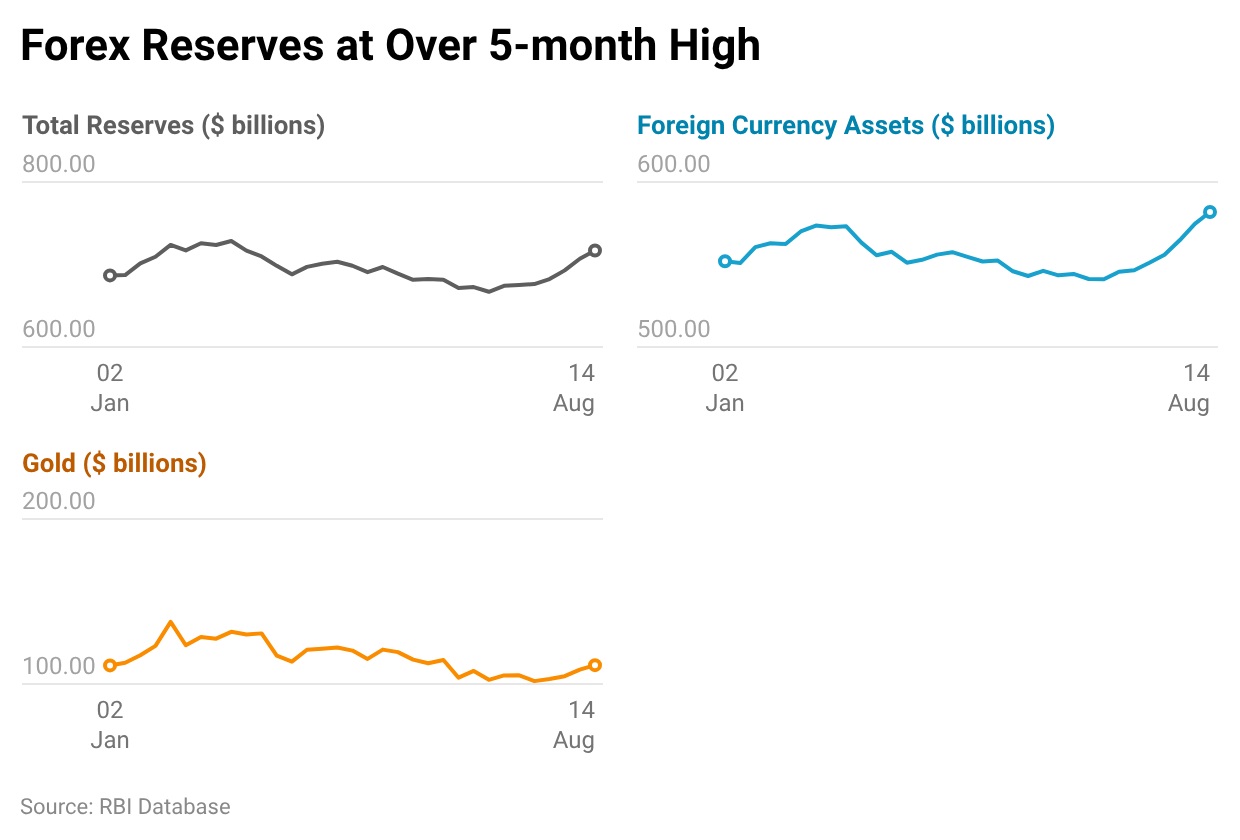
Now, if you’ll allow me to stretch this metaphor a little further. The FCNR(B) scheme, the early closure of which has been a subject of considerable debate, is a perfect example of anticipation versus reality. As Gaura Sen Gupta notes in her analysis, the scheme may have cost the RBI something, but it also eased liquidity and funding pressures, supported the rupee and attracted dollar inflows. It was a calculated gamble. The anticipated benefits outweighed the cost of the bet.
Apoorva Javadekar, however, raises an intriguing question: why did the RBI close the window early, particularly when inflows had already reached $52.3 billion by August 13, almost twice the amount raised during the 2013 exercise? The answer, it seems, lies in the fact that record inflows don’t always deliver the expected boost to the currency.
Speaking of anticipation, Chief Economic Adviser V Anantha Nageswaran seems to be tempering his obligatory optimism with something that feels refreshingly honest. As BasisPoint Groupthink observes, he’s restoring constructive doubt to policy, questioning everything from ethanol to AI to private capex.
The US Treasury’s buybacks, as V Thiagarajan writes, bring relief but are no hand of God for markets. They can change sentiment, but they can’t alter America’s deficits or long-term debt trajectory. Yield Scribe makes a similar point about India’s bond markets, arguing that participants need to let the data speak louder than RBI guidance.
And Deepa Vasudevan’s analysis of WPI inflation, the “canary in the coal mine”, reminds us that what we’re seeing upstream will eventually flow downstream. Wholesale prices are the whisper before the scream. Producer price inflation, she argues, may be an early warning of where consumer prices could be headed.
Sanjay Mansabdar writes on the retreat from transparency. Markets are embracing opacity, he argues, and the price of that opacity is growing. Private credit, AI financing and weaker disclosure rules are creating exposures that markets cannot see, price or contain with confidence.
Rahul Ghosh, meanwhile, writes about how the implementation of expected credit loss will require auditors to understand the models behind the numbers. The accounting number is no longer simply a number; it’s a prediction, and predictions, as we know, are where the risk lives.
Arvind Mayaram argues that developing countries need a new financing architecture, one that turns public liabilities into investable assets rather than relying on shrinking aid budgets and episodic debt relief.
Trade Mark’s analysis of India’s trade opening with the US makes the same point. India has moved on tariffs and market access, but Washington must now turn its promises into durable gains for Indian exporters.
Amitrajeet Batabyal writes about India’s employment gains, noting that the country is creating more jobs but that many are concentrated in low-productivity work. Employment growth is the headline; the quality of those jobs is the fine print. Sharmila Kantha raises a related question about AI skilling. The Prime Minister has announced a target to train 10 million young people in AI skills, but India’s skills ecosystem, she argues, needs consolidation and coordination among stakeholders.
Vivek Kaul, in a sharp piece, recalls Ved Prakash Chaturvedi’s prediction that the Sensex would cross 100,000 in “our lifetime”, a forecast so vague that it could not possibly be wrong. Kaul argues that forecasts sell certainty, confidence and power. But when dates slip and predictions fail, the smartest forecasters push the deadline far enough into the future to escape scrutiny.
Minari Shah’s analysis of Tata’s succession question also echoes this theme. The group, she writes, is searching for a chairman, but what it really needs is a patriarch and final arbiter. It’s not about filling a role; it’s about filling a void.
Krishnadevan V’s piece on Indian telecom customers is a delightful reminder that our assumptions are often wrong. Prepaid subscribers, he notes, talk more than postpaid customers, more than twice as much, in fact, and yet they generate almost the same revenue. The prepaid customer is the one who actually uses the service, while the postpaid customer is the one investors fetishise.
His other piece on Avenue Supermarts is equally interesting. DMart has chosen not to chase quick commerce and is instead defending its low-price model. It’s opting for the planned, weekly shop over the immediate, convenience-led top-up. It’s betting that the joy of value will outlast the high of speed.
Ketaki Thakur’s piece on India’s digital state observes how India can measure deployment meticulously but still miss completion. The Aadhaar identity, the ration card, the biometric authentication: none of it guarantees that the citizen actually receives the ration, pension or service.
K. Srinivasa Rao writes about how banks are losing their grip, and how customer centricity is the key to winning back trust. Banks have the numbers but not the loyalty. They have the infrastructure but not the completion.
Rajesh Ramachandran’s analysis of the BRICS summit and India’s geopolitical balancing act also touches on this theme. India is hosting the summit but is not quite sure if it wants to be seen as leading it. It’s the anticipation of the summit, the stage management and the dance, but the actual deliverables are still uncertain.
And finally, Rakesh Khar writes about how parliamentary gridlock is turning India’s youth away from the ballot. A decade after young Indians embraced the ballot, repeated parliamentary paralysis risks turning political hope into deep cynicism.
If we believe that the anticipation of a better future is where we find our joy, then perhaps we need to think carefully about what kind of future we’re planning.
The FCNR(B) scheme was a plan to stabilise the currency. The early closure was a recognition that the plan needed adjusting. The Tata succession is a plan to replace a patriarch. The skill training is a plan to prepare for AI. The BRICS summit is a plan to navigate geopolitics. All of them are plans, filled with anticipation, and all of them face the same challenge: making delivery match ambition.
The world is full of plans and promises and forecasts and schemes. But somewhere between anticipation and delivery lies the actual living. And that, I suspect, is where the real dopamine lives, not in the shopping cart, not in the booking confirmation, but in the messy, exhausting journey itself.
Until next time, here’s to taking the trip, even if you haven’t packed your socks.
Phynix
Also Read
Sarci Sense: When Did We Stop Being Embarrassed by Hypocrisy? by Srinath Sridharan: We’ve stopped being embarrassed by our own contradictions, and that loss of discomfort says more about us than about society.
The Power of Two by Kalyani Srinath: Sometimes the quietest miracles aren’t grand gestures but two friends who simply refuse to stop showing up.
Admit, Stay Silent, or Inspire: Leadership is About Reading the Room by Kirti Tarang Pande: Mamdani got it right, Modi misread it, and Gandhi chose dignity, proof that leadership isn’t about style but about diagnosing what each moment demands.
Why US Bond Markets Are Trembling by Jim O’Neill: September is coming, and when US bonds sneeze, the rest of the world catches a cold.
Global Economic Convergence Is Stalling by Keun Lee: America keeps pulling ahead while the rest of the world runs in place, so much for the great convergence.
The Law of Tomorrow: When Economic Growth Creates Legal Complexity by Lt Gen Syed Ata Hasnain: Tomorrow’s lawyers won’t just argue cases; they’ll navigate algorithms, boardrooms and geopolitics.
Beyond this Newsletter
The BasisPoint app brings you our latest insights, analysis and updates as soon as they are published.
Download the BasisPoint app from Google Play or Apple’s App Store and stay connected to the ideas shaping India’s economy, policy and markets.
You can also follow us on WhatsApp Channel:
https://whatsapp.com/channel/0029Vb6wYey3wtb36FzRg52S
More From BasisPoint