.png)


Michael Patra is an economist, a career central banker, and a former RBI Deputy Governor who led monetary policy and helped shape India’s inflation targeting framework.
July 1, 2026 at 3:32 AM IST
Modern-day monetary policy has a domestic orientation, with country-specific overtones. It is no surprise, however, that central banks tend to look closely at each other at all times. In the face of a global shock or drawn-out perturbations in global economic conditions as are being observed in the still-evolving geopolitical landscape, a certain synchronicity in actions or at least a co-movement in central banks’ attitudes takes shape. It is as if they are responding in unison.
Take the month of June 2026, for instance. Among advanced economies, the European Central Bank was first off the block in raising its key interest rates. While it saw the war in the Middle East posing both upside risks for inflation and downside risks for economic growth, it decided to act to ensure that inflation stabilises at its 2% target in the medium term.
The Bank of Japan followed, taking its policy rate to the highest level since 1995, to prevent inflation from breaching the target. The Governor was absent from the policy announcement, but Deputy Governor Ryozo Himino voiced the fear of tightening too slowly.
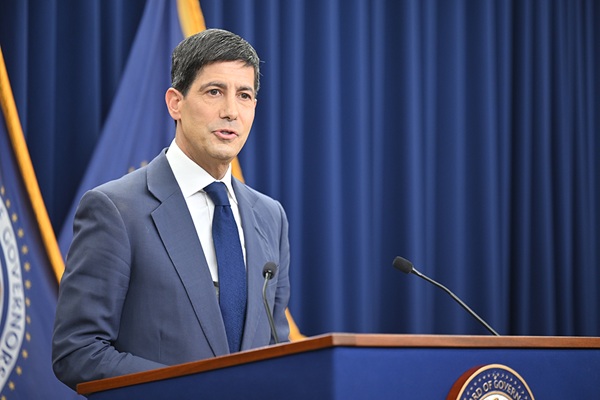
Like the Reserve Bank of India, the US Fed paused, but what a pause it was, overturning the dovish tones that were associated with the debut of Chair Kevin Warsh and the conditions surrounding his appointment! He pulled back on forward guidance; did not provide his dot plot a la Greenspan; decided to review the balance sheet of the Fed; set up a task force on rethinking the inflation framework; shifted analytical focus to alternative data and technological trends (including artificial intelligence) and their impact on productivity, jobs, and the broader economy; and asked for a relook into the Fed’s communication with the public and financial markets to make the institution less interventionist and predictable.
The Bank of England and other advanced economy central banks held rates unchanged in a stance that can certainly be described as hawkish, citing inflation risks and volatile global energy prices resulting from the conflict in the Middle East. In the case of the Bank of England, chief economist Hew Pill and external member of the monetary policy committee Megan Greene dissented, calling for a quarter-point increase in the policy rate to head off the risk of elevated energy prices feeding into wages and corporate prices. The Reserve Bank of New Zealand kept rates unchanged but only after the Governor cast a tie-breaking vote.
Among at least 10 emerging market economies that tightened, the Philippines raised its policy interest rate in June due to strong inflationary pressures arising from elevated global oil and fertiliser prices. Indonesia aggressively raised its benchmark rate for the second consecutive month in a bid to anchor inflation and stabilise the exchange rate. Sri Lanka’s central bank surprised by unexpectedly raising interest rates a full percentage point due to spiking inflation and currency depreciation. Even though Russia and Brazil cut rates to support growth, they warned that geopolitical tensions could worsen inflation.
What are central banks scenting?
Central banks seem to be bracing for what could well be a long-haul battle against this pernicious beast. The silent assassin is also stalking by stealth. Exchange rate weakness is a persistent headache for central bankers, as it inevitably feeds into inflation in various time spans through the cost of imported inputs.
This time around, central banks are showing an inclination to be ahead of the curve, stung by the costly error of 2022 when, in the wake of the war in Ukraine, they were blindsided by the pandemic’s carryover false reading that this was a supply-side phenomenon.
What followed was an apologetic but savage synchronised tightening of monetary policy worldwide, not seen since the 1970s.
Delayed monetary policy reactions always take a toll because the embarrassment of acting from behind the curve compels more punishing behaviour than pre-emptive actions. If central banks don’t act at the right time, they could be forced to tighten more aggressively later, weighing heavily on households and businesses through channels such as a surge in mortgages, wages and input costs.
This would wreak more economic damage than a steady pace of well-timed increases in the policy rate. Monetary policy is not a magic bullet; timely adjustments are vital to getting inflation on target, keeping it there, and supporting long-term economic growth.
With the planned reopening of the Strait of Hormuz, the spectre of a prolonged crunch in energy supplies has faded, and with it the risk of a severe global downturn. Crude prices have retreated, and supplies are returning to pre-war levels. The global economy has proved resilient, although it could take months for disruptions of the Hormuz squeeze to unwind. Mines will need to be cleared before ships can navigate freely through the channel. Oil fields and refineries that throttled production or sustained damage during the war will need to be brought back online. Uncertainty will weigh on shipping while Washington and Tehran thrash out details on Iran’s nuclear programme and other unresolved issues. Governments will scramble to rebuild stockpiles depleted by the crisis and pour resources into domestic energy production and storage to brace for the next one.
Yet, the world has pulled through. The World Bank’s June 2026 Global Economic Prospects forecast that the global economy will grow 2.5% this year, only a small downgrade from its prewar forecast of 2.6%. The massive supply shock following the multi-month closure of the Strait of Hormuz has been absorbed, including through emergency inventories and rerouted pipelines.
What is left behind is sticky inflation, high transportation and insurance costs, elevated input costs, and threats to inflation targets. The global purchasing managers index survey showed the steepest rise in global input cost inflation in three-and-a-half years, which fed through to sharply higher selling prices for goods and services. This points to higher consumer prices in the months ahead. The number of central banks missing their targets currently is a cluster comparable to July 2016, but back then, inflation was too low. The longer they keep missing, the less grounded inflation expectations will become. It is worthwhile to note that even though longer-term expectations have eased a bit, they remain above target.
Perhaps this is what central banks are sensing – their credibility could be called out again.
More From BasisPoint