.png)

When Vulnerability Becomes Strength and India’s Moment of Truth
Dharmendra’s tender masculinity offers a timely lesson: real strength lies in flexibility. From the rupee to labour reform, India’s systems could use that honesty.
Phynix is a seasoned journalist who revels in playful, unconventional narration, blending quirky storytelling with measured, precise editing. Her work embodies a dual mastery of creative flair and steadfast rigor.
December 1, 2025 at 5:16 AM IST
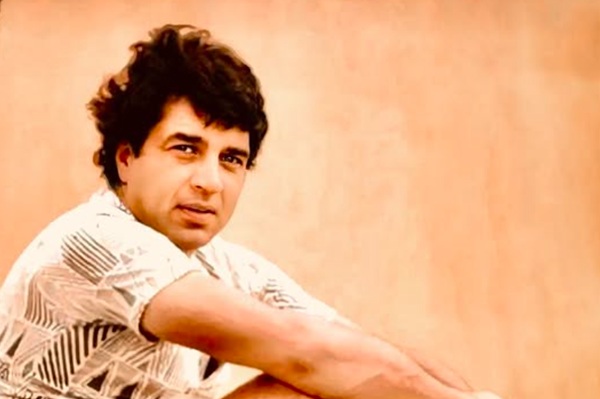
A nation’s heart cracked a little this week. Bollywood’s beloved Dharmendra, the original He-Man, was gone. And suddenly, social media feeds turned into these strange, modern mourning rooms. People were grieving in a way that felt both completely real and also a little borrowed, like we’d all inherited someone else’s memories. Obituaries kept repeating the same things: that impossible handsomeness that felt like a public service, a career that stretched hundreds of films, the stories of fans who slept with his photo under their pillows. And there I was, a child of the Shah Rukh Khan era, realising (with a tiny pang of embarrassment) that I barely knew the man everyone was crying over.
I’d watched Sholay, of course, and Seeta Aur Geeta, but they always felt like a different cinematic universe, with a theatricality I didn’t quite speak. So when WhatsApp groups started buzzing with reels and recommendations, I figured I’d show up anyway.
I began with Chupke Chupke. And honestly? I was disarmed. The silliness had this pure, earnest, stage-play energy that cut straight through my cynicism. It felt like finding an old, illustrated storybook tucked under the diwan. The language was clearly from another time, yet I caught myself smiling through scenes I didn’t expect to care about. I’ve lined up Anupama and Dream Girl next, finally understanding that his easy charm wasn’t just about a chiselled jawline; it was about making you believe every word he spoke.
This personal excavation coincided with reading Kirti Tarang Pande’s piece, "The He-Man Who Cried," which landed not as an article but as an epiphany. Pande observes that Dharmendra’s quietest truth was also his strongest: the He-Man who cried taught India that vulnerability is not weakness but power. Seeing that man, that icon of masculinity, let his voice crack and his eyes well up without a shred of shame was a radical act. It made him more human. Mard ko dard nahi hota is a lie every Indian boy is fed, and here was the ultimate mard quietly, powerfully, refuting it. Perhaps that’s the lesson not just for our personal lives, but for our systems, our policies, our economy. We’re so obsessed with projecting unbreakable strength that we forget resilience often looks like the ability to bend, to adapt, to show a little vulnerability.
Our economic policy, for instance, could use a dose of that honesty. Right now, as R. Gurumurthy observes, we’re in a phase of deceptive macro calm, with the RBI walking a December tightrope. Headline inflation has eased, growth seems steady, and to a casual observer, another rate cut looks like a foregone conclusion. But beneath this statistical serenity, real fragilities crawl. Credit appetite is weakening, the gap between core and headline inflation remains wide, and the rupee has been officially reclassified by the IMF as operating under a “crawl-like arrangement.”
This reclassification, as decoded by veteran forex trader Venkat Thiagarajan in his interview with Rajesh Mahapatra, is a significant moment of truth. Thiagarajan uses the analogy of the rupee trading like a “caged bird.” As Babuji K notes, the RBI’s frequent interventions have provided stability, but at what cost to credibility and the natural discovery of a price? The recent spikes in hedging demand, rising forward premiums and sudden offshore-driven moves keep revealing soft spots in India’s defence. That’s why the idea of adding FX auctions to the intervention toolkit is beginning to gain quiet traction.
The instinct to control, to project strength, is understandable, but as Thiagarajan writes in a separate piece, history is littered with the wreckage of rigid exchange rate regimes. Every major international crisis, from Mexico in 1994 to Turkey in 2000, had a fixed or pegged exchange rate at its heart. The question now is whether we’re prioritising the illusion of control over the messy, but ultimately more resilient, reality of a flexible float.
And it’s not the only place where the numbers demand a more honest reading. As this BasisPoint Groupthink observes, India’s July–September GDP release delivered another moment of truth. Real GDP expanded 8.2%, but nominal GDP rose just 8.7%, leaving barely half a percentage point between the two. In an economy that looks robust across manufacturing, services and investment, this narrowness is more than a statistical quirk.
In this complex dance, Mint Owl argues, the RBI must not let go of its communications rhythm. The cadence of speeches, the timing of regulations—these aren’t bureaucratic minutiae; they are the tools that manage market expectations. When they drift, policy signals get muffled.
This tension is playing out everywhere. Look at the landmark notification of India’s new Labour Codes, which Sharmila Kantha explains can unlock formalisation at scale, offering ease for large enterprises but potentially straining MSMEs with new compliance burdens. The reform is monumental, consolidating 29 laws into four, but as Shruti Mahajan reports, it faces both praise and pushback. The government sees streamlined compliance and job creation; trade unions fear a rollback of worker rights in the name of ease of doing business. It’s a classic Indian reform paradox: a leap towards a modern framework that will be defined entirely by how nimbly it’s implemented on the ground.
And then there are the areas where we need less vulnerability and far more fortitude. The unsettling settlement in the Sandesara-Sterling Biotech case, as Krishnadevan V writes, could rewire India’s credit culture in dangerous ways. The message seems to be: for small borrowers, the rules are brutal; for large economic fugitives, a negotiated payout can apparently exchange prosecution for payment. A system that secures big cheques while appearing lenient in marquee cases may look fine on capital ratios, but it quietly weakens the very foundation of trust that credit is built upon.
We see a similar need for sturdy, convergent strength in our public health. Amitrajeet A. Batabyal presents compelling evidence that India’s fight against childhood anaemia isn’t a battle to be fought on a single front. It demands policy convergence, not parallel efforts. The synergistic effect of combining nutrition programmes with sanitation yields far greater results than either can alone. It’s a lesson in holistic thinking: you can’t nourish a body in an environment that constantly makes it sick.
Even the judiciary is wrestling with this question of control versus flexibility. Srinath Sridharan points out something obvious but easy to forget: justice can’t run on technology alone. Sure, digital tools make access quicker and smoother, but the real speed and credibility of the system still depend on old-fashioned things like discipline, consistency, and administrative willingness to fix what’s broken. Alpana Killawala makes the case that as India's digital payments boom continues, cyber insurance must become the country's new financial essential.
Meanwhile, TK Arun argues against creating yet another censor board for social media. Instead of building a new watchdog, just hold platforms accountable the way we already hold traditional publishers accountable. It’s not about cracking down harder; it’s about setting up a system where responsibility is built in rather than imposed with a hammer.
Speaking of transformation, Manoj Rane’s conversation with Sundeep Sikka charts a remarkable 23-year journey: from building a top-tier AMC without bank backing to shaping retail investing across Bharat’s smallest towns. Sikka speaks candidly about earning investor trust, the early scrapes, and how simple ideas became category-shaping products, in a two-part conversation. He also explains why Nippon’s leadership team has stayed unusually stable, and where the industry is headed with mutual funds, AIFs and the next wave of products.
Chandrika Soyantar traces another evolution: the way warrants have morphed from sweeteners into serious growth capital for Indian banks. What began as an add-on has become a disciplined, strategic instrument, helping banks raise capital smartly, navigate ownership caps and signal conviction, while giving investors structured access to future upside.
And then, almost as a palate cleanser from all this policy noise, I find myself drifting back into Dharmendra’s old films. What strikes me is the sheer volume and ease of that era: multiple releases a year, no CGI, no technical crutches, just charisma, timing, and stories that didn’t apologise for being simple.
It makes me nostalgic for those weekly cinema trips with my mom, my sister who’d reliably fall asleep, and the CDs of Kishore Kumar, Mohammed Rafi, Mukesh, and Lata Mangeshkar that were the soundtrack of my childhood. Yeh Kahan Aa Gaye Hum, Aaj Mausam Bada Beimaan Hai, Pal Pal Dil Ke Paas, Tere Mere Milan Ki Yeh—these weren’t just songs; they were emotional anchors in a simpler time. Understanding? Zero. Vibe and soul? 200%.
Today, our anchors are more complex. The US Treasury is seeing foreign demand steadily wane, as Yield Scribe notes, with emerging markets like India selling off holdings. Our edible oils market, as G. Chandrashekhar highlights, still lacks the import visibility needed for truly anticipatory policy. And in the bustling, often chaotic world of edtech, Krishnadevan V warns that Physicswallah, for all its acceleration, may be lacking a vector, risking the very teacher-student trust it was built upon by expanding in a way that feels dissonant with its origins.
Through it all, the lesson from the He-Man who cried endures. True strength isn’t about an unyielding facade. It’s in the RBI’s ability to communicate with clarity even when the path is murky. It’s in a labour reform that’s flexible enough to support both enterprise and worker. It’s in a justice system confident enough to reform its own administration.
Until next time, hoping I catch up on my watchlist.
Phynix
Also Read:
- Get Ready for an Overdue Fed Overhaul by Mohamed A El-Erian: A fractured Fed and colliding goals push policy into uncertainty, demanding institutional evolution.
- India–Israel Trade Deal Returns to Agenda After a Decade-Long Pause by Ajay Srivastava: A renewed FTA push signals a pivot from basic goods to high-value partnerships in defence and tech.
- India’s Exports to US Fall 28.5% in Past Five Months as Tariffs Batter Key Sectors by Ajay Srivastava: Urgent action is needed to roll out an Export Promotion Mission and counter damaging tariffs.
- The Real Story Behind India’s Gold Rush: Signals, Not Contradictions by Kirti Tarang Pande: Surging gold demand is driven by diverse psychological motives, not just fear.
- The Basel Consensus Is Cracking by Howard Davies: Diverging US and global views on bank supervision are testing the future of Basel III.
- Pakistan’s 27th Amendment: Constitutionalising the Deep State by Lt Gen Syed Ata Hasnain: Cementing the army's dominance alters nuclear control and the strategic risks India must navigate.
More From BasisPoint