.png)

April 23, 2026 at 3:31 AM IST
The current Middle East conflict is ultimately a story of physical scarcity working its way through the global economy. At its core are tradable inputs, molecules, whose movement, disruption, and transformation drive complex macroeconomic outcomes.
While there might be an abstract nature and subjectivity about such monetary policy decisions, the underlying constraint is not. Molecules themselves are very simple and straightforward. Either they are there or not there. If they are there, their presence is easily quantifiable and drives transparent pricing decisions in global supply chains.
Any or all rounds of inflation effects are rooted in this basic constraint. Supply is limited in a conflict like the current one. And if demand does not adjust to lower supply because of government-administered constant prices, the bill does not disappear; it is simply transferred, whether through fiscal balances, corporate margins, or external accounts.
The benzene molecule is unique and is an essential high-volume industrial chemical used primarily as a building block for plastics, synthetic fibres, rubber, dyes, detergents and pharmaceuticals. Its production is closely tied to crude oil through catalytic reforming of naphtha, making it an early transmitter of energy shocks.
Even in China, which holds roughly 1.2 billion barrels of crude inventory and is relatively insulated among Asian nations, benzene prices have risen by around 40% since the Iran conflict began. Even in a well-buffered system, scarcity still asserts itself.
Urea is another story.
Urea is the most widely used nitrogen fertiliser, which supports global food production. Its high 46% nitrogen content makes it an inexpensive and efficient nutrient source for plants, facilitating food production in a broad spectrum of climates and soils. The most common and cost-effective feedstock for urea is natural gas. But if natural gas itself is missing from global supply chains, urea molecules also go into hiding.
In US markets, where natural gas remains abundant, urea prices have risen by 50%. This reflects not domestic scarcity, but imported demand from regions where gas shortages have constrained production. Even with an adequate domestic supply, prices have risen as global demand seeks available exports.
A recent example was the bidding for a urea tender by Indian Potash Ltd. Offers were made at $1,000 a tonne, far higher than even prevailing US urea prices of $700. The urea molecule is telling the truth about domestic production constraints in light of lower natural gas supplies, and about the transmission of global scarcity through trade.
Sulphur, helium, industrial solvents and petrochemical-derived materials tell the same story. Prices for each of the above are higher by 40–50% since the Iran war started, reinforcing the pattern that once upstream supply is disrupted, downstream pricing adjusts across sectors.
The problem is the supply chain, as shipping costs are higher by 40–50% across the globe currently, amplifying the delivered price of already scarce inputs and acting as an additional transmission channel for inflation.
Chain Reaction
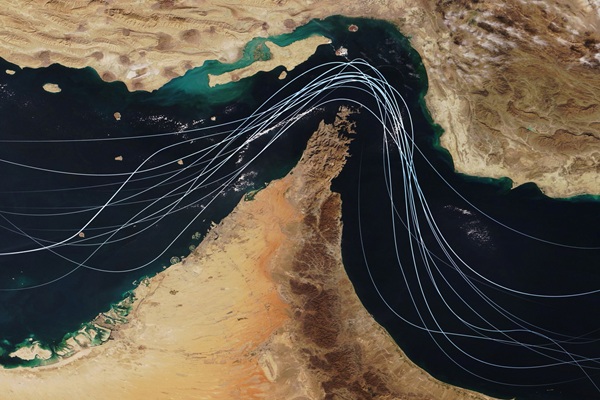
At the core of the Middle East conflict is crude oil. Will supply suddenly return even if the Strait of Hormuz is opened today? In all likelihood, it will take six months or more for flows to get back to pre-war levels.
There is almost a 3–4 million barrels per day permanent loss of crude, as many oil wells are now beyond even the restart phase. Under normal conditions, oil flows continuously from wells to refineries and export terminals. But when exports are blocked, storage tanks begin to fill. When storage tanks get full, oil wells have to be shut. But once shut, water starts seeping upwards, and the oil-bearing rock becomes permanently unrecoverable.
Which is why oil well shutdowns are not just a switch-off and switch-on phenomenon. They can permanently reduce an oil field’s productivity and thereby the stock of available crude.
Even now, in weekly physical crude auctions in the Atlantic basin, there are 40 bids for four offers. The real price of a deliverable molecule of crude through such long distances and elevated shipping costs for a country like ours will always be a $15–20 premium to the paper price of Brent futures. The relevant constraint is not just price, but availability. Even at that premium, can we source enough crude at current levels of domestic demand?
Basic economics says that if prices are high due to limited supply, demand needs to adjust. But by keeping pump prices constant ahead of state elections, policymakers are only delaying the inevitable. Under-recoveries of oil marketing companies will widen the fiscal deficit, while sustained import bills will pressure the external account. Higher fiscal deficits, in turn, risk crowding out private investment and pushing bond yields higher, turning a supply shock into a broader macroeconomic imbalance.
At the current rate of under recoveries, a minimum ₹10 hike is needed in diesel and petrol prices. It is also much needed so that the end consumer is aware of rising costs, and their discretionary spending patterns have to change accordingly. Higher prices lead to demand destruction, which is how one saves on scarce foreign exchange reserves instead of artificial foreign exchange interventions. It also helps in saving scarce government resources via lower need to cut down on capex spending, making the adjustment explicit rather than hidden.
Manufacturing costs are escalating across all sectors. It is a matter of time before they get passed on to end consumers. Price hikes are already taking place in autos, paints, milk items, chips and mobile phones. To ignore such price hikes by labelling them as first-round effects is to ignore the nuance of household balance sheets. When price hikes are as pervasive as the current state, households demand higher wages, as seen in recent Haryana labour unrest cases, which led to a 35% hike in minimum wages for unskilled workers, indicating that second-round effects are already forming.
While the initial response can be wait and watch, terming the current situation as a supply shock and waiting for second-round inflation effects to appear, the fact that there is suppression of a natural demand response to such a systematic supply shock means that when these second-round inflation effects appear, they might be far larger in size and permanent in nature, embedding themselves into wages, expectations and core inflation.
Molecules are not returning in a hurry. Supply chains are broken, and logistics costs are likely to remain high. Shielding aggregate demand from this reality will only accelerate second-round inflation effects, strain fiscal resources, and erode foreign exchange reserves, as the underlying physical constraint continues to assert itself.
More From BasisPoint