.png)

March 14, 2026 at 5:00 AM IST
On March 9, when Brent crude touched $116 a barrel, the BSE Oil & Gas index fell nearly 3%. Hindustan Petroleum Corp dropped 8.67%, Bharat Petroleum Corp 6.44%, Indian Oil Corp 4.43%. Reliance Industries fell roughly 2%. Over the two sessions before that, as the crude spike accelerated, Reliance had gained nearly 6%. The market was not treating India's largest refiner the way it was treating India's state-owned refiners.
There is a structural reason for that, it was built over the past three years, and the analyst community has been pricing this in.
Among the 35 analysts tracked on the stock, 32 carry Buy or Overweight ratings against two Sells and one Hold. Morgan. The consensus average sits near ₹1,646, implying roughly 18% upside from current levels.
In 2022-2023, when Brent averaged over $110 in the first quarter, Reliance absorbed a ₹66.48 billion hit to O2C segment EBITDA from the Special Additional Excise Duty, the windfall levy introduced in July 2022 on exported transportation fuels. The hit was sharpest in the second quarter of 2022-2023, when SAED alone reduced segment earnings by ₹40.39 billion in a single quarter.
SAED applied only to fuel that left India. Reliance, then heavily export-oriented, had limited means of escape. Government-mandated retail price caps made domestic sales unattractive at the same time, with private retailers recording under-recoveries on every litre sold inside the country.
That configuration no longer exists.
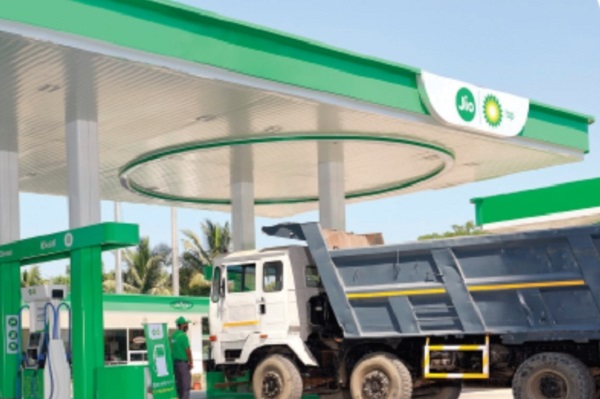
Reliance BP Mobility (Jio-bp), is a joint venture in which RIL holds a 51% stake and bp the remainder. Its strategic purpose within the O2C segment is specifically to route refinery output through domestic petrol pumps rather than export tankers, thus sidestepping SAED entirely. The tax does not apply to fuel sold at a pump in Pune. It applies to fuel loaded onto a vessel bound for Rotterdam.
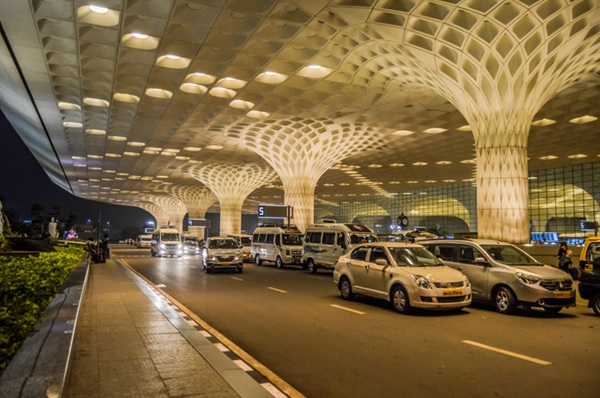
Jio-bp sells motor spirit and high-speed diesel through a network of 2,125 outlets, alongside EV charging infrastructure and compressed biogas stations. In 2024-2025, the venture reported revenue of nearly ₹500 billion, roughly 4.7% of Reliance's consolidated turnover.
At $100 crude, that routing decision carries significant earnings weight.
In October-December, HSD volumes HSD volumes through Jio-bp grew 24.7% against the industry’s 3.1%; motor spirit grew 20.8% against 5.5%. The venture's Market Effectiveness ratio, which measures its sales per outlet as a multiple of the industry average, was 2.7 for HSD.
Jio-bp's Active Technology fuel additives, which are claimed to deliver 4.3% higher mileage, and loyalty programmes anchored around commercial fleet operators drive that outperformance. Fleet operators acutely sensitive to fuel costs are a more receptive audience for premium fuel at $100 than at $75.
BPCL reported throughput of 153 KL per month per outlet in April-June, the best in the public sector, and acknowledged lagging private retailers. IOC, running over 40,000 outlets, follows at roughly 130 KL per month. A universal service mandate dilutes the PSU average. The productivity gap does not close quickly.
The gross refining margin will compress regardless by an estimated $2-4 per barrel from its recent range. There is also the question of whether the government that introduced SAED in 2022 reaches for the same instrument again. Current account pressure, a weaker rupee, and the political difficulty of raising pump prices are the conditions under which windfall levies return.
Reliance's domestic placement scale means it is materially less exposed to that risk than it was in 2022-23.
The petrochemicals business remains genuinely exposed, though. Naphtha-linked cracker margins compress with limited near-term relief and will show in segment numbers. Every $1 per barrel change in refinery margin is estimated to move RIL’s EBITDA by $500 annually, a number that works in both directions.
The 32 analysts with Buy ratings are probably right about the destination — the Jio IPO, retail expansion, and the longer conglomerate re-rating story remain intact. What they may be underestimating is the detour: GRM compression, petrochemicals exposure, and a residual windfall levy risk that could weigh on 2026-27 quarterly numbers before the longer thesis plays out.
The bull case on Reliance is that $100 crude will not be painless, but manageable. Three years of building Jio-bp is the evidence that Reliance has been working on exactly that problem.
(This column reflects the author's personal views and is based on publicly available information. It is intended for general commentary and analytical purposes only and should not be construed as investment advice.)
More From BasisPoint