.png)


Gaura Sen Gupta, a D-School alumna, is the Chief Economist at IDFC First Bank.
March 18, 2026 at 5:47 AM IST
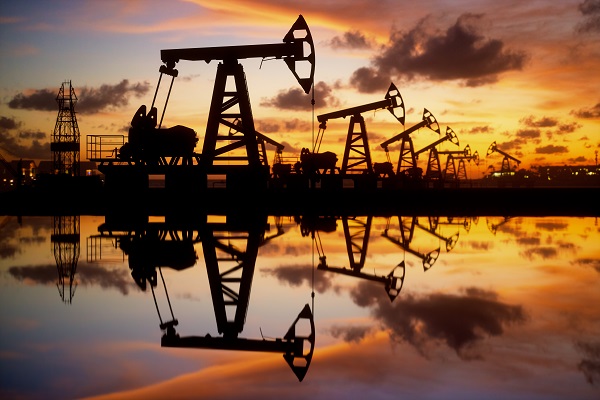
The year 2026 has started on an explosive note, with an unprecedented escalation of geopolitical risks in West Asia. The crisis is best understood as a dual shock, combining both price spikes and physical supply disruptions. Many are comparing the crisis to the Russia-Ukraine escalation, when crude oil prices stayed at $100 per barrel for more than 100 days. Others draw parallels with Covid-19, when the world faced unprecedented supply-side disruptions, but crude oil prices were low. This episode sits uncomfortably between the two.
With damage to oil-producing infrastructure and no clear pathway to de-escalation, supply normalisation may take weeks even if tensions ease. It may still be early days, but the probability of a prolonged disruption is rising.
The crisis is impacting Asian countries more, given their reliance on the Strait of Hormuz for essential supplies such as crude oil, gas and fertilisers. More than 80% of Asia’s crude oil and LNG imports transit via the Strait of Hormuz. In contrast, for Europe, only 5% of crude oil imports and 13% of gas needs are affected, while the US remains a net exporter of crude oil. That said, the surge in energy prices is impacting all economies.
Asian countries have already begun to respond. Thailand and the Philippines have asked civil servants to work from home, while Korea has imposed price caps. India is rationalising the usage of LNG and LPG for commercial consumption. At present, oil marketing companies are absorbing the price shock, shielding domestic consumers.
Macro Cushion
The fiscal and monetary authorities will need to work in tandem to safeguard this growth momentum. Fiscal policy will need to cushion the consumer from the price shock and supply disruption. Monetary policy, in turn, will need to ensure that domestic financial conditions remain growth supportive, even as inflation risks rise.
If the supply-side shock persists for a few months, average crude oil prices for 2026-27 could rise to $90/barrel, assuming some moderation in the second half of the year. The adjustment is likely to follow a three-way burden-sharing model across oil marketing companies, the government, and households.
The fiscal cost to the government is estimated at around 0.5% of GDP in 2026-27, reflecting higher fertiliser and LPG subsidies. This estimate also incorporates a ₹4 per litre cut in excise duty on petrol and diesel for six months, implying a revenue loss of ₹360 billion.
For households, there could be a 3% increase in retail petrol and diesel prices. Consumers are also likely to face higher LPG, ATF, CNG, as well as gold prices. Second-round effects may emerge as firms pass on higher input costs. The total impact on headline CPI inflation is estimated at around 80 basis points in 2026-27.
Risks to growth are likely to arise primarily from supply disruptions rather than demand compression, given partial price shielding. Any disruption could affect manufacturing and services activity in the April-June quarter of 2026-27, potentially shaving off 0.5 percentage points from growth. After incorporating these transient disruptions, real GDP growth is estimated at around 7.0%.
Policy Response
Monetary policy is typically ill-suited to counter supply shocks, but it cannot ignore the risk of unanchored household inflation expectations. To safeguard the growth recovery, the RBI will need to rely on both communication and liquidity management.
Liquidity management has already supported credit growth by keeping funding costs contained through durable liquidity infusion. Another key shift has been the tolerance for overnight rates to remain below the repo rate. In effect, the RBI’s liquidity stance becomes the first line of defence, ensuring that external shocks do not translate into tighter domestic financial conditions.
As long as the crisis persists, liquidity operations will need to remain geared towards preventing an unintended tightening of financial conditions.
With markets beginning to price in rate hikes, as reflected in OIS curves, policy signalling becomes critical to prevent premature tightening. Clear guidance on the policy rate outlook, while inherently difficult in such an uncertain environment, may be essential to anchor market expectations and preserve growth momentum.
In this environment, the RBI’s challenge is not merely to respond to inflation risks, but to prevent a supply shock from morphing into a broader tightening cycle.
More From BasisPoint