.png)


Datametricx is a veteran journalist tallying the macro game, keeping score of the numbers that shape India’s economy and policy.
July 11, 2026 at 11:43 AM IST
Growth in India’s retail automobile sales accelerated in June, driven by across-the-board gains across all major segments. Total sales grew 21.8% year-on-year to 2.56 million units. Overall sales had grown 9.5% in May and 9.8% in June last year. Automobile sales in the country have mostly remained buoyant since the government cut goods and services tax rates in September.
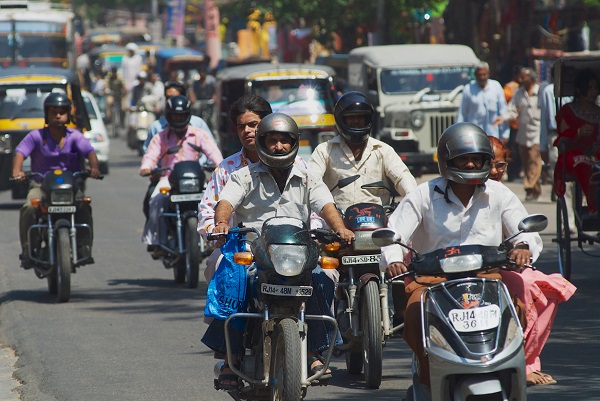
Two-wheeler sales rose 21.2% year-on-year to 1.83 million units, while passenger vehicle sales increased 28.6% to 410,853 units in June. Commercial vehicle sales grew 16.9% to 90,972 units in June, while three-wheeler sales grew 16.2% to 120,889 vehicles.
Growth was comparable across urban and rural areas, with total retail sales rising 21.3% year-on-year in urban areas and 22.3% in rural areas. Going ahead, the end of the war in West Asia should support consumer confidence, while a deficient southwest monsoon is likely to act as a dampener.
Domestic tractor sales growth slowed, with domestic sales rising 11.9% year-on-year to 126,041 units in June, down from 19.6% a month earlier. The tractor industry, among the biggest beneficiaries of the GST rate cuts implemented in September 2025, has recorded double-digit growth in domestic sales for the 11th consecutive month. Total sales, including exports, rose 11.8% to 135,950 units, while production increased 10.2% to 114,980 units in June. In absolute terms, total sales in June were the fourth-highest ever.
Growth in e-way bill generation accelerated to a four-month high of 14.5% year-on-year in June. E-way bill generation in June was the fourth-highest on record at 136.77 million. The e-way bill, a GST document for transporting goods worth more than ₹50,000, is a leading indicator of economic activity.
Growth in electricity generation from conventional sources reached a two-year high in June, led by a sharp increase in thermal power output. Power generation rose 8.2% to 142.03 billion kWh in June. The sharp rise was led by a 12.5% increase in thermal power generation to 122.37 billion kWh and a 23.3% rise in nuclear power generation to 5.54 billion kWh. Hydropower generation, however, declined 20.3% to 13.36 billion kWh in June.
Consumption of petroleum products fell year-on-year for the third consecutive month in June, as the war in West Asia continued to disrupt supplies. Petroleum product consumption declined 3.1% to 19.42 million tonnes in June, dragged down by a sharp decline in liquefied petroleum gas, which contracted 14.3% to 2.19 million tonnes. Petrol and diesel consumption rose despite higher retail fuel prices. Consumption of petrol rose 7.4% to 3.78 million tonnes, while diesel increased 6.2% to 8.61 million tonnes.
Loans advanced by non-banking finance companies rose 14.2% year-on-year in May, up from 11.4% a year ago. Retail loans, which accounted for 43% of the total advances by non-bank lenders, rose 19.5%, up from 14.9% a year ago, led by a 69.9% rise in loans against gold jewellery. Loans to industry rose 7.3% in May, while those to the service sector increased 16.7%.
Inflows into equity schemes improved to ₹290 billion in June from a one-year low of ₹229 billion in May. Inflows into equity mutual funds have remained positive for more than five years now.
Systematic investment plan inflows remained robust despite volatility in stock markets. SIP inflows were ₹318 billion in June, marginally higher than ₹310 billion a month earlier, with the number of contributing SIP accounts rising to 97.8 million from 96.4 million a month earlier.
Gold ETFs saw inflows of ₹34 billion compared with outflows of ₹7 billion in May.
The mutual fund industry’s net assets under management stood at ₹82.22 trillion at the end of June, up from ₹81.58 trillion a month earlier.
Private-sector companies in India turned less optimistic about the year-ahead outlook for output and profitability following the outbreak of war in West Asia. The headline HSBC India Business Activity Net Balance fell to +22% in June from +35% in February, signalling the lowest level of positive sentiment since October 2023.
June's results also showed weaker hiring plans, although companies remained optimistic about investment intentions. Weighing on business confidence were concerns about margin pressures. Firms expected higher costs for fuel, energy, raw materials, transportation, and wages, but said intense competition and price-sensitive customers would make it difficult to pass the higher costs on.
Other challenges cited by firms included softer market demand, volatile commodity prices and currency movements, and changes in government rules or taxes.
New-business premiums of life insurers rose 13.1% year-on-year to ₹465 billion in June, led by private insurers. Premiums of private life insurers rose 36.8% to ₹188 billion, while those of state-owned Life Insurance Corp. India rose 1.2% to ₹277 billion. During April-June, new business premiums grew 16.6% to ₹1.091 trillion, with private insurers’ premiums rising 27.5% and LIC's increasing 10.3%. Insurance companies sold 5.11 million policies in the first quarter, up 6.0%, of which LIC sold 3.11 million and private insurers sold 2.01 million.
Gross direct premiums of general insurers rose 15.9% year-on-year to ₹272 billion in June. Gross direct premiums in April-June rose 10.7% to ₹878 billion. State-owned New India Assurance Co. had the highest market share in premium income in April-June at 14.5%, followed by ICICI Lombard General Insurance Co. at 9.5%.
India’s foreign exchange reserves rose sharply as inflows under various government and Reserve Bank of India measures picked up. The reserves increased by $7.26 billion to $674.19 billion in the week ended July 3. Foreign currency assets increased by $4.51 billion to $545.58 billion, while gold reserves increased by $2.67 billion to $105.21 billion. The Reserve Bank of India and the government have announced several measures to attract foreign flows, including a concessional forex swap facility for public sector units raising external commercial borrowings and a facility covering hedging costs for banks mobilising foreign currency non-resident deposits.
Reservoir storage improved sharply as the monsoon picked. As of July 9, live storage in reservoirs stood at 59.44 billion cubic metres, up 11.72 billion cubic metres or 25% from a week earlier. This was the biggest weekly increase in absolute terms in about a year. The latest live storage accounted for 32% of total capacity, and was 8% higher than the 10-year average. However, the storage level was 36% lower than a year ago. Typically, reservoir storage levels start rising in June.
The southwest monsoon improved significantly in July, wiping out part of the June deficit. As of July 10, cumulative rainfall over the country was 15% below normal at 212.1 millimetres. Of the country’s four regions, rainfall was 6% below normal over northwest India, 37% below normal over east and northeast India, 16% below normal over the south peninsula, and 1% above normal over central India.
The southwest monsoon rainfall was 38% below normal in June and 31% above normal so far in July.
Kharif sowing remained well below last year’s pace because of weak southwest monsoon rainfall. The total area sown under kharif crops fell 20.8% year-on-year to 35.09 million hectares as of July 5. Rice acreage, which typically accounts for about one-third of the total kharif cropped area, declined 13.1% to 6.02 million hectares. Sowing of pulses fell 21.8% to 3.72 million hectares, while oilseed acreage fell by 39.3% to 6.63 million hectares. In contrast, sugarcane sowing, which is nearing completion, rose 1.5% to 5.76 million hectares. Even so, the sowing season is in its early stages, with only 32% of the normal kharif area of 110.45 million hectares covered so far.
Coming up
- July 13: Consumer Price Index for June
- July 14: Output Producer Price Index for June
- July 15: Balance of payments for May
Rainfall in June was 102.5 millimetres, 38% below the normal rainfall of 165.3 millimetres. This is the sixth-lowest rainfall in June since 1901. Of the five years with lower June rainfall, three ended with deficient seasonal rainfall.
More From BasisPoint