.png)


Ajay Srivastava, founder of Global Trade Research Initiative, is an ex-Indian Trade Service officer with expertise in WTO and FTA negotiations.
March 12, 2026 at 9:55 AM IST
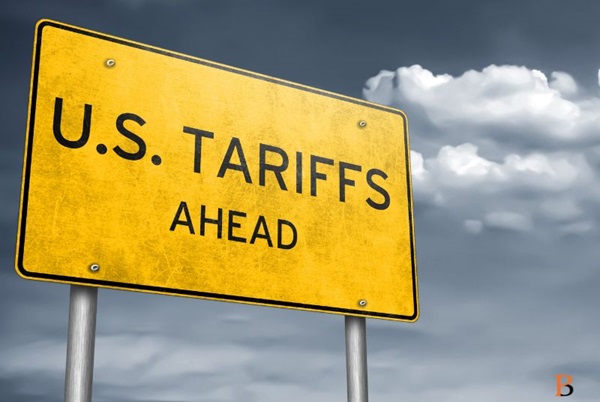
The United States has opened a new chapter in its trade policy by launching a fresh round of Section 301 investigations into the industrial policies and manufacturing practices of 16 economies, including India.
The announcement by the US Trade Representative on March 11 comes at a moment of considerable uncertainty in global trade diplomacy. Washington’s earlier strategy of aggressive tariff pressure has been weakened by a recent Supreme Court ruling, forcing policymakers to look for alternative instruments to retain negotiating leverage.
The countries covered by the investigation include China, the European Union, Singapore, Switzerland, Norway, Indonesia, Malaysia, Cambodia, Thailand, South Korea, Vietnam, Taiwan, Bangladesh, Mexico, Japan, and India. The probe spans a wide range of sectors, including steel, aluminium, automobiles, batteries, electronics, chemicals, machinery, semiconductors, and solar modules.
For India, the investigation highlights sectors where the US believes structural excess capacity or export-driven production is emerging. Solar modules, petrochemicals, steel, textiles, health-related goods, construction materials, and automotive products are among the industries identified.
The US notice points in particular to India’s solar module sector, where installed manufacturing capacity is already almost three times domestic demand, raising concerns in Washington that surplus production could increasingly target export markets. Similar questions have been raised about expanding capacity in petrochemicals and steel.
Under Section 301 of the US Trade Act of 1974, Washington can investigate whether foreign trade practices are unreasonable or discriminatory and whether they harm US commerce. The investigations will examine policies such as industrial subsidies, state-supported manufacturing expansion, the activities of state-owned enterprises, market-access barriers, currency practices, and suppressed domestic demand that could contribute to global manufacturing overcapacity.
If the investigations confirm that such practices disadvantage the US industry, the administration may impose retaliatory measures. These could include additional tariffs, quantitative restrictions, or other trade barriers.
The process itself is structured and relatively lengthy. Public dockets for written submissions will open on March 17, allowing companies, trade associations, and governments to submit comments. Written submissions and requests to participate in hearings must be filed by April 15. Public hearings are scheduled for May 5 to May 8 at the US International Trade Commission in Washington, after which rebuttal submissions will be allowed within seven days.
Only after this process and consultations with the governments concerned will the US Trade Representative determine whether retaliatory action is warranted.
Tariff Strategy
Within hours of that ruling, Washington moved to impose a uniform 10% tariff under Section 122 of the Trade Act of 1974, replacing targeted tariffs with a flat duty applied across countries.
That shift, however, produced an unexpected complication. Several trading partners had already negotiated tariff arrangements with Washington under the earlier framework. These deals included higher negotiated tariff levels, roughly 15% for the European Union, Japan, and South Korea, around 20% for Vietnam and Taiwan, and about 19% for Indonesia and Thailand.
Once the universal 10% tariff was imposed following the court ruling, the negotiated advantages embedded in those agreements effectively disappeared. Some governments have since begun reconsidering whether those trade arrangements continue to offer meaningful benefits.
Many of the economies now facing Section 301 scrutiny had already concluded some form of trade agreement or framework arrangement with the United States after April 2025. These include the European Union, Indonesia, Japan, Malaysia, Cambodia, South Korea, Vietnam, Taiwan, and Bangladesh. China operates under a temporary tariff arrangement, while Singapore, Switzerland, Norway, Thailand, Mexico, and India remain in negotiations.
India, for example, signed a joint statement with the United States on February 6 committing to reduce tariffs on several goods, purchase more than $500 billion of US products over five years, ease digital regulations affecting American technology firms, and relax certain regulatory barriers for US exports.
President Donald Trump has warned trading partners against attempting to renegotiate these arrangements in light of the court ruling.
Slow Instrument
For this reason, Section 301 investigations tend to move more slowly and require a more elaborate evidentiary process.
Washington also retains the option of imposing tariffs under Section 232 of the Trade Expansion Act of 1962, which permits trade restrictions on national security grounds. This provision has previously been used to impose high tariffs on steel and aluminium and could potentially be extended to additional sectors.
Taken together, the new investigations suggest that US trade policy is entering a transitional phase.
With its earlier tariff strategy effectively dismantled by the Supreme Court, Washington appears to be shifting toward investigations and targeted measures as instruments to retain leverage in trade negotiations.
For countries such as India, the message is clear: even as trade negotiations continue, the US retains multiple pathways to exert pressure on industrial policy and export strategies.
More From BasisPoint