.png)

The Afghan Trap: Why Pakistan Lost Control After Winning In Kabul
Pakistan’s Taliban strategy has become blowback, with the Durand Line dispute, TTP violence and Kabul’s defiance eroding Islamabad’s long-sought Afghan leverage.
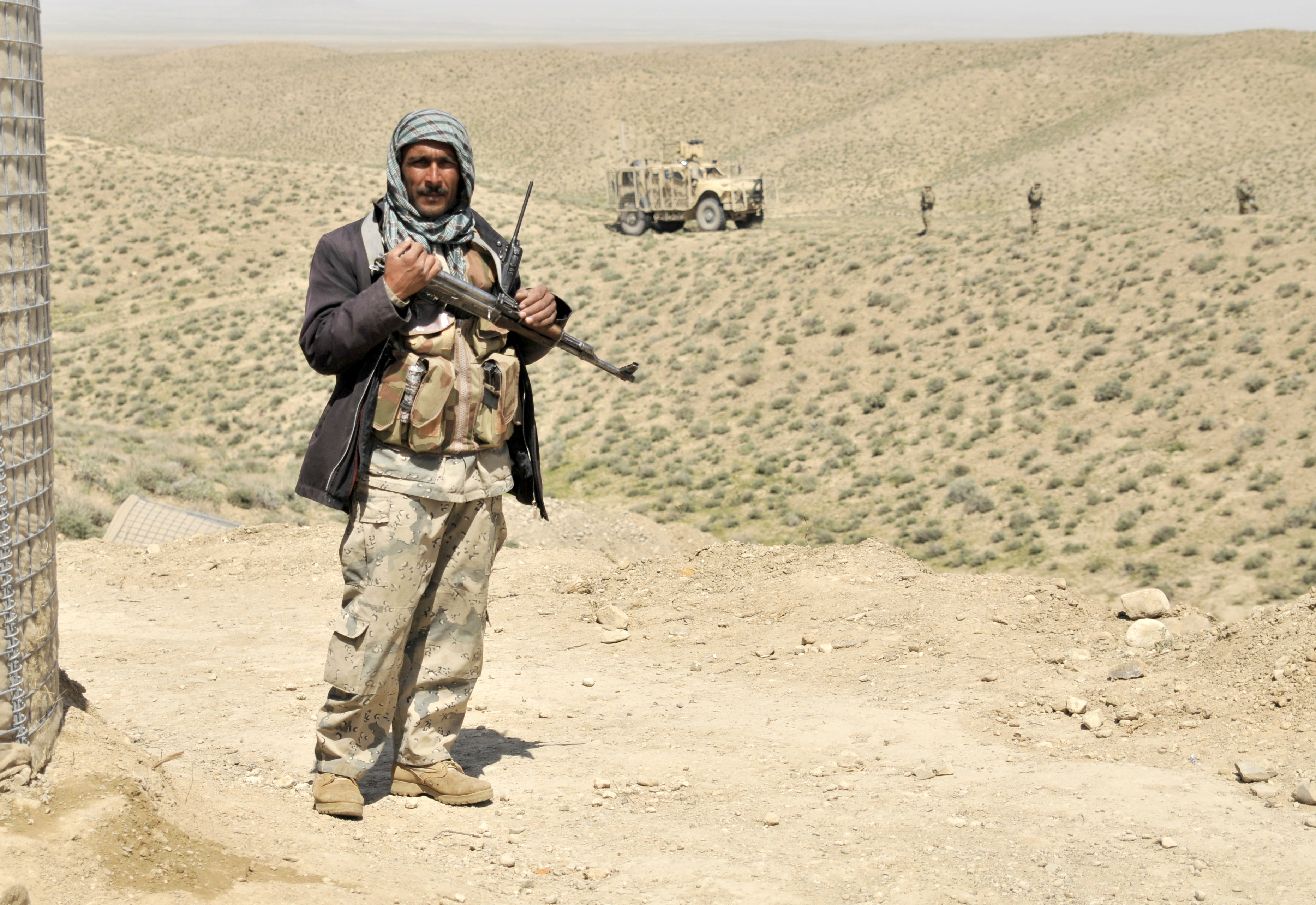

Lt Gen Syed Ata Hasnain is Governor, the State of Bihar, and Former Commander of India's Srinagar-based Chinar Corps.
July 3, 2026 at 3:42 AM IST
The dramatic fall of Afghanistan to the Taliban in August 2021 appeared, at least on the surface, to represent the culmination of one of Pakistan’s longest and most sustained geopolitical enterprises. For more than four decades, Pakistan had invested political capital, intelligence resources and military effort in shaping the Afghan theatre to suit its strategic interests. The final withdrawal of the US and the return of the Taliban seemed to vindicate Islamabad’s persistent pursuit of what it had long termed strategic depth.
For observers in India and elsewhere, the immediate prognosis appeared deeply unfavourable. Pakistan seemed poised to consolidate influence in Kabul, secure its western frontier and potentially reorient strategic attention eastwards. India’s space in Afghanistan looked sharply diminished. Yet, less than five years later, events have progressively taken an entirely unexpected turn. Pakistan today finds itself confronting an increasingly hostile regime in Kabul, rising insurgent violence led by the Tehrik-e-Taliban Pakistan, and a deteriorating security environment along the Afghan frontier.
The central question therefore demands attention; how did Pakistan lose strategic control almost immediately after achieving what should have been its greatest geopolitical success? The start point of any analysis has to be this change.
The Unresolved Burden of the Durand Line
Successive Afghan governments, irrespective of ideology, never fully reconciled themselves to this border. In fact, Afghanistan became the only country to oppose Pakistan’s admission into the United Nations in 1947, largely over this issue. To have an idea of Pashtun rage I once, some years ago, spoke to a number of Dubai-based Pakistani taxi drivers. It was a revelation listening to them and understanding the passion of their sub-nationalism.
Pakistan’s strategic establishment appears to have assumed that a Taliban government, indebted to Islamabad for decades of sanctuary, financial support and operational backing, would finally accept the Durand Line as settled reality. This assumption proved profoundly flawed. The Taliban, while Islamist in orientation, remain deeply influenced by Pashtun sub-nationalism. Accepting Pakistani claims on the border would have risked undermining their own domestic legitimacy.
Pakistan probably underestimated the emotional and political depth of this issue.
Victory Changed the Power Equation
However, militant movements often transform once they achieve state power. Before August 2021, the Taliban needed Pakistan. After August 2021, the equation reversed — Pakistan needed the Taliban.
This was the strategic inflection point Islamabad appears to have missed. Pakistan continued engaging the Taliban leadership with the confidence of a patron dealing with a dependent proxy. The now-famous visit of Pakistan’s intelligence chief to Kabul immediately after the Taliban takeover symbolised precisely this confidence. In retrospect, it may have marked the beginning of Pakistan’s strategic miscalculation.
The TTP Challenge Re-emerges
For years, the Afghan Taliban maintained only limited and often ambiguous support for TTP activities directed against Pakistan. Yet following their return to power, this relationship evolved rapidly.
Several explanations are possible. First, ideological solidarity made it difficult for the Taliban leadership to suppress fellow Islamist fighters merely to satisfy Pakistani demands. Second, resentment grew within Kabul over what many Taliban leaders perceived as Islamabad’s continued attempts to dictate Afghan policy. Third, Pakistani military strikes and increasingly aggressive border enforcement measures appear to have deepened mistrust. The result has been a far more permissive environment for TTP operations against Pakistan.
Pakistan’s Internal Contradictions
Political instability following the removal of Imran Khan, growing civil-military tensions, economic distress and a visible decline in public confidence toward the military establishment have collectively weakened the state’s ability to manage external complexities.
The coherence with which Pakistan previously managed the Afghan theatre appears significantly diminished. Instead of strategic management, policy increasingly appears reactive and fragmented.
Pakistan may believe that its recent diplomatic rehabilitation and renewed confidence internationally could allow it to reassert leverage over Afghanistan — but whether that can reverse the structural breakdown in relations remains doubtful.
The Blowback of Proxy Warfare
For decades, Pakistan tolerated or actively supported militant organisations whose activities served external strategic purposes, particularly in Afghanistan and against India. Simultaneously, it attempted to suppress militant groups challenging the Pakistani state internally. This distinction was always inherently unstable.
The Taliban’s victory over the US generated powerful ideological momentum across the radical ecosystem operating in the region. For groups like TTP, the lesson was unmistakable; if the Afghan Taliban could defeat a superpower and seize control of a nation-state, then Islamabad itself could be challenged.
Pakistan had normalised terrorism as an instrument of statecraft. It now faces the consequences of that doctrine.
India’s Quiet Strategic Patience
New Delhi neither rushed to fully embrace the Taliban regime nor attempted destabilising countermeasures. Instead, it maintained humanitarian engagement, preserved communication channels and allowed the evolving regional dynamics to unfold naturally.
As relations between Kabul and Islamabad deteriorated, India gradually regained diplomatic space without overt intervention.
This cannot be described as a strategic breakthrough for India. However, Pakistan’s inability to secure the advantages it anticipated from Taliban rule has certainly altered the regional balance in subtle but meaningful ways.
Pakistan’s Strategic Reckoning
Instead, it now confronts a deeply unstable western frontier, militant violence spreading within its own territory, and a Taliban regime no longer willing to operate within parameters defined in Rawalpindi. The very doctrine that shaped Pakistan’s regional strategy has begun to erode its own internal security architecture.
This is no longer simply an Afghanistan problem or a border dispute. It represents something far more consequential — the steady unravelling of a strategic doctrine built around the selective use of extremism as an instrument of state policy.
History may eventually record that Pakistan won the war for Kabul in 2021. It may also record that the moment of victory marked the beginning of an altogether different defeat.
More From BasisPoint