.png)

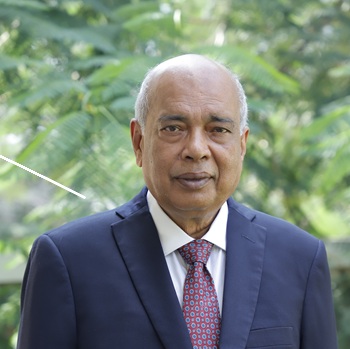
Dr Satya N Mohanty is a former secretary in the Government of India and senior advisor on rural development at the erstwhile Planning Commission.
May 28, 2026 at 4:10 AM IST
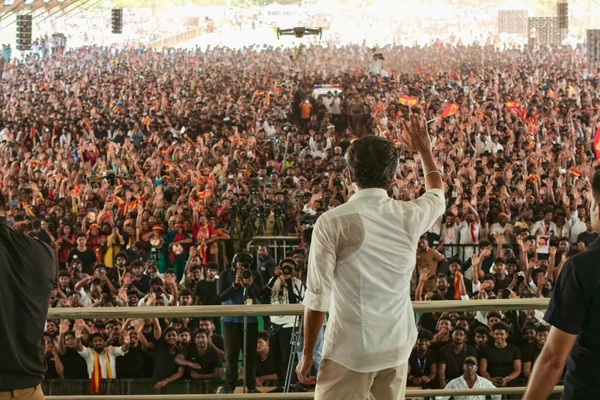
The emergence of Tamilaga Vettri Kazhagam as the single largest party in Tamil Nadu, elbowing aside the Dravidian establishment, is both a jolt and a small beacon of hope. The party, led by actor-turned-politician Joseph Vijay, fought on an explicit anti-corruption plank at a moment when graft has become so normalised across India's mainstream parties that it has all but vanished from public discourse.
Corruption is tolerated as a practical necessity: elections cost money, and the money raised through office is quietly accepted as part of the calculus. The costs go well beyond fiscal leakage. Corruption warps the priority list, pushing aside what deserves attention in favour of what yields a return. It also keeps coercion close at hand.
In Tamil Nadu, the grievance doing the rounds before the election was pointed: that selling land or dividing property among children required, in practice, the blessing of the party in power. When rights that should be unremarkable become contingent on political favour, an anti-corruption appeal lands with force.
Against this backdrop, Vijay's decision to stake TVK's identity on an anti-corruption platform is a breath of fresh air. After the results, the newly-elected MLAs took a public oath to neither accept nor offer bribes, and to refuse any association with corruption. During the campaign itself, TVK reportedly declined to pay voters, even as rivals did otherwise.
Pledge Psychology
Oath-taking carries genuine psychological weight. American author and professor of business administration Dan Ariely's work, Predictably Irrational, demonstrates that moral reminders interrupt the rationalisation process people use to justify dishonest behaviour. Public pledges make self-justification harder; those who take them tend, at least for a period, to behave accordingly. Not paying voters during the election also removes the immediate pressure to recoup campaign expenditure through office — typically the first step in the snowball of political corruption.
Is a corruption-free government a pipe dream for a newcomer? Perhaps. But outsiders see possibility where insiders have grown inured to immutability. Vijay is no accidental outsider, either. For over 15 years before entering formal politics, he and his NGO Vijay Makkal Iyakkam were engaged in civic work and disaster relief. That experience would have brought him close to precisely the bureaucratic failures and rent-seeking that anti-corruption politics promises to address. Voters appear to have trusted that record.
The TVK manifesto's welfare commitments have attracted the familiar dismissal of "freebies." Yet several of these transfers are straightforwardly welfare-enhancing. A monthly employment allowance of ₹2,000–₹5,000 for diploma and degree holders is not extravagance when the labour market is failing to absorb qualified young people. The ₹2,500 per month for women-headed households addresses genuine deprivation. Both put money in the hands of those who will spend it immediately, feeding back into consumption and, by extension, growth.
The framing of welfare versus growth obscures a more fundamental question: who has a legitimate claim on state revenue after the fixed obligations of salaries, pensions, maintenance, and debt servicing are met?
When the top 5–10% of the population seeks to capture most of that surplus through infrastructure-led expenditure, it crowds out transfers that would benefit 50–60% of people. Much of the infrastructure built in India over the past decade — expressways, flyovers, gold-plated airports — is of negligible utility to the bottom three quintiles. Meanwhile, ₹500,000 interest-free loans to self-help groups, ₹15,000 annually for a child's education, or ₹2.5 million family health insurance are precisely the kind of targeted bypasses that reach households the state's structural apparatus fails to serve. That infrastructure costs have also been inflated by political kickbacks, as contractors in Karnataka made clear when they went on strike, only reinforces the argument.
Some commitments, such as 8g of gold for poor women at marriage and a baby welcome kit, may look extravagant to outside observers. Within Tamil cultural norms, they are neither arbitrary nor indefensible, and the state can afford them without meaningful fiscal strain. Free sanitary pads, free bus travel, and subsidised cooking gas cylinders all have documented productivity effects in comparable contexts. At a minimum, they transfer real resources to people who need them.
Anti-corruption politics is a long haul, and it needs the poor to stay with it. They have the most to gain from clean governance, but they will not wait indefinitely for gains they cannot see. If life does not get materially better, the intended beneficiaries of the whole project turn into its gravediggers. Welfare schemes that put real resources in people's hands are not a detour from the anti-corruption agenda. They are what makes it credible, and what gives it time.
How far Tamil Nadu's experiment influences politics elsewhere will depend on whether it demonstrably works here first.
More From BasisPoint