.png)

Richard is an independent financial journalist who tracks financial markets and macroeconomic developments
September 3, 2026 at 10:08 AM IST
The Reserve Bank of India faces an unusual liquidity problem after bumper inflows through its foreign exchange swap windows pushed banking system surplus to a record ₹9.70 trillion and dragged overnight rates towards the standing deposit facility rate.
With the weighted average call rate slipping closer to the lower band of policy rate corridor and the TREPS rate falling further, the central bank will need to absorb excess funds without sending an unintended signal of monetary tightening or disrupting the bond and foreign exchange markets.
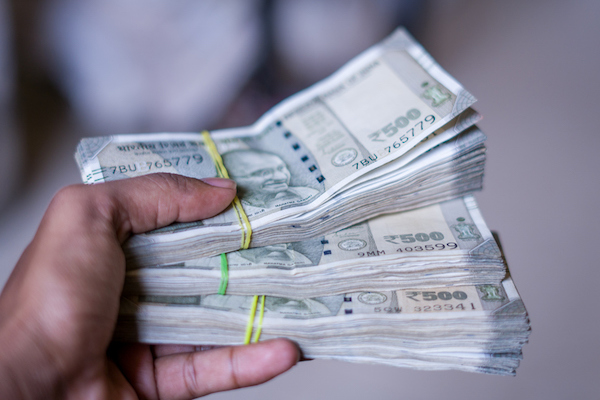
The scale of the liquidity challenge is now visible in the latest data. Banking system liquidity surplus widened to a record ₹9.70 trillion, surpassing the previous peak of around ₹9.20 trillion seen during the COVID-19 period. The surge, driven largely by sizeable foreign currency inflows through the RBI's swap-linked facilities, has pushed overnight rates sharply lower. The weighted average call rate was last at 5.05%, while the TREPS rate fell to 4.58%, reflecting the abundance of funds and underscoring the need for further liquidity absorption.
The scale of inflows explains the challenge. Banks mobilised $127.2 billion through FCNR(B) deposits under the discounted swap facility by its August 31 closure, while total inflows through FCNR(B), external commercial borrowings and overseas foreign currency borrowings reached $136.38 billion. Much of these funds has already been swapped with the RBI, injecting substantial rupee liquidity into the banking system.
VRRR remains the first line of defence. The biggest advantage is flexibility. The RBI can vary the amount and tenor of auctions and reverse the operations quickly when tax payments, festive-season currency demand or other autonomous outflows tighten liquidity. But longer-tenor VRRRs may not always attract sufficient demand, particularly when banks expect sizeable near-term cash movements.
Radhika Rao, senior economist and executive director at DBS Bank, said “concerted steps” would be needed to drain the potential liquidity surge. In her assessment, a calendar of money market operations, including VRRRs at shorter tenors, could help because longer-duration operations of around 15 days had seen limited interest.
Short-term government paper could be the next option. Cash management bills and Treasury bills can absorb liquidity while avoiding a permanent tightening of bank reserves. Upasna Bhardwaj of Kotak Mahindra Bank expects the RBI to supplement VRRRs with short-term instruments such as CMBs, T-bills under MSS before considering durable measures. CMBs and T-bills would be operationally convenient, although government cash balances of around ₹4.6 trillion could limit their usefulness. Bhardwaj therefore sees MSS as a more viable route for absorbing surplus for up to six months, although its use involves additional procedural requirements.
The drawback is that larger issuance could influence short-term yields and alter the shape of the yield curve.
An incremental CRR is a powerful but problematic option. It would immediately impound liquidity and could be imposed temporarily for two or three months. However, the RBI had exempted incremental deposits mobilised under the discounted FCNR(B) window from CRR and SLR requirements. Reimposing a reserve burden through iCRR could therefore dilute the incentive structure of the scheme.
Rao also cautioned that FCNR-related liquidity is unevenly distributed across banks, potentially placing smaller and mid-sized institutions at a disadvantage. A broader CRR increase would be even more disruptive and would signal a durable tightening in liquidity conditions.
Sell-buy swaps offer another direct route. They can withdraw rupee liquidity while also interacting with the RBI's large forward position. But Rao warned that they could disrupt FX markets and come at a high cost. Bhardwaj also expects the RBI to remain cautious, arguing that elevated global uncertainty makes preserving foreign exchange reserve flexibility important. Greater use of such swaps could also place upward pressure on forward premia.
OMO sales remain the nuclear option. Selling government bonds would permanently drain liquidity, but at the cost of pushing up bond yields at a time when net Centre and state government bond supply is projected to rise to ₹12.5 trillion in October-March from ₹9.4 trillion in April-June. IDFC FIRST Bank has also noted that managing the liquidity surplus will influence both the yield curve and money market rates.
The RBI's immediate task, therefore, is likely to be one of calibration rather than aggressive sterilisation. With currency leakage estimated at around ₹5 trillion in 2026-27, and three-fourths of it expected in the second half, and other drains likely from FX intervention and forward maturities, much of the surplus could unwind organically.
For now, the RBI may continue with VRRRs while shifting gradually towards CMBs, T-bills under MSS for the next four to five months. Durable measures such as CRR hikes, OMO sales or large-scale sell-buy swaps are likely to remain reserve options unless liquidity stays more durable and overnight rates continue to trade materially below the policy corridor.
More From BasisPoint