.png)

Papa, Don’t Preach, Please Just Listen
Love, logic, and loud silences in today’s parent-child equation
Kalyani Srinath, a food curator at www.sizzlingtastebuds.com, is a curious learner and a keen observer of life.
March 21, 2026 at 4:23 AM IST
How is it that the choices we make for ourselves feel perfectly reasonable—bold, even wise—while the ones we gently (or not so gently) suggest to our kids are immediately suspect? Somewhere along the way, “I’m just saying this for your good” started sounding a lot like “I don’t trust you,” and that’s when the temperature in the room drops a few degrees.
“Papa, don’t preach,” they say. Sometimes it’s said out loud. Sometimes it’s just there—in the eye roll, the half-listening nod, the quick change of topic. And just like that, what could have been a conversation turns into a careful dance. You pick your words. You soften your tone. You try not to sound like… well, like your own parents.
Because that’s the other twist, isn’t it? The very things we once resisted, we now find ourselves saying. Almost word for word.
Parenting has never been easy. But lately, it feels like the job description changed and nobody sent a memo. What used to be “guiding” now feels like “negotiating.” What used to be “experience” is now “just your opinion.” And what used to be a clear “no” now needs a supporting presentation, three examples, and a disclaimer.
Part of the challenge is that today’s kids grow up in a world that moves faster than ours ever did. Information is everywhere. Opinions are louder. Confidence comes early. Sometimes, a little too early. There’s a quiet belief that things should work out—quickly, smoothly, and preferably without too many detours. And when they don’t, it’s not just frustrating; it feels unfair.
So when a parent steps in with a cautious “maybe think this through” or “this might be harder than it looks,” it doesn’t always land as concern. It can sound like doubt. Or worse, like negativity.
Add to that a dash of “I already know this,” and suddenly, your years of trial-and-error wisdom are competing with a 90-second video and a friend’s confident opinion.
To be fair, it’s not all on them.
Parents come with their own expectations. We assume our intentions are obvious. We expect our advice to be taken seriously. Somewhere, we hope for a little acknowledgment—if not agreement, then at least a pause before dismissal. And when that doesn’t happen, irritation creeps in.
That’s when conversations start to go sideways.
You begin gently: “Have you thought about…?”
They counter: “I’ll figure it out.”
Over time, something interesting—and slightly worrying—happens. You start editing yourself. You skip certain topics. You tell yourself, “Not worth the argument.” Calls get shorter. Conversations stay on safe ground: food, weather, traffic, maybe a show you both watched.
The bigger things—the ones you actually care about—get quietly parked.
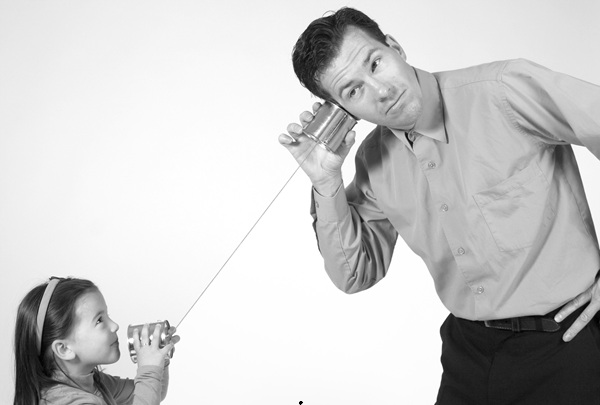
And then comes that odd moment when you realise you’re hesitating before calling your own child. Not because you don’t want to talk, but because you’re not sure how it will go. That’s a strange place to be.
How does that happen? How do people who’ve spent years providing, protecting, and worrying become… slightly stressful to talk to?
It’s not one big thing. It’s a series of small mismatches.
Parents are looking at the long game. We’ve seen how choices play out over time. We know that some shortcuts aren’t really shortcuts. So when we speak, it comes from that place of hindsight.
Kids, on the other hand, are in the middle of it. For them, choices aren’t theoretical—they’re immediate, personal, and tied to identity. The idea of “learning the hard way” doesn’t sound scary. Sometimes, it sounds necessary.
So when we say, “Be careful,” they hear, “Don’t try.”
Of course, life itself isn’t getting any easier. As Atlas Shrugged famously reminds us, life is difficult. Not occasionally. Not selectively. Just… consistently. That hasn’t changed across generations, even if everything else has.
No amount of positive thinking or motivational quotes can completely smooth things out. Life is still a series of decisions—some good, some questionable, some we avoid making until they make themselves. Every stage brings its own set of forks in the road.
Parents tend to see those forks with caution: “Take the steadier path. It may not be exciting, but it’s safer.”
Kids often see them with curiosity: “What’s the point of the steady path if I don’t even know what the other one looks like?”
The real issue isn’t the difference in thinking—it’s how we handle that difference.
When every suggestion sounds like instruction, it creates resistance. When every piece of independence looks like rebellion, it creates tension. And when both sides dig in a little too firmly, even simple conversations start to feel heavy.
But here’s the thing: beneath all the back-and-forth, the eye rolls, the “I know,” and the “just listen to me,” the intention on both sides is surprisingly similar.
Parents want their kids to be okay. Not perfect, not flawless—just okay. Secure. Capable. Able to handle what comes their way.
Kids want to be trusted. Not managed, not constantly corrected—just trusted. To try, to fail, to figure things out.
Somewhere between “I’m saying this because I care” and “Let me do this my way,” there’s a middle ground. It’s not always easy to find, and it definitely doesn’t show up on its own.
Maybe it looks like parents offering advice without insisting on immediate agreement.
And maybe, just maybe, it’s okay if not every conversation ends in alignment.
Because at the end of the day, this isn’t really about winning arguments or proving points. It’s about keeping the connection intact.
Life will continue to be unpredictable. Plans will go off track. Decisions will work out—or they won’t. That’s part of the deal.
But if, in the middle of all that, parents and children can still talk—honestly, occasionally awkwardly, sometimes even with a bit of humour—then things are probably not as off track as they seem.
And if all else fails, there’s always the safest conversation starter of all time:
“Have you eaten?”
More From BasisPoint