.png)


Minari Shah is a strategic communications leader who has helped Fortune 500 brands, such as Amazon, Tata Motors and Dell, build trust through storytelling.
July 8, 2026 at 3:05 PM IST
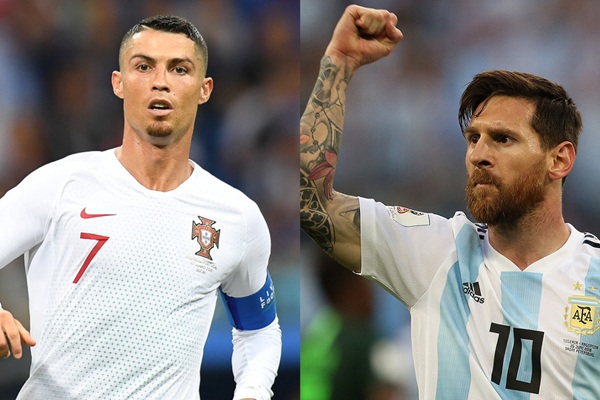
As of this week, the bracket has spoken. Portugal is out of the tournament, Ronaldo’s dream unfinished; Messi’s Argentina lagged behind Egypt for three-quarters of the game but is finally through to the quarterfinals. The grand face-off was perhaps always more of a wishful thinking than a real possibility. The tournament goes on, the fans may continue heated debates a little longer, but this marks the end of one of the biggest rivalries in football for the last 20 years. For me, a casual watcher at best, the debates, the ongoing media coverage, and the social posts on this rivalry have been illustrative.
It’s a story long in the making about two completely different personas: a classic example of how reputation works. Reputation is less a record of what someone does and more an interpretive system that determines what each new fact will be allowed to mean. Once people believe they know who you are, contradictions get ignored, explained away, or waved off as exceptions. It works on unproven claims too. An unverified story about Ronaldo’s infraction often sticks more easily in parts of the media and fandom. A similar story about Messi typically faces disbelief or gets explained away as out of character.
Let’s look at the differing frames. One is cast as the humble genius. The other as the relentless machine. One read as natural. The other as constructed. Messi became the reluctant virtuoso: quiet, gifted, pure, almost untouched by ego. Ronaldo became the self-made icon: disciplined, driven, obsessed, undeniable. Once those frames settled, every new fact got read through them. When Messi went quiet, it meant humility. When Ronaldo spoke up, it meant ego. When Messi showed anger, it was passion. Ronaldo's on-field frustration often gets interpreted as narcissism. When Messi won, it was destiny. When Ronaldo won, it was willpower. The asymmetry persisted when either stumbled. Ronaldo's controversies often became evidence of what the audiences thought they already knew, while Messi's were more readily compartmentalised as departures from character rather than confirmations of it.
Real life is rarely this clean. Both are supremely ambitious. Both have shaped football for nearly two decades. Both have carried nations, clubs, expectations and impossible comparisons. Both have shown grace, petulance, brilliance, insecurity, leadership, and controversy, often within the same season.
Two Toolkits, One Job
I will leave aside the word “authentic” and call the difference as visible restraint versus declared ambition. Because at the level at which these two operate, everything is both authentic and constructed at once: temperament refined over two decades by management, sponsors, and an audience that keeps asking for more of the story it already believes. Each man has perhaps become a character inside a story curated as carefully as any brand is.
Ronaldo has built his myth in full view. He has talked about legacy, records, and being the greatest, in his own words, often unprompted. He turned his initials into a holding company: hotels, fragrance, gyms, underwear, a stake in a football club. The brand and the man are the same entity.
Messi built his myth by withholding. Sparse interviews, almost no self-explanation. A public face often read as guileless. Scarcity of access is its own kind of narrative management. The paradox is that between a family that has managed his affairs since his teens and sponsors, he may be one of the most carefully protected brands in modern sport; precisely because he appears unbranded.
Ronaldo performs striving. Messi performs naturalness. Neither fake, both reputational choices, both stories refined not just by the men themselves but also by the machinery around them.
Why One Story Travels Further
"Talented but humble" requires nothing from an audience. You don't need to know a single tactical concept to find it moving. It's a fairy tale shape, and fairy tales don't need footnotes.
"Relentless self-belief that turned a raw, ambitious teenager into a physical outlier for two decades" is a harder tell. It asks the audience to do some work: know what he looked like at 19 versus 34, understand what elite performance at 41 costs. Defending Messi's greatness can run entirely on vibes. Defending Ronaldo's requires citations. This shows up in the two fandoms. Messi's reach runs wide: it has aficionados, but casual viewers with barely a passing interest in football also root for him, because his story asks nothing of them except to feel it. Ronaldo's fandom runs narrower but hotter, the kind of devotion that argues, defends, and quotes numbers back at you.
Money Story
Both men have businesses stamped with their own names, built along the same basic architecture: hotels, fashion, licensing. The differentiator is just volume.
Ronaldo has run the entrepreneur track loud and continuous for most of his career. CR7 hotels, gyms, and fragrance date back over a decade, and he has owned up to the empire as part of his myth. Messi ran nearly the opposite model for most of his playing life. Classic paid-endorser deals, representing brands he had no stake in. A real business layer was, however, forming underneath: MiM Hotels since 2017, a fashion line, and licensing. It stayed unpublicised, most times almost incidental to the persona. In the last few years, largely since the Inter Miami move, this layer has scaled into something substantial: a listed real estate company, an equity stake in the club; a portfolio built along lines now strikingly similar to Ronaldo's, if not yet at the same financial scale. But the coverage for Messi still gets organised around the athlete, not the business.
The interpretive system remains at work: even financial journalists whose job is to look at the numbers, find the restraint frame so strong that the commercial ambition remains nearly invisible.
Two Theories of Legitimacy
Strip away the football, and what's left are two competing theories about how greatness should present itself. One says it should look effortless, arriving rather than being built. The other makes it look earned, visibly, out loud. Neither is inherently better. What differs is the scrutiny each attracts.
With declared ambition comes the probing inquiry. It invites the audience to measure the gap between the promised and the delivered. Amazon was mocked as a doomed vanity project before it turned a profit. Tesla was one of the most shorted stocks in the market before Model 3 proved it could scale. Djokovic heard more boos than cheers, even though he broke most of Federer's and Nadal's records (and, in June this year, got onboarded as a global strategic advisor by General Atlantic, a $126 billion private equity firm). The records and wins eventually forced the door open, but the cost of declared ambition can be a level of scrutiny that the "effortless" frame doesn't attract.
It doesn’t mean ability is unproven in the case of restraint. Messi proved himself as conclusively as Ronaldo did. But restraint changes how proven ability gets processed: it gets mythologised rather than measured. The audience extends something warmer than respect for the person and not just the ability, and they do it without demanding evidence. Messi’s greatness runs on folklore as much as on data, while Ronaldo must keep proving himself in the public arena. Declared ambition earns doubt about whether the person is really as good as claimed; restraint makes proven ability more readily accepted and revisited less often.
You can see the difference in how frame breaks get handled. If an action breaks the quiet image, that does become the story but doesn’t automatically cause permanent damage. When Messi sent a legal notice to Barcelona demanding to leave in 2020, the football world treated it as a crisis. But it never fundamentally altered the interpretive frame through which Messi was viewed.
The same mechanism runs at corporate scale. Apple installed warmth first, aesthetics married to user convenience, so early that even its most aggressive business moves get read as perfectionism rather than dominance. Other technology companies that built their reputations around engineering excellence, relentless execution or scale find that warmth never sticks in quite the same way; every assertive move is more readily interpreted as an exercise of market power than an extension of customer obsession.
The Open Question
Different reputational archetypes compound differently. It comes back, in the end, to the interpretive system reputation runs on. Once a frame sets (natural or self-made, humble or hungry), it decides what every future fact is allowed to mean, far more than it describes who someone actually is.
Most companies never make this choice consciously. They install a frame through early founder behaviour, first press coverage, initial positioning, and then spend years managing consequences they never chose. A company coded as warmth-first will find that aggressive moves read as betrayal. A company coded as ambition-first will find that every stumble reads as hubris. Neither frame is wrong. Both impose constraints on what you are allowed to do next without paying a price for it. The strategic question is whether you know which frame you've installed, and whether you've accounted for what it will cost when you need to do the thing it doesn't permit for free.
Every founder and every company faces this choice, whether they recognise it or not. The ones who recognise it early, who understand that they are installing an interpretive system and not just choosing a brand, can look around the corners of their own reputation and plan for what's coming. Else they will have to manage a problem that was set in place way before any crisis came up.
This piece first appeared on Minari Shah’s Substack page, The Long View.
More From BasisPoint