.png)

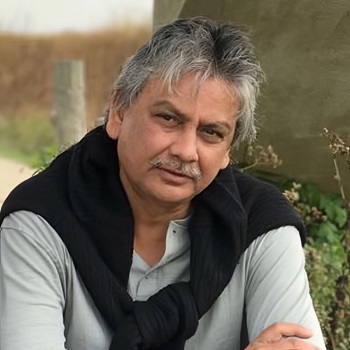
Michael Patra is an economist, a career central banker, and a former RBI Deputy Governor who led monetary policy and helped shape India’s inflation targeting framework.
September 7, 2026 at 2:45 AM IST
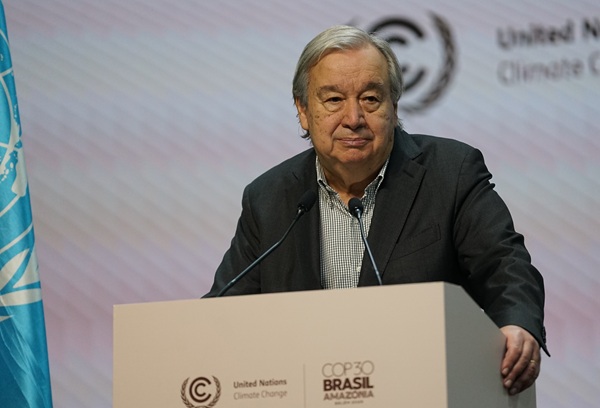
On December 31 this year, Antonio Guterres, the 9th Secretary-General of the United Nations, will leave office after completing his second five-year term. UN Secretaries-General traditionally serve a maximum of two terms, meaning that the UN General Assembly will select and appoint his successor, who will take office on January 1, 2027.
A former Prime Minister of Portugal and UN High Commissioner for Refugees, Guterres will be remembered for leading the UN through unprecedented compounding crises. His watch has been marked by gridlocked geopolitics through which he navigated a Security Council deeply divided by the Russia-Ukraine war and the conflict in West Asia beginning with the Israeli-Hamas strife. He will also be remembered for his blunt, evocative vocabulary on global warming, for steering the global response to the COVID-19 pandemic and for championing the establishment of global governance frameworks for artificial intelligence.
The Legacy of Guterres
But perhaps what he will not be remembered for may well be his most important legacy: the reform of global rules for economic measurement.
Guterres has been an ardent advocate of the need to rethink the use of GDP as an indicator of economic progress or lack thereof. After several decades of economic development that the world has seen post the Second World War, the stark reality is that the ‘GDP growth at all costs’ philosophy has failed to eradicate poverty, unemployment — especially among the youth —, high levels of inequality and social unrest.
In 2021, Guterres galvanised the leading multilateral institutions to summarise what is right about GDP and what is not.
Valuing What Counts
At its second regular session on November 18, 2021 the UN’s Chief Executives Board for Coordination, its highest level coordination body chaired by Guterres, tasked the High Level Committee on Programmes, the principal mechanism within the UN for global policy coherence, cooperation, and strategic programme planning to “build on existing initiatives to develop measurements of progress on sustainable development that complement gross domestic product, and support statistical capacity-building in developing countries”. The result is the paper Valuing What Counts.
Why GDP Falls Short
GDP is the most widely used benchmark to measure a country’s economic progress and the value of its domestic production of goods and services. Its success is that it has enabled thousands of national accountants worldwide to be trained to produce reliable, consistent, comparable and replicable national accounts. It also provides a useful way to tell a compelling economic narrative.
For a world navigating the crises of the 20th century, however, the experience has been that it has fallen short of measuring progress towards socially and economically inclusive, just, and sustainable development. Significant vulnerabilities in these aspects exist even in countries with high levels of GDP.
The paper argues that GDP oversimplifies and obscures the complex needs of countries. For instance, GDP does not account for air pollution, natural resource depletion, environmental degradation and biodiversity loss. Global GDP has doubled since 1970, while the depletion of resources has more than tripled, with disastrous consequences for the natural environment.
GDP also does not capture the full extent of the informal economy, such as unpaid care work carried out largely by women in households. It does not capture the social value of activities such as health care or the value of security. This was particularly pronounced during the COVID-19 pandemic.
GDP does not offer insight into inequalities, and hence it does not account for the targeted interventions needed to address them in their various intersectional forms. The social and environmental exclusion inherent in GDP perpetuates the misallocation of resources in ways that further exacerbate inequalities.
GDP does not sufficiently capture new economic phenomena such as digitalisation, the use of crypto assets and the development of data centres and clouds. These issues weigh heavily on the 2025 revision of the System of National Accounts.
Why Go Beyond GDP and How
Guterres argued that the 21st century faces multidimensional and interconnected challenges and crises such as environmental degradation, pandemics, extreme inequalities, and rapid technological change. Accordingly, policymakers need a better tool to enhance decision-making in the best interest of people, planet, prosperity and peace.
Driven by his vision, the paper Valuing What Counts proposes a narrative, conceptual framework for complementing GDP with metrics that are more inclusive of environmental and social aspects of progress.
Three outcomes are sought:
- putting the focus on people and promoting meaningful participation to contribute to transformational change;
- respect for life and the planet by safeguarding it and ensuring possibilities for well-being in the future; and
- reduced inequalities.
The framework should also be based on participatory governance and stronger institutions; innovative and ethical economies; and a focus on the environment. In Guterres’ view, political commitment to develop the conceptual framework must go hand in hand with a technical and scientific process to develop the metrics in the form of a dashboard of indicators. The aim should not be to establish a single composite indicator. The intention is not to replace GDP but to improve it and complement it with a broader measurement framework. The challenge is to define what matters to people and their wellbeing, and to define key policy goals with a forward-looking lens.
What Lies Ahead
António Guterres has been the primary driving force behind the UN’s active push to move "Beyond GDP." His leadership culminated in a major milestone on May 7, 2026, when he launched the landmark blueprint report Counting What Counts: A Compass of Progress for People and Planet. The report was prepared by a group of 14 independent experts co-chaired by Kaushik Basu, former Chief Economic Adviser to the Government of India. The ‘Beyond GDP’ initiative has now transitioned into a formal political and inter-governmental phase. Guterres has officially urged UN Member States to reform the world's standard economic accounting systems and pilot a new UN Beyond GDP Dashboard featuring 31 critical sustainability and equity metrics. About half of them are mapped directly from existing Sustainable Development Goal (SDG) frameworks. Spain and Guyana serve as the official co-facilitators of the intergovernmental negotiations, managing the global diplomatic effort to reach universal political alignment. In parallel with diplomatic negotiations, the UN’s Conference on Trade and Development (UNCTAD) and other UN-system partners have launched localised pilot programmes to help countries strengthen their national statistical systems and test the 31 indicators in real time.
More From BasisPoint