.png)

Reform Compass is a column by former senior officers of Income Tax, GST & Customs focused on reforms in policy and tax administration.
March 25, 2026 at 6:49 AM IST
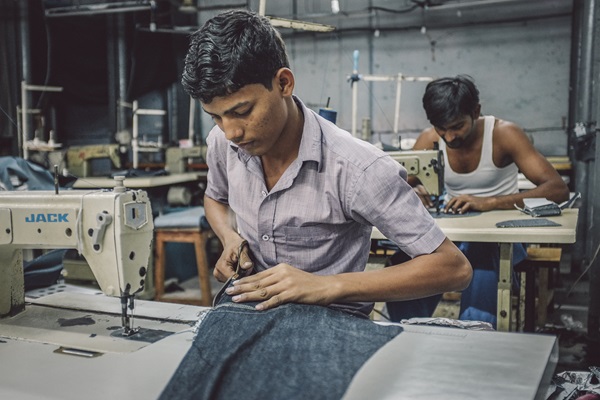
India wants to become a manufacturing powerhouse and an alternative to China. The political will is visible. The Make in India slogan did fire ambition. But the result: India’s share of manufacturing in GDP has fallen from 18% in 1979 to 13% in 2024, according to the World Bank. According to DGFASLI data, the number of working factories in 2005 was a little over 233,000. By 2013, and the count had grown to 292,010, a level at which it has broadly stagnated over the next decade. Employment in factories presents a slightly better picture, having grown from 10.6 million to 20 million, at a rate of 3.6% annually, but far below the nominal GDP growth rate of 10-12% over the same period.
EPFO’s data presents an interesting picture. EPF contributing establishments have more than doubled to 767,000 over the last decade. EPF contributing members have reached 80 million, of which factory workers are only about 20 million — 25%. The number of non-manufacturing establishments is nearly twice the number of working factories. The formalisation story India is telling is overwhelmingly a services story, not a manufacturing story. The factory economy is, in fact, falling behind. These performance metrics exhibit a structural misalignment between manufacturing ambition and policymaking. They also show that industries thrive when government intervention is minimal: hence software and services went on to become our pride.
Over the past five decades, the national imperatives have been very clear — improve foreign exchange earning capacity to keep the balance of payments manageable and boost manufacturing to enable job creation.
Policy Contradictions
Not only have the FTAs left large swathes of domestic industry battling competition from the Asian tigers, but no thought seems to have gone into assessing the impact on privileged sectors – EOU (1981) and SEZ (2005). SEZs have brought in investment of over ₹8 trillion and employ 3.2 million people. They account for 21% of India’s exports. However, 25% of their capacity utilisation comprises deemed exports and domestic sales (DTA), which shows their dependence upon domestic market access. Now look at the inequity: goods ‘imported’ into India from SEZs suffer full customs duty and IGST. A pretty much similar story prevails through the web of EOUs and MOOWR (Manufacture and Other Operations in Warehouse Regulations) under customs bonded warehouse, give or take minor tweaks. The conclusion: if you set up a factory in India in an SEZ, you will be worse off accessing the domestic market than exporting to India under an FTA – as your product pays nil BCD at the point of import itself – no value addition in India required, no manufacturing obligation, no investment conditionality.
All these schemes have been built at different times, by different ministries, with varying conditions, and privileges, not only displaying administrative untidiness, but also becoming a hotbed of tax litigation and policy flip-flops, eventually resulting in stunted growth.
What India needs is a single-minded coherent approach that prioritises manufacturing and jobs over lesser aims and consolidates rules relating to EOU, SEZ, and MOOWR into a coherent structure with uniform DTA access logic, where market access is leveraged for investment rather than traded away for uncertain export gains. MOOWR is structurally best suited to what Make in India actually requires: defer customs duty on imported inputs, manufacture in a bonded warehouse, pay duty only when goods exit into the domestic market. No export obligation. No Net Foreign Exchange straitjacket forcing the business model to serve a compliance metric rather than market conditions. Single department interface. Complete geographical freedom to set up. MOOWR’s underlying design logic is better aligned with a manufacturing economy equally oriented towards domestic consumption and exports.
The new 17-member committee established by the Indian government in March 2026 to overhaul the Special Economic Zone policy, focusing on creating "SEZ 2.0" to boost manufacturing, needs a hard reality check.
It must rise above the pulls and pressures of ministerial turfs, and recognise that until rationalisation happens, India’s manufacturing ambition will continue to outrun its policy coherence. Without that clarity, Make In India risks becoming a slogan that signals intent, but not outcomes.
More From BasisPoint