A low-equilibrium trap is hidden in plain sight.
India’s economic resilience is being questioned as structural weaknesses: weak household incomes, falling savings, and stagnant private investment have persisted despite the hitherto benign crude oil prices and extensive policy initiatives. India may now be trapped in a low-equilibrium growth path: the economy keeps expanding on paper, but too slowly and too unevenly to lift household confidence, consumption and private investment. Official growth figures may overstate underlying strength, while weak consumption, slowing productivity, and limited job creation leave the economy vulnerable to external shocks and stagflation risks.
Contrary to the view that a surge in oil prices is the primary threat, the real challenge is the erosion of household purchasing power and private-sector dynamism. The danger is not that India will stop growing; it is that growth remains narrow, income-poor and unable to generate enough jobs. These risks could worsen if inflation accelerates and global fragmentation continues.
The public discourse challenging India’s growth marvel has intensified after the West Asia conflict and the wave of global protectionism triggered by US reciprocal tariff measures since early 2025. More economists now recognise the disconnect between the official narrative and the lived experience of most economic agents.
Households And Capex Are The Fault Lines
In 2013, the Fragile Five critique centred on policy paralysis, declining private investment, high inflation, rising unemployment and a depreciating rupee. A decade after the 2014 regime change, however, private capex, job creation and capital inflows remain well short of expectations.
Policy responses came through Make in India, skill missions, self-reliance drives, digital expansion and infrastructure spending. Yet, over a decade later, dissatisfaction has persisted. Since 2015, headline greenfield FDI figures masked modest net growth after repatriation and disinvestment, with flows skewed towards domestic consumption rather than export-oriented manufacturing. That is why the low-equilibrium problem has survived successive policy announcements.
Over the last 10 years, there has been a chronic weakness in private investment. Despite healthier corporate balance sheets, tax cuts, public absorption of bad debts and post-COVID support, private capex remains elusive. Public spending has dominated, but crowding-in effects remain limited, reflected in weak household demand, policy uncertainty and high public debt.
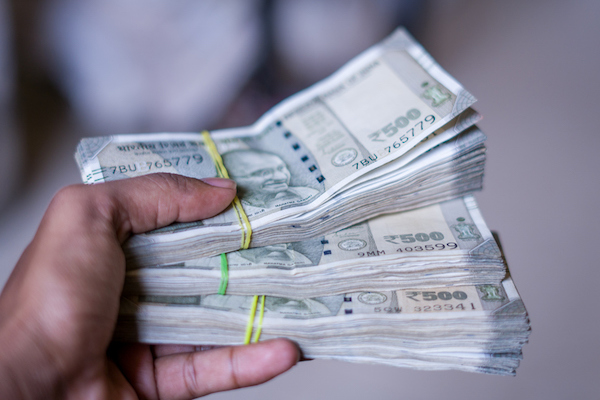
This ties directly into the household income crisis and falling savings. Real household income growth, proxied by private final consumption expenditure plus gross household savings, deflated, has slowed to around 3.5% CAGR in recent years from earlier peaks near 8%. Household savings have declined sharply. Families are dipping into savings to sustain consumption, creating a vicious cycle: weak incomes suppress savings and investment, which stifles job creation and demand.
Why Stagflation Risk Is Structural
This household stress aligns with Prof Arun Kumar’s critique that headline GDP growth largely captures the organised sector, while the informal sector remains stagnant or contracting. High-frequency indicators often proxy only the organised economy, masking unemployment, weak consumption and distress from demonetisation, GST, the NBFC crisis and the pandemic.
The result is a paradox of shining numbers and widespread distress.
Data scepticism has been reinforced by Arvind Subramanian’s recent interventions. The former chief economic adviser estimates that official GDP growth was overstated by 1.5–2 percentage points annually between 2012 and 2023. Private corporate investment has halved from 2000s peaks to 8–10% of GDP, labour-intensive manufacturing exports remain stuck and net FDI has turned near zero, while rupee depreciation reflects lost investor confidence.
The balance of realism has shifted in favour of the critics.
The latest GDP rebasing to 2022-23 prices has reportedly marked down nominal GDP for 2021-22 to 2025-26 by ₹43 trillion and private consumption by ₹81 trillion. A realistic assessment suggests revised real GDP and private consumption growth over 2018-19 to 2025-26 may stand closer to 4.8% and 3.8%, respectively, rather than earlier estimates of 5.4% for both.
Monetary policy under flexible inflation targeting has been hailed for price stability and CAD management, but it is operating with a broken compass. Average inflation has hovered around 5%, while exchange-rate management provided only transient stability. Declining productivity, real wage stagnation and falling household savings make the framework inconsistent with current realities.
India’s low inflation and moderated external and fiscal deficits have been driven more by weak demand than robust economic strength. The culmination is a structural crisis: informal-sector distress, weak demand, stagnant productivity, rising ruralisation and uneven gains concentrated among elites and the organised sector.
The time for denial and nationalistic exhortation is over. India needs a credible growth model that revitalises domestic demand, revives broad-based private investment and bridges the organised-informal divide. Without this, it risks remaining trapped in a low-equilibrium growth path, ill-equipped for the shocks ahead.
.png)