.png)

India’s Guided Missile Maker Has a Profit Problem Hiding Behind Its Cash Pile
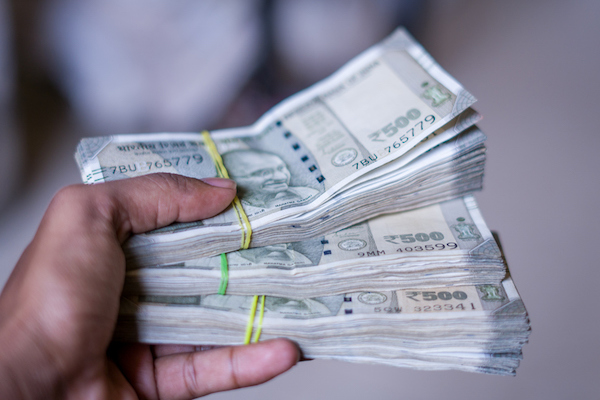
Most of BDL’s profit now comes from interest on its ₹47 billion cash pile, not from building missiles. The missile maker is, in effect, running a treasury operation with a defence business attached.

Dev Chandrasekhar advises corporates on big picture narratives relating to strategy, markets, and policy.
June 1, 2026 at 6:51 AM IST
Bharat Dynamics spent 2025-25 telling a growth story. Revenue had climbed 41% to ₹33.45 billion, the chairman called it “stellar,” and a defence-spending tailwind was supposed to do the rest. 2025-2026 reversed it. Total revenue fell 27% to ₹24.42 billion; last year’s blockbuster fourth quarter, which booked more than half the annual top line, left a base so high the January-March quarter looks like a collapse. The direction of travel is unambiguous: Bharat Dynamics produced more and sold less.
Bharat Dynamics is a state-owned defence manufacturer, roughly 75% government-held, and India’s primary maker of guided missiles: surface-to-air systems, anti-tank missiles and torpedoes. It sells almost entirely to one customer, the Ministry of Defence. That single-buyer model shapes its accounts: orders are large but infrequent, and a few big shipments can swing a whole quarter. The other defining feature is a fortress balance sheet that has no debt and a large cash reserve built from customer advances and retained profit.
Net profit of ₹4.20 billion, down 23.5%, almost flatters the year because of what sits on the balance sheet, not what the factories shipped. BDL holds roughly ₹47 billion in cash and deposits, and that pile threw off ₹4.24 billion of other income, mostly interest. Set it aside and the picture changes: core operating profit before tax stripped of other income fell 64% to just ₹1.44 billion. The missile maker is, in effect, running a treasury operation with a defence business attached.
The margin tells the same story another way. EBITDA margin compressed almost 500 basis points to 9.15%, the culprit being material costs, which jumped from 62.8% of revenue to 81.7%. That is not a company “easing out of supply-chain constraints,” as last year’s commentary promised; it is one whose input costs ran ahead of what it could convert into billed sales. Reported margins also flatter the year: BDL capitalised ₹7.73 billion of production into inventory rather than expensing it, a swing worth nearly a third of revenue that will reverse when that stock is drawn down.
Inventory is now the dominant balance-sheet line at ₹46.26 billion, up 75% in a year. Some is genuine work-in-progress against the order book. But it is production that hasn’t become revenue, and here lies the year’s real puzzle. BDL is making the equipment; it just isn’t converting that output into sales. The reason is structural: revenue is booked only when the Ministry of Defence formally takes delivery against a contract milestone.
Until the customer inspects, accepts and signs off, everything Bharat Dynamics builds piles up as its own inventory. In 2025-26 those acceptances did not keep pace with production, so output swelled while the top line shrank. A record order book proves demand exists; it says nothing about whether this year’s production got delivered and billed. For Bharat Dynamics, much of it did not. Trade payables, up 88% year-on-year to fund the build, are doing the financing.
The cash flow is where the bulls will plant their flag, though. Operating cash flow surged 261% to ₹6.04 billion, lifting the OCF-to-PAT ratio from a feeble 0.30 times to a healthy 1.44. Even after a ₹19.78 billion inventory outflow, free cash flow stayed positive at ₹3.75 billion, helped by released receivables and supplier credit. Earnings quality, on this measure, improved, and the order book of roughly ₹260 billion gives multi-year visibility few mid-cap industrials can match.
The governance is harder to wave away. BDL could not constitute a valid audit committee this quarter. Because quorum failed on the departure of independent directors, the board approved these results without committee review, drawing fines from both exchanges. The chairman-cum-managing director retired at the end of April, leaving a director with additional charge. It is not the kind of housekeeping expected of a ₹47-billion-cash PSU.
Hitting the headline ambition of ₹100 billion of turnover by 2030-2031 requires a sustained 32.6% compound growth rate, starting from a year when revenue fell 27%. New lines at Ibrahimpatnam, Jhansi, and the naval-systems facility could bend the curve from 2026-2027. But the gap between the narrative management has been selling and the numbers it just reported is now wide enough that the burden of proof has shifted. Bharat Dynamics has the orders and the cash. It has to show that it can deliver on that book without bleeding margins.
(This column reflects the author's personal views and is based on publicly available information. It is intended for general commentary and analytical purposes only and should not be construed as investment advice.)
More From BasisPoint