.png)


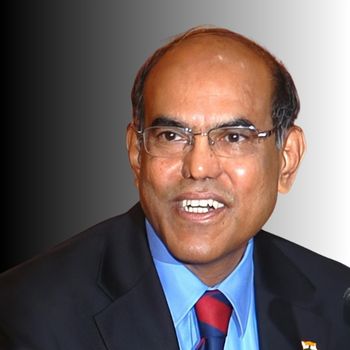
Dr Duvvuri Subbarao is a former governor of the Reserve Bank of India.
May 11, 2026 at 2:57 AM IST
For much of the post-1991 period, India’s external-sector anxieties revolved around one central question: how large a current account deficit could the economy sustain? Policymakers, markets and rating agencies focused on oil imports, export competitiveness, remittance flows and the “safe” threshold for the CAD as a share of GDP. Financing the CAD, while important, was often a secondary concern. The assumption was that if growth remained strong and macroeconomic stability broadly intact, capital would flow in to bridge the deficit.
Over the last few years, India’s external-sector debate has shifted from the sustainability of the current account deficit itself to the stability and composition of the capital flows financing it. The pressure on the rupee, notably, predates the recent Iran conflict and wider Middle East tensions. It reflects a deeper structural reality: global capital is becoming more selective, more fragmented and less automatically available to emerging markets that once enjoyed a valuation or growth premium.
India is not facing a balance-of-payments crisis. Foreign exchange reserves remain substantial, external debt metrics are manageable, and the current account deficit itself is modest by historical standards. Yet the underlying external-sector model deserves reconsideration because the nature of global capital flows is changing in ways that matter profoundly for India.
In particular, India’s recent experience of capital outflows has been triggered by both push and pull factors.
The push factors are domestic. Over the last few years, millions of Indian retail investors have entered equity markets directly and through mutual funds. Even as these flows have provided an important stabilising force for domestic markets, they have also pushed valuations sharply higher. Foreign portfolio investors, who allocate capital globally and compare opportunities across markets, increasingly see limited scope for quick returns in Indian assets at current valuations. In relative terms, India has become an expensive market.
The pull factors are global and capital is being drawn toward sectors and geographies perceived to be at the frontier of technological transformation. The AI boom, particularly concentrated in large US technology firms, has attracted enormous amounts of global capital. Investors have also rotated funds toward economies more closely associated with advanced manufacturing, semiconductors, biotech, and renewable-energy ecosystems, notably the US, Taiwan, and increasingly even China despite its broader macroeconomic slowdown.
This shift is material for India because it signals that global capital allocation is no longer driven primarily by headline growth differentials. Investors have become more interested in “innovation” than growth alone. India may still be among the fastest-growing major economies, but it is often viewed as a marginal player in the technologies currently driving global capital flows: artificial intelligence, advanced biotech, and frontier clean-energy systems.
As a result, money has steadily rotated out of India into what investors perceive as “innovation economies”. The consequence has been persistent pressure on the rupee, raising questions about the assumption that India will automatically command a structural overweight in emerging-market portfolios.
This matters because foreign savings are important for India’s growth. An economy targeting sustained growth rates of 7% while simultaneously pursuing infrastructure expansion, manufacturing ambitions, energy-transition investments, and defence modernisation will need to attract foreign savings via current account deficits to augment domestic savings.
The question, therefore, is not whether India should attract foreign capital. It is what kind of foreign capital we should prioritise, and whether policymakers can realistically discriminate between different forms of inflows.
RBI Governor Sanjay Malhotra has recently suggested a preference for foreign direct investment, free trade agreements, and long-term productive capital over volatile portfolio inflows. The prioritisation is understandable. India’s own experience — from the taper tantrum of 2013 to repeated episodes of FPI reversals — demonstrates the vulnerability associated with relying excessively on portfolio flows.
FDI is clearly more desirable as investors typically lock into the country’s long-term prospects. Besides, it brings technology transfer, export capacity and managerial expertise. It is less volatile and more closely linked to productive investment. The governor is also right to call for deeper trade integration, supply-chain participation and manufacturing-linked investment.
But it is also important not to overstate the distinction between “good” and “bad” capital.
Good Capital, Bad Capital
Indeed, large and sophisticated economies require both. FDI supports productive capacity creation, while portfolio flows deepen domestic financial markets, expand financing options, and improve capital allocation efficiency. The challenge is therefore not eliminating portfolio capital but managing its volatility through stronger institutions and deeper markets.
That is where India’s macroeconomic “pitch” to global investors needs to evolve.
For years, India’s proposition was straightforward: superior long-term growth, political stability, and improving macroeconomic management justified a valuation premium. That proposition still carries weight, but it is increasingly insufficient in a world where capital is more tactical and innovation-driven.
Foreign investors today evaluate not just growth prospects, but also the credibility of tax policy, the transparency of regulation, the depth of financial markets, the quality of hedging instruments, and the predictability of currency management. In many of these areas, India still generates uncertainty.
A stable and transparent tax regime is especially critical. India has in the past forfeited investor confidence through retrospective taxation disputes, inconsistent interpretations and uneven implementation across regulatory agencies. Even when the formal policy framework appears stable, uncertainty in administration can materially affect investor sentiment. Global investors are willing to tolerate volatility; they are far less willing to tolerate unpredictability.
The issue is not merely tax rates but credibility and consistency. Long-term capital, especially institutional capital, values certainty above incentives. A transparent implementation framework with minimal regulatory discretion may ultimately matter more than episodic tax concessions.
Currency Framework
Similarly, India’s domestic financial architecture remains underdeveloped relative to the scale of its ambitions. Corporate bond markets are shallow and long-duration institutional capital is insufficient. Hedging instruments exist but are often expensive or operationally cumbersome. A credible external-sector strategy therefore requires deeper domestic markets, not merely larger reserves.
Fiscal policy also matters as persistent fiscal deficits dent public savings, crowd out private investment and increase structural dependence on foreign capital. Credible fiscal consolidation at both the centre and state levels will aid external sector resilience.
Trade policy, too, must become more central to external-sector management. For too long, India’s external strategy relied disproportionately on capital inflows rather than export competitiveness. Durable external stability ultimately requires stronger export dynamism, particularly in manufacturing and tradable services higher up the value chain.
The geopolitical environment complicates matters further. Fragmented supply chains, strategic industrial policies, sanctions regimes and growing economic nationalism are reshaping global capital allocation. Capital increasingly follows geopolitics as much as economics. India’s strategic positioning remains favourable, but geopolitical goodwill alone will not guarantee sustained investment flows.
The broader lesson is that India cannot assume global capital will continue arriving automatically because of its large domestic market, demographic dynamics or superior growth rates. The era of passive emerging-market allocations is ending. Countries increasingly compete for capital on institutional quality, innovation ecosystems, policy credibility and financial sophistication.
India’s external-sector debate therefore needs to evolve beyond the old binary of “safe” current account deficit thresholds. The more important question is whether India can build a stable and diversified framework for attracting foreign savings in a world of structurally more volatile and selective capital flows.
More From BasisPoint